Monthly Archives: May 2026

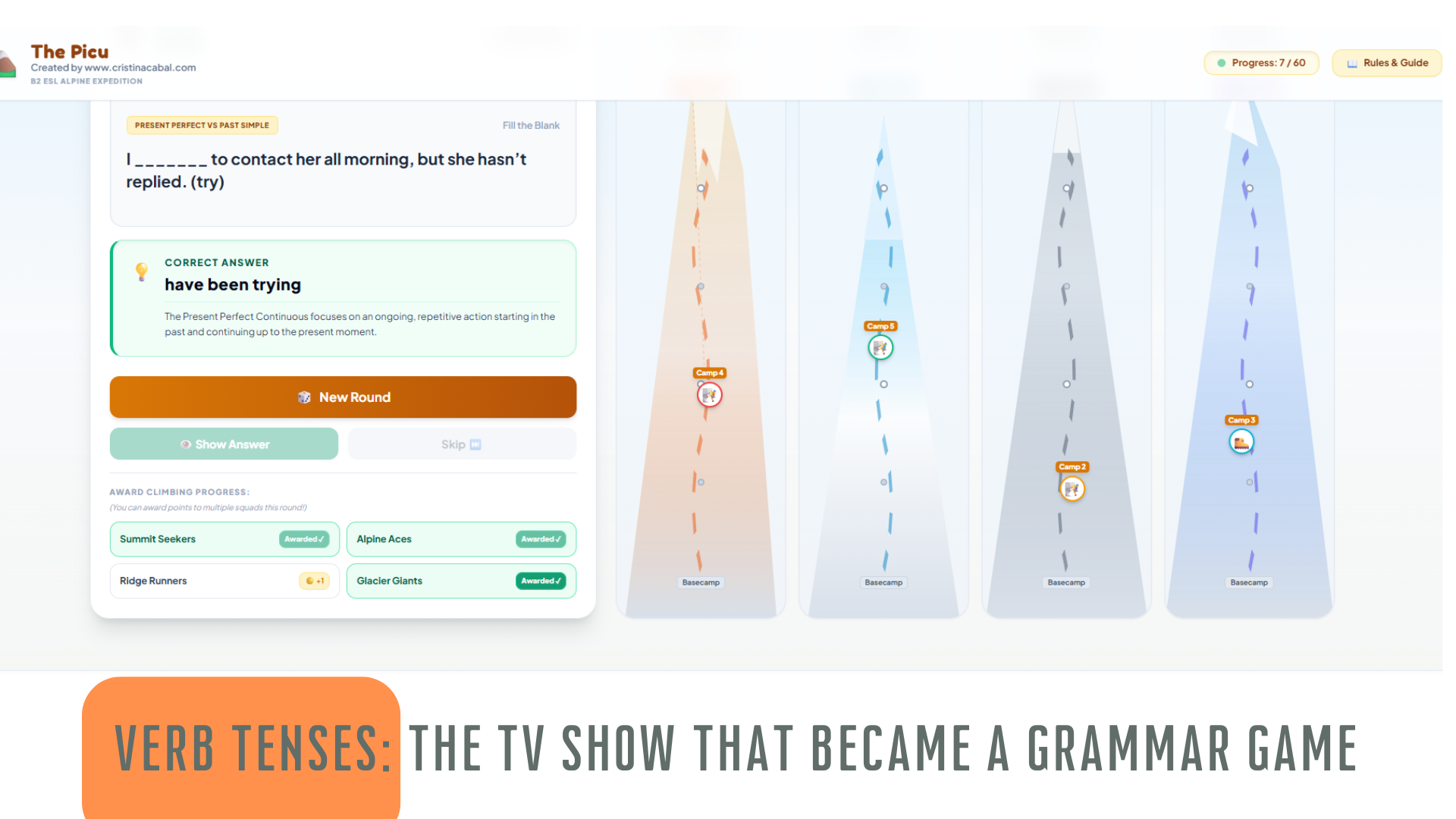
Cool Speaking Cards, Indirect Questions, a Spinning Wheel and Speed Chatting: One Lesson, Endless Engagement

Remember those awful photocopies? You know the ones. A photocopy of a photocopy of a photocopy, with a blurry black-and-white image that was somehow supposed to inspire deep conversation in class? Yeah… same. And honestly? The students’ faces said everything before the activity had even started

Lately, I’ve completely transformed the way I approach speaking activities, and AI has become a huge part of that process. But probably not in the way people imagine. It’s not about clicking a button and magically producing the perfect lesson. I wish! It still takes creativity, tweaking, experimenting, and sometimes a lot of failed prompts along the way. But the process itself? It’s fun.

GENERATING THE QUESTIONS

I could explain but I’d rather you watch the video and see for yourself how easy it is to generate some cool cards. And for “free”.

You will find the prompt I used to generate the cards, in the first comment of the video. And please, leave a comment , I love hearing from you!
AND THE GRAMMAR: INDIRECT QUESTIONS

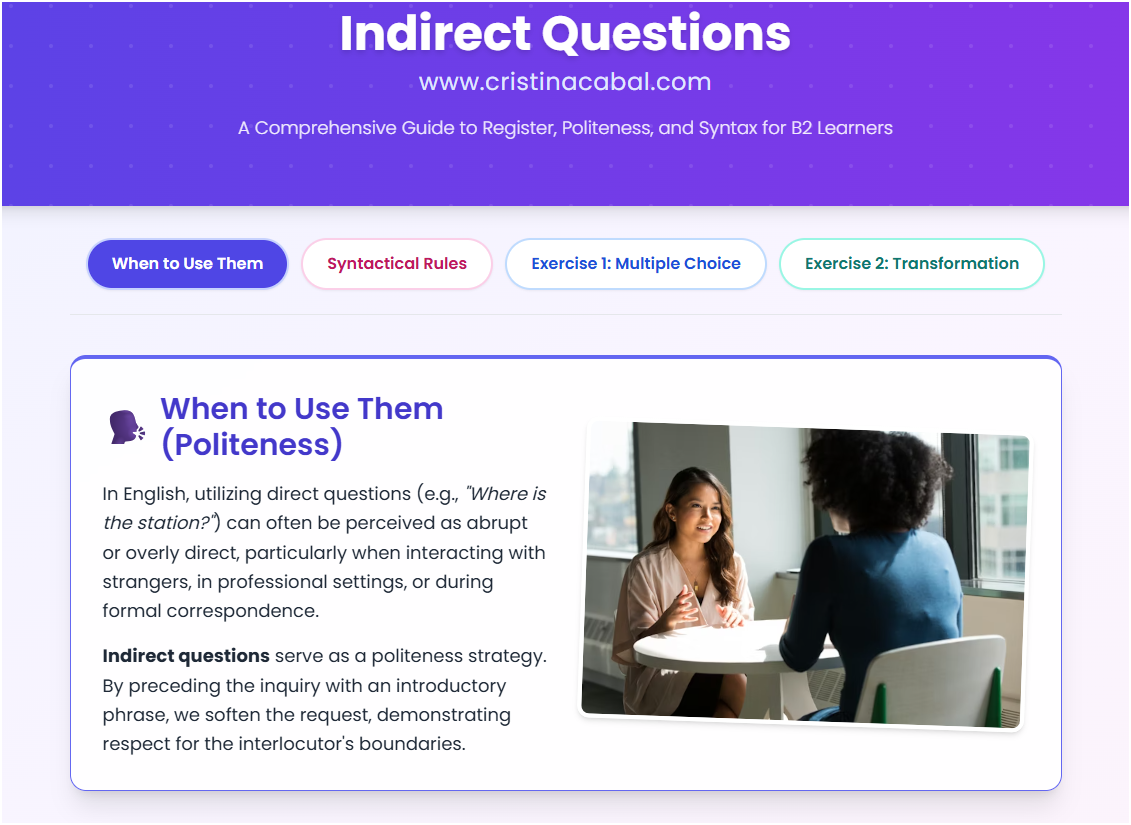
Once we have our conversation questions, I like to use them to revise indirect questions — it’s the perfect excuse. The questions are already there, they already have context, so why not squeeze a bit of grammar out of them too?

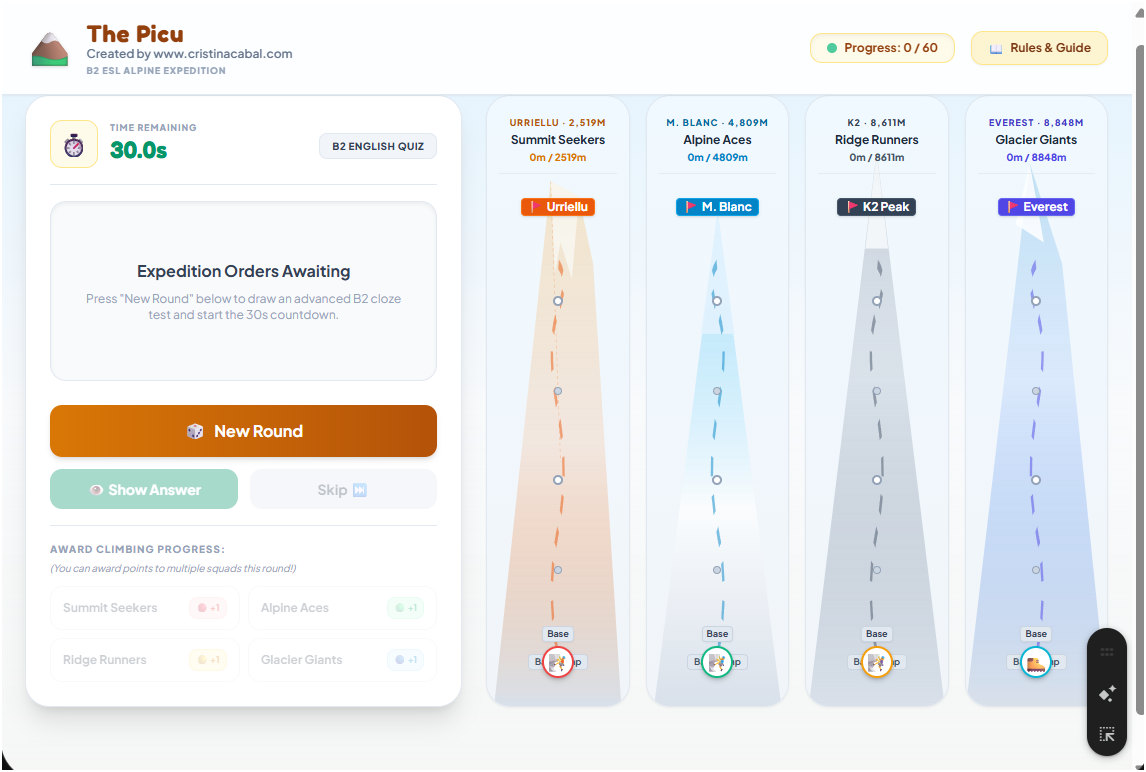
To make the revision more engaging, I built a little website — also with Gemini — where students can practise the structure interactively. First we revisit the rules, then we activate.

Spin the Wheel. Then Speed Chat.

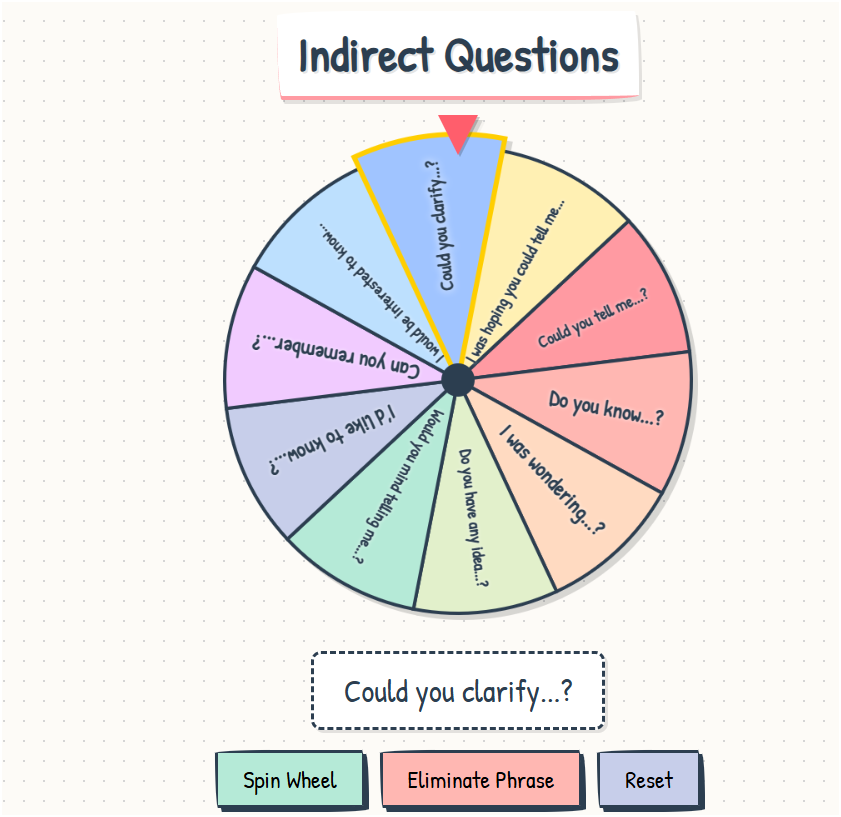
After the grammar input, we present the first question and… spin the wheel — built with AI, loaded with examples of indirect questions.

  1. Show the card with the question they need to answer
  2. Spin the wheel

Example: I was wondering … (do you believe that online shopping will completely  replace…?) if you believe that online shopping…

And to wrap it all up? Speed chatting. Signal sounds, they rotate, new partner, new indirect question, new conversation question. Dynamic, social, and it always gets a smile out of them.

What more can you ask from one single activity? Give it a go and let me know. 👇shopping

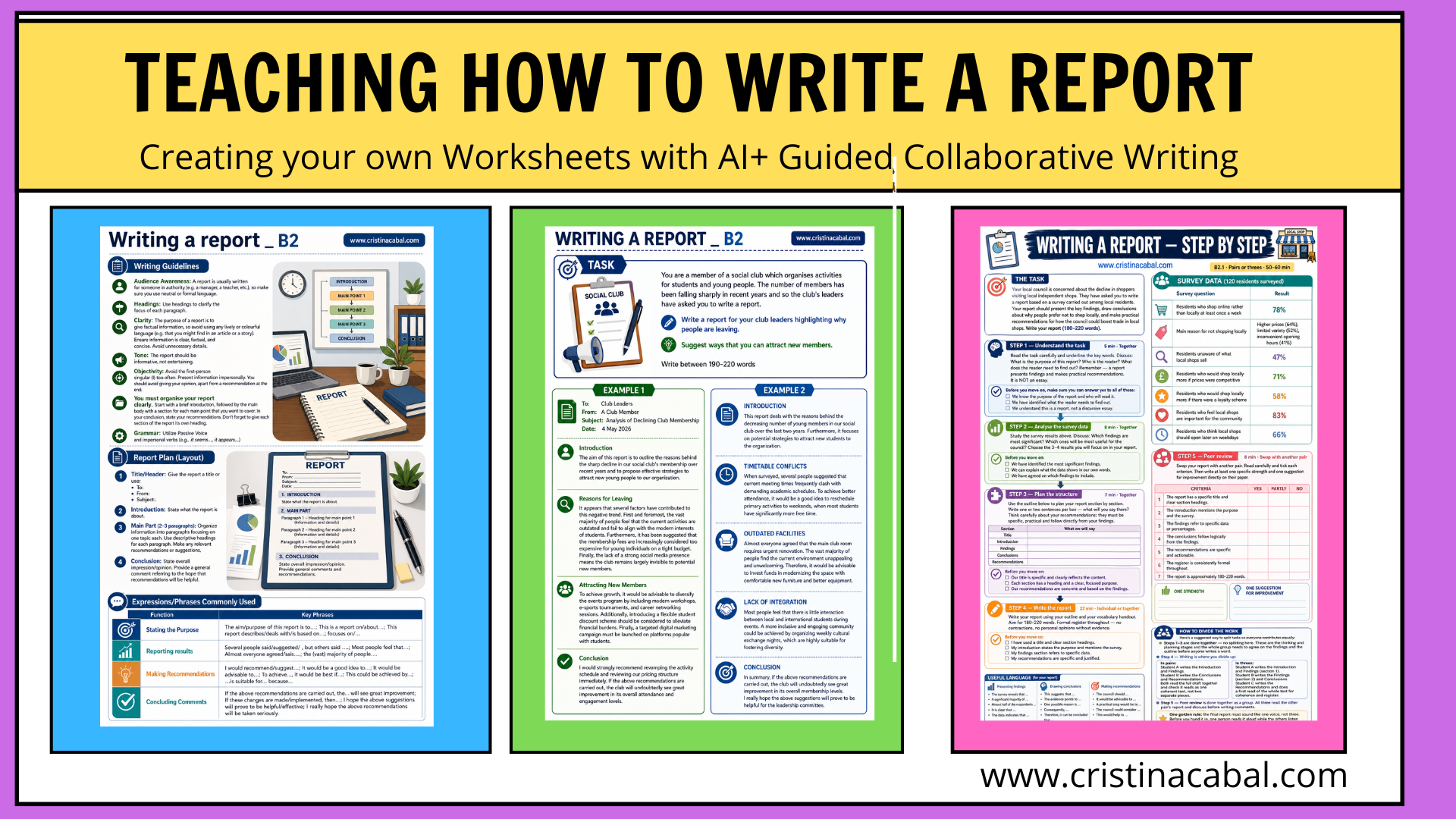
Teaching How to Write a Report. Create your own Worksheets and Make it more Palatable for your Students

It’s Sunday evening, I’m prepping for the week, and I open my B2.1 students’ textbook to the report writing unit. Five seconds in, I want to close the book, pour myself a glass of wine, and pretend it doesn’t exist.

You know the kind of page I mean. Dense. Overwhelming. A chart nobody asked for. Vocabulary that even I have to look up. My students wouldn’t read it — they’d survive it. Barely. And I’d spend the entire lesson firefighting confusion instead of actually teaching anything useful.

So I did what any self-respecting language teacher does: I refused to accept it and went rogue.

Step 1: I Went Textbook Shopping

Before I even thought about creating anything, I did a little research mission. I pulled out a few different textbooks — because no single textbook has all the answers— and I started gathering:

  • The core structure of a report
  • Realistic vocabulary my students can actually use without sounding like a lawyer
  • Task types that make sense for where my students are right now

Step 2: Hello, Gemini and Hello ChatGPT

1. Generating the Text

Once I had my notes, I headed over to Gemini and copy/pasted my notes and asked it to generate clean,  level-appropriate content. Exactly the kind of thing I wished was in the textbook in the first place.

2- Generating the worksheets

So now i have the text; but, in the era of AI, why give them a boring document when you can give them a beautifully structured worksheet? Because — even well-written content, if it looks like a photocopied page from 1998, is going to kill the vibe before we even start.

So I took my Gemini-generated content and went straight to ChatGPT — a if you haven’t tried the new image generation model in ChatGPT yet, close this tab and go do that first. I’ll wait.  It is genuinely the best option out there when your worksheet involves formatted text, tables, or any kind of visual structure.

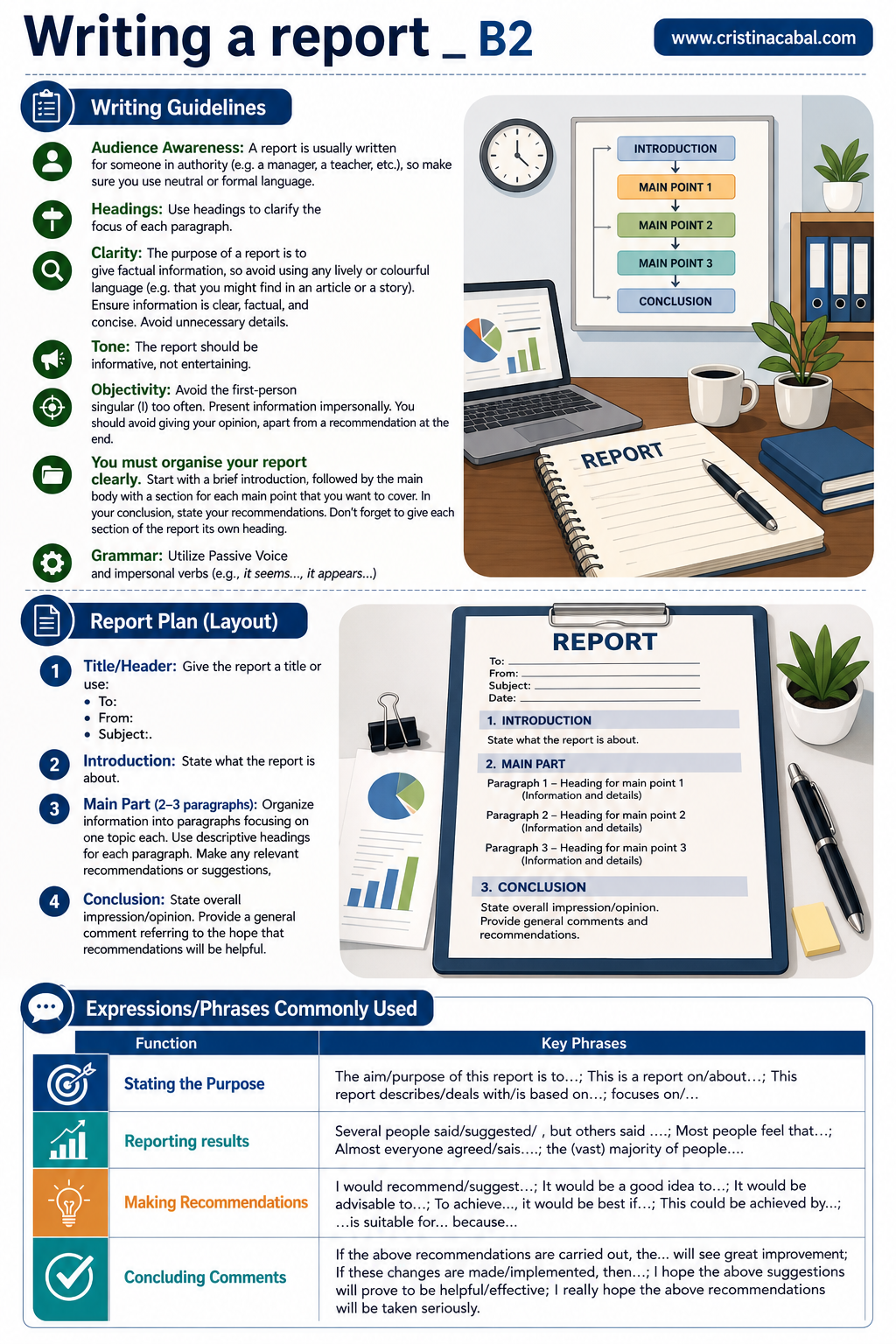
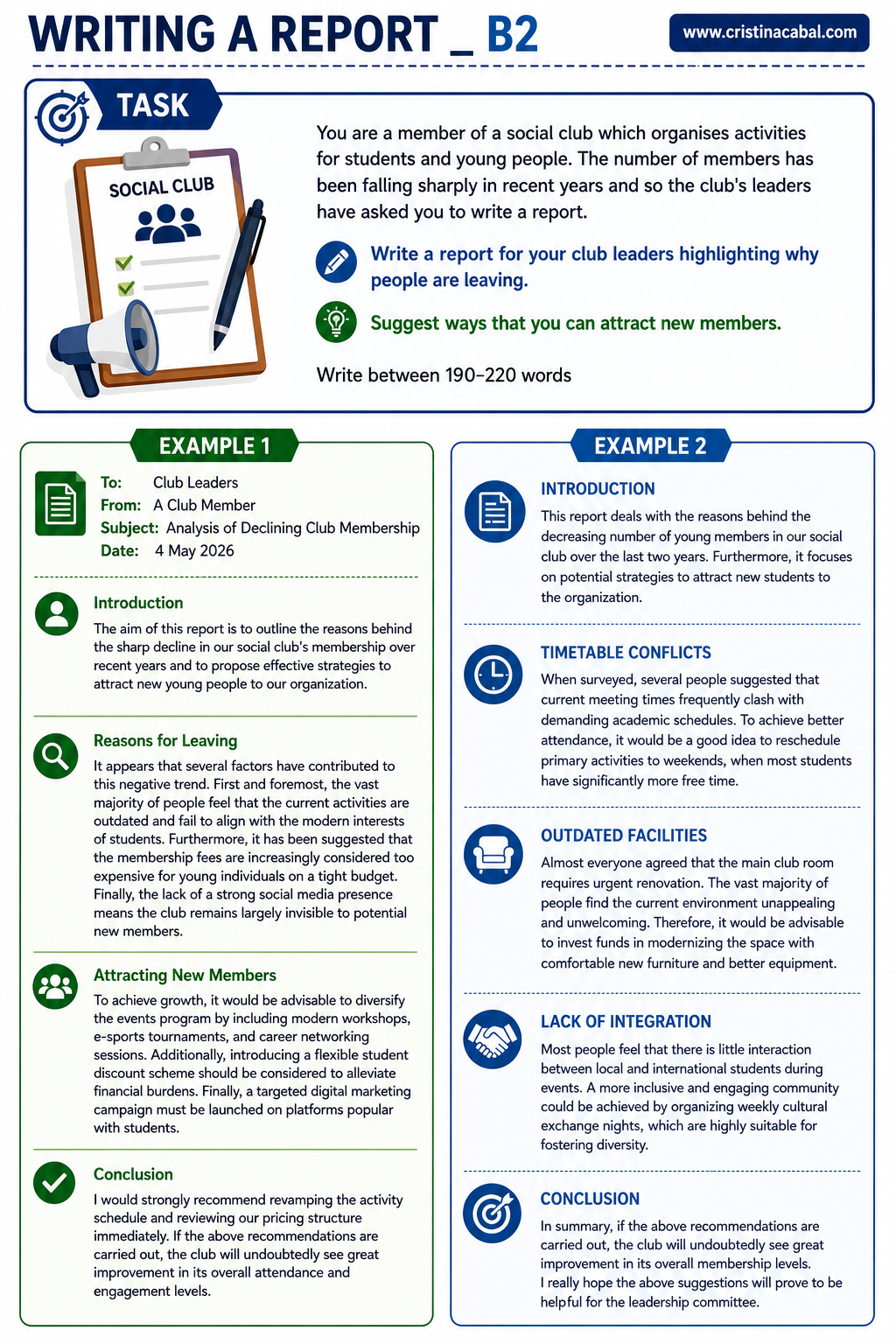
I want you to create a worksheet with  the content pasted under these lines. Include all the information pasted. Title “Writing a report _ B2 www.cristinacabal.com” . Use images related to the content to make it more visually appealing. Clean design.

And the result? A worksheet my students actually picked up and looked at. With curiosity. Not dread.

To get the worksheets, Right click on the image and Save as…

It has everything they need:

  • A model text at the right level
  • Guided vocabulary in context
  • A clear framework they can replicate
  • A writing task that feels achievable


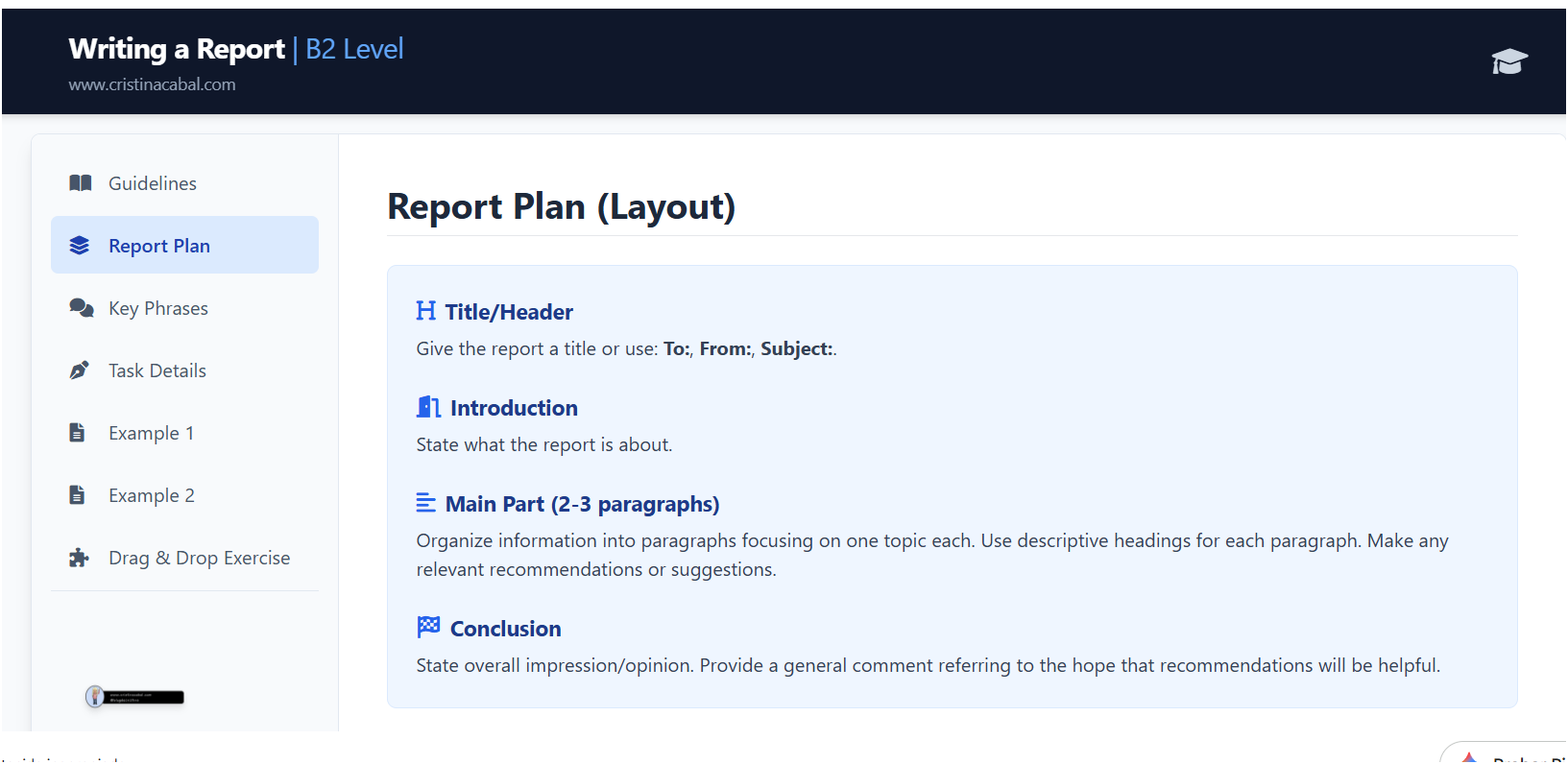
Step 3: And why not an interactive website for those who prefer interactive content?

Because apparently a gorgeous worksheet wasn’t enough for me, I also went ahead and built an interactive website to go with it with a Drag and Drop exercise

Step 4. They Know the Theory. Now They Need to Write.

Knowing the structure is one thing. Producing it under exam conditions is a completely different story. Report writing doesn’t come naturally to B2 students — it needs practice. Lots of it. And they can’t do that without me in the room, monitoring, nudging, redirecting. What works for me is collaborative guided practice: students work together within a clear framework, which lowers the anxiety AND means I can actually see what’s happening before they write a single word. The activity below is exactly that. Does it guarantee a perfect report? No. But it gives them a fighting chanc

Note: Click here for a more user-friendly view of the webpage with the step-by-step  activity