Tag Archives: B1

Fun Retrieval with The race letter and a Gallery Walk

Right, personality adjectives are still on the menu, but stick with me here — this activity ‘ The Race LETTER is way more flexible than that. Fancy doing it with  some other topic-specific vocab for an exam class? Works just as well.
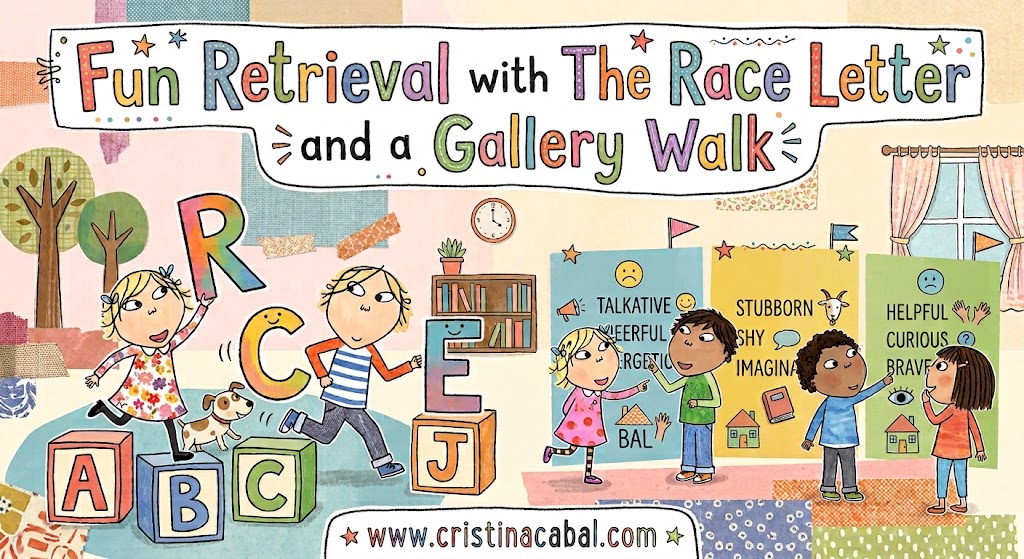
PART 1: The Race Letter

Picture this: your students are lined up in the aisle (or better yet, out in the corridor if you’ve got the space), each holding a blank piece of paper. You call out a letter – any letter – and they’ve got  20 seconds to  think of a personality adjective starting with that letter and scribble it down.

  • Get it right? Take a step forward.
  • Blank or wrong? Stay right where you are.

Decide how many steps ( in my case, 5 steps) they need to take before reaching the goal and That’s it! . That’s the whole game!.

How to Run It (Step-by-Step)
  • Set the scene. Line students up along the aisle between desks, or – if you’ve got the luxury of space – take them out to the corridor. This works brilliantly as an “outside the classroom” activity, and trust me, that change of scenery alone gets them buzzing.
  • Hand out paper. One blank sheet each. No prep, no printing needed.
  • Call out a letter. Start easy – think A, S, C – letters with loads of adjective options.
  • Give them 20 seconds. Enough time to think, not enough time to overthink.
  • Check answers. Walk down the line (or have them hold papers up) and check who’s got a valid personality adjective.
  • Move the winners forward. Correct answer = one step forward. Wrong or blank = stay put.
  • Repeat with a new letter each round.
  • First to reach the end wins.
A Few Tips From Trial and Error
  • Set the ground rules up front: does “kind” count for K, or are you asking for something a bit more B2-level, like knowledgeable? Decide your difficulty level before you start, and be consistent.
  • Keep a mental list of adjectives per letter.

Part Two: Turning the Adjectives Into a Gallery Walk

This is a teacher-guided activity. Allow about 5 minutes per station and tell students when to move to the next. At each station, students will have to do different things.

HOW TO DO IT

Take some of the most useful adjectives that came up and stick them up around the walls of your classroom, spaced out so students naturally move from one to the next. Then send your students off on a gallery walk:every time they move to a new spot, they’ll find two or three adjectives waiting for them, and a little task to go with each stop.

Here are some ideas to fill those stations with. At each station, I would ask them to do a different speaking tasks with the adjectives.

  1. Station 1. Speaking: Can you think of someone who fits one of these adjectives? Students talk in groups
  2. Station 2.Opposite hunt. Ask students to guess the opposite of each adjective.Speaking: Do you identify with any of these adjectives?
  3. Station 3. Rate yourself. A quick 1–5 scale for each adjective: how much does this adjective describe you?
  4. Station 4.Sentence starters. Ask students to complete the following sentence using one of the adjectives on the wall. “The most ______ person I know is…”

You can use my presentatio or say/write the questions on the board
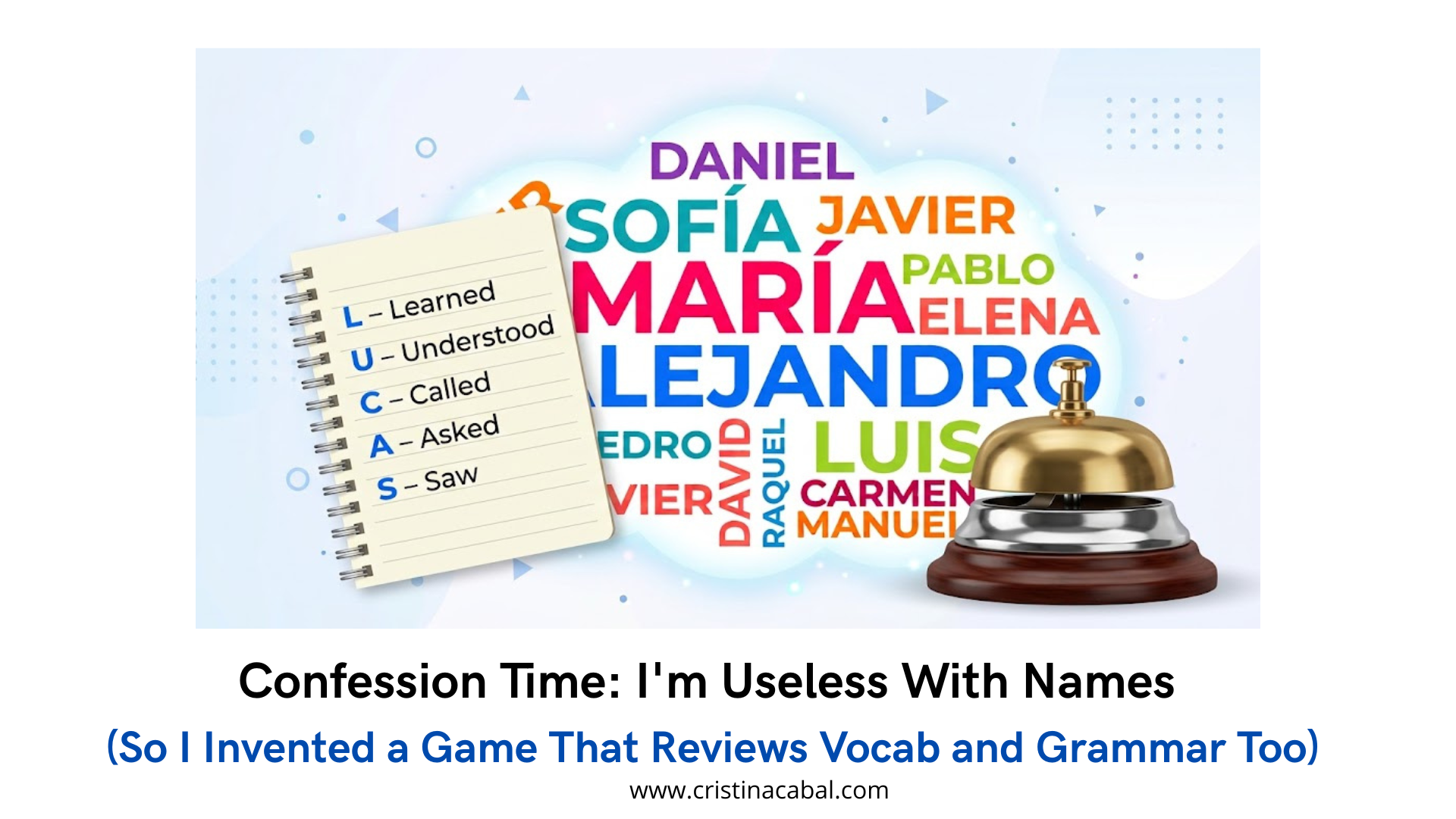
Confession Time: I’m Useless With Names (So I Invented a Game That Reviews Vocab and Grammar Too)

Okay, I’ll confess: we’re in the first days of the new course and I, the teacher, cannot for the life of me remember half my students’ names. Does this happen to you too? That moment when you point at someone and go “hey… you, yes, you, the one in the blue hoodie” because the name has completely vanished from your brain. A classic September moment. Well, and in my case, February moment, too.

So I started turning it over in my head (because yes, I have that habit of mine of turning any everyday problem into a classroom activity, it’s a blessing and a curse in equal measure) and I came up with something that kills two birds with one stone: we learn names AND we review grammar and vocabulary. Yay! Because why settle for one thing when you can have both, right?

And guess how I’m going to run it? Exactly how I like it: mixing tech and old-school tradition. Not fully digital, not fully analogue, a bit of both. But hey!!! You don’t like tech. It can all be done in the traditional way.

VOCABULARY ACROSTIC DUEL

Objective: learning students’ names and revising grammar and vocabulary.

Setting it up

  • A WordCloud. Split the class into two teams and create two word clouds, one per team, with the names of their members. You can do this by hand on the board or you can bring in the tech like I do (because for this bit, I admit I’m a little lazy) and use Wooclap to generate the cloud on the spot. Well, two clouds, one per team,
  • A buzzer. Some noise? Yes! Each team needs a buzzer within reach. A real buzzer, one of those that goes “ding!” and gives the whole thing that game-show feel that hooks everyone instantly.
How to play

(click on the image)

  1. Pick a student’s name at random from either word cloud (it doesn’t matter which team they’re on).
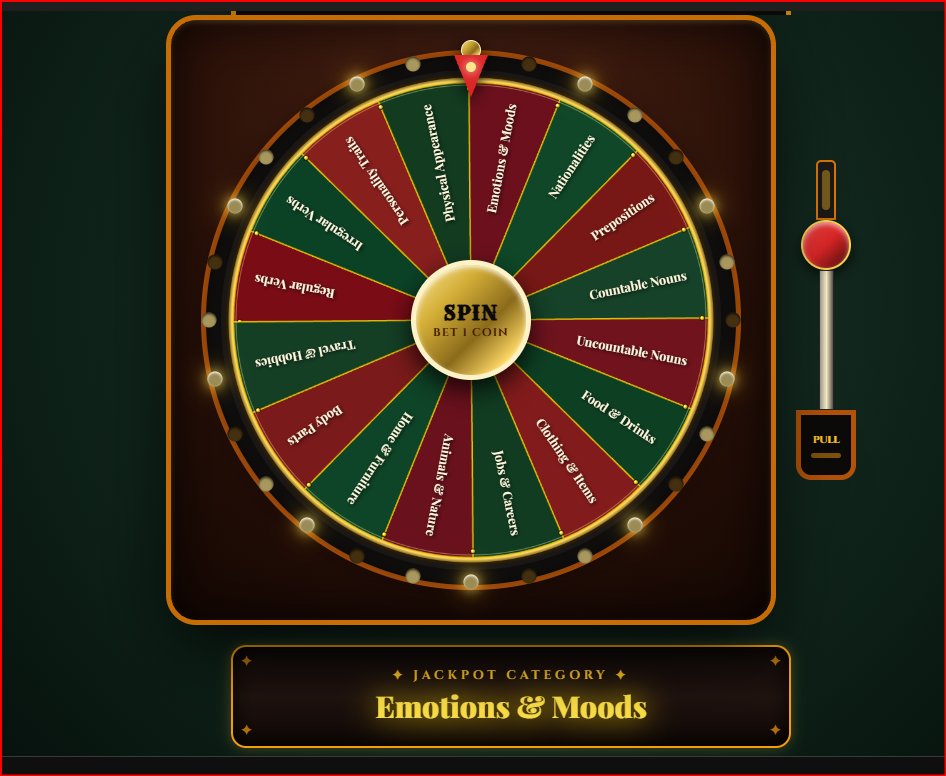
  2. Assign a challenge or if you use my wheel above, spin the wheel: for example, each letter has to be a past tense verb, or a descriptive adjective. You’ve got total freedom here to adapt it to whatever grammar point you’re working on.

An example with the name LUCAS and past tense verbs

  • L – Learned
  • U – Understood
  • C – Called
  • A – Asked
  • S – Saw

3.  Within each team, students can work solo, in pairs, or in groups of three, whatever       they prefer.

4. As soon as someone finishes the acrostic, they hit the buzzer.Let’s say it is a student from Team A.  If it’s correct, their team wins the round and  crosses out a name from Team B’s  cloud,  and picks the next name plus the next grammar or lexical category.

NOTE: If the student from Team A makes a mistake, then the other team wins (Team B) wins and crosses out a name from Team A’s cloud

And so, round after round, and without even realizing it, they’re repeating names over and over while working on structure and vocabulary. By the end of the class, I promise even I’ll have picked up a few more names.

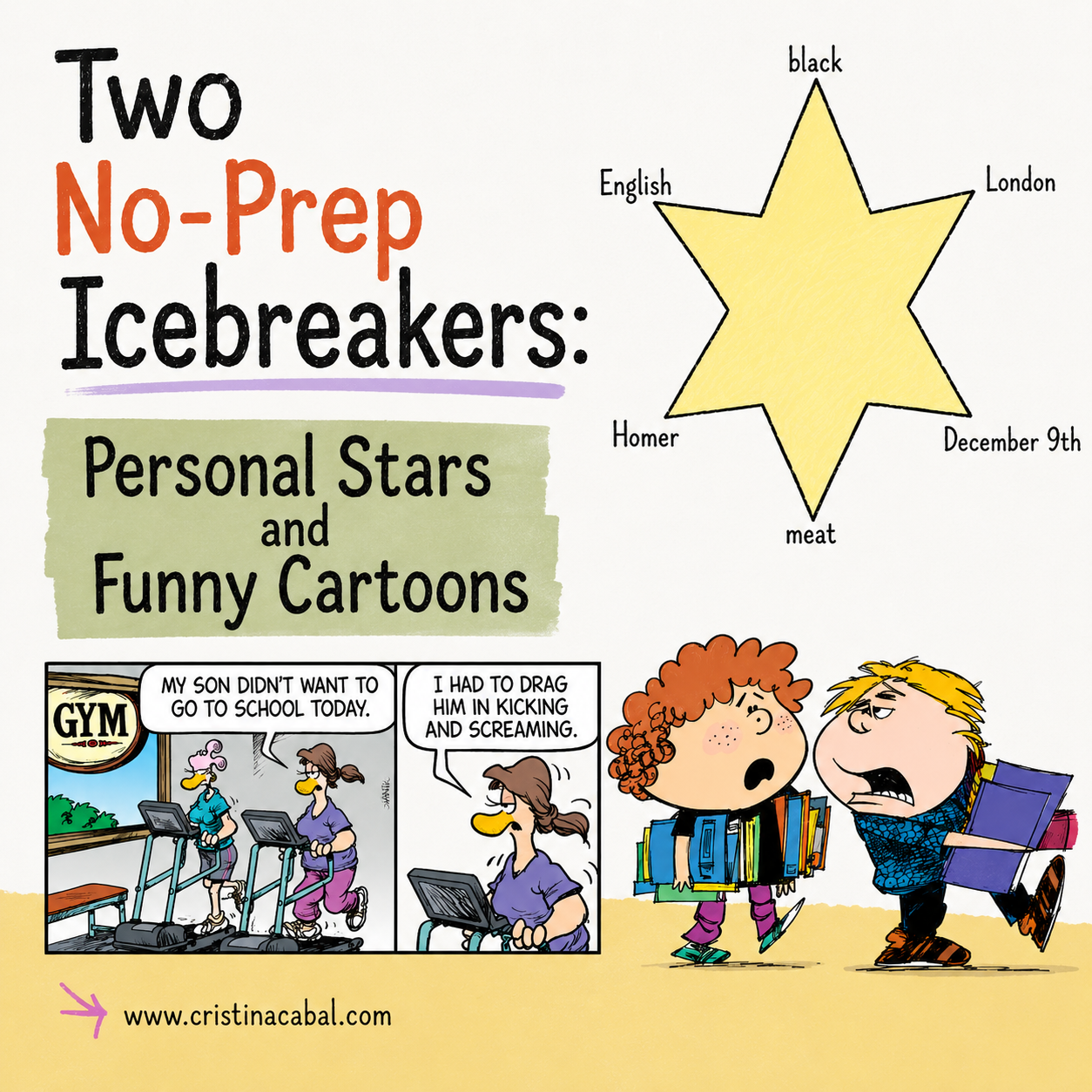
Two No-Prep Icebreakers: Personal Stars and Funny Cartoons

I still had sand between my toes and here I am, already planning the first day of class. How did that happen SO fast? One minute you’re lying on the beach not thinking about anything, and the next, bam! September is staring you.

But let’s look on the bright side: starting means new faces, renewed energy, and that special “fresh start” buzz I love so much.

So today I thought I’d share my plan for day one:

  1. MY PERSONAL STAR: a no-prep icebreaker to get everyone talking
  2. CARTOONS: followed by some cartoons I love using to squeeze out even more conversation once the ice is broken.

Sound good? Let’s get into it!

Icebreaker 1: Personal Star

This one takes no prep, and students always love a bit of gossip about their new teacher!

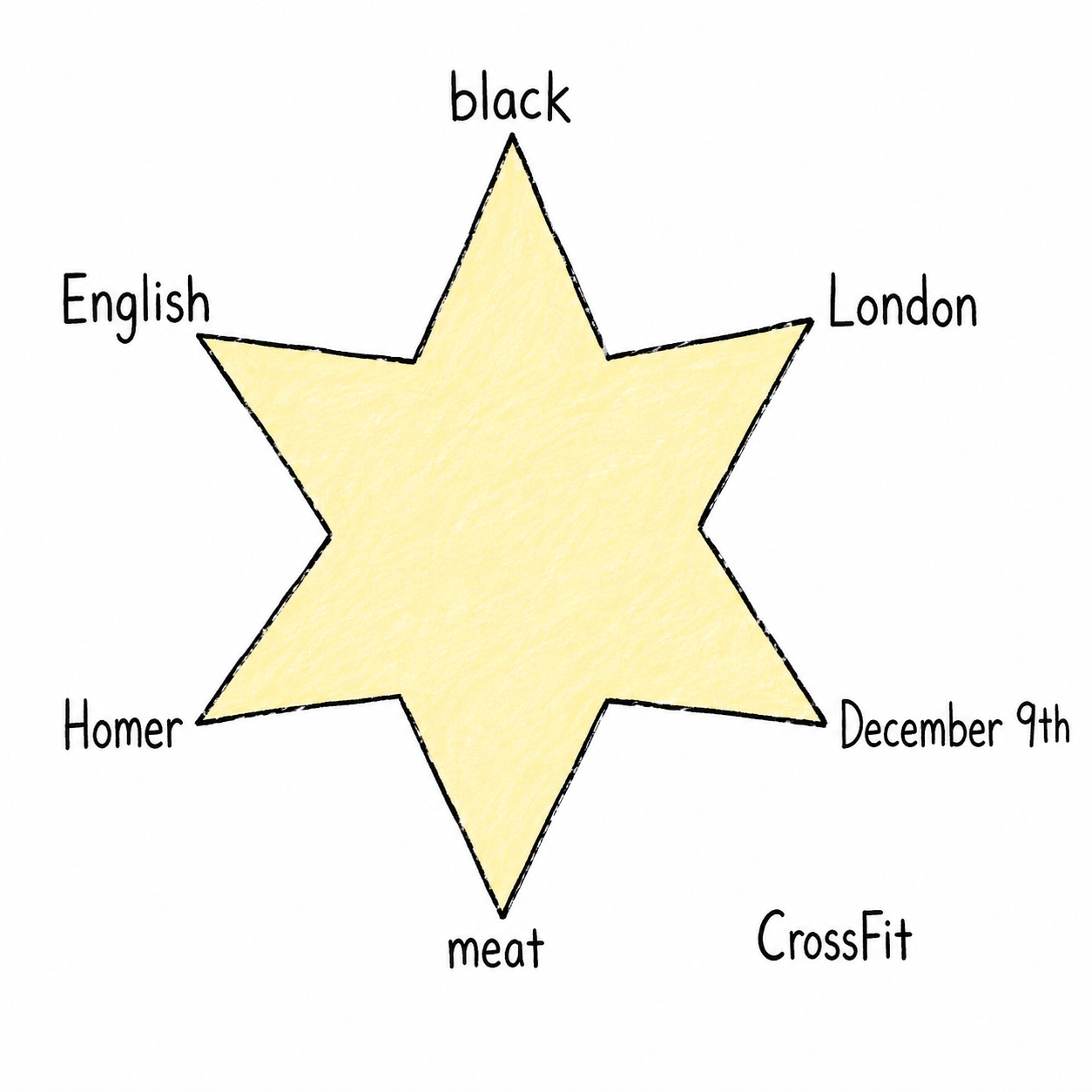
Here’s how it works: draw a star on the board and write six pieces of information about yourself inside it. Mine looks like this: black, London, December 9th, Homer, English, meat.

Tell your students the star is full of clues about you, and their job is to guess what’s behind each word by asking questions. If they’re a bit lost, give them an example: “My favourite colour is black. What question do you need to ask to find that out?” Let them work it out — “What’s your favourite colour?” — and cross the word off the star. Keep going until the whole star is solved.

Their Turn Now

Put students in pairs and get them to draw their own personal star with six pieces of information about themselves inside. They take turns asking each other questions to uncover what’s hiding in their partner’s star.

When everyone’s done, bring the group back together and have each student introduce their partner, sharing what they found out. Instant mingling, instant speaking practice, and everyone leaves knowing a little more about the person sitting next to them.

Icebreaker 2: Conversations around some of my favourite back-to-school cartoons.

Once the ice is well and truly broken, I like to move on to something a bit more visual and that’s where these back-to-school cartoons come in — they’re perfect for warming up vocabulary and getting students talking a bit more, without it feeling like “work.”

Here are six cartoons with some questions each, mixing some better suited for adults and others that’ll hook teenagers more. Grab whichever fits your group best!

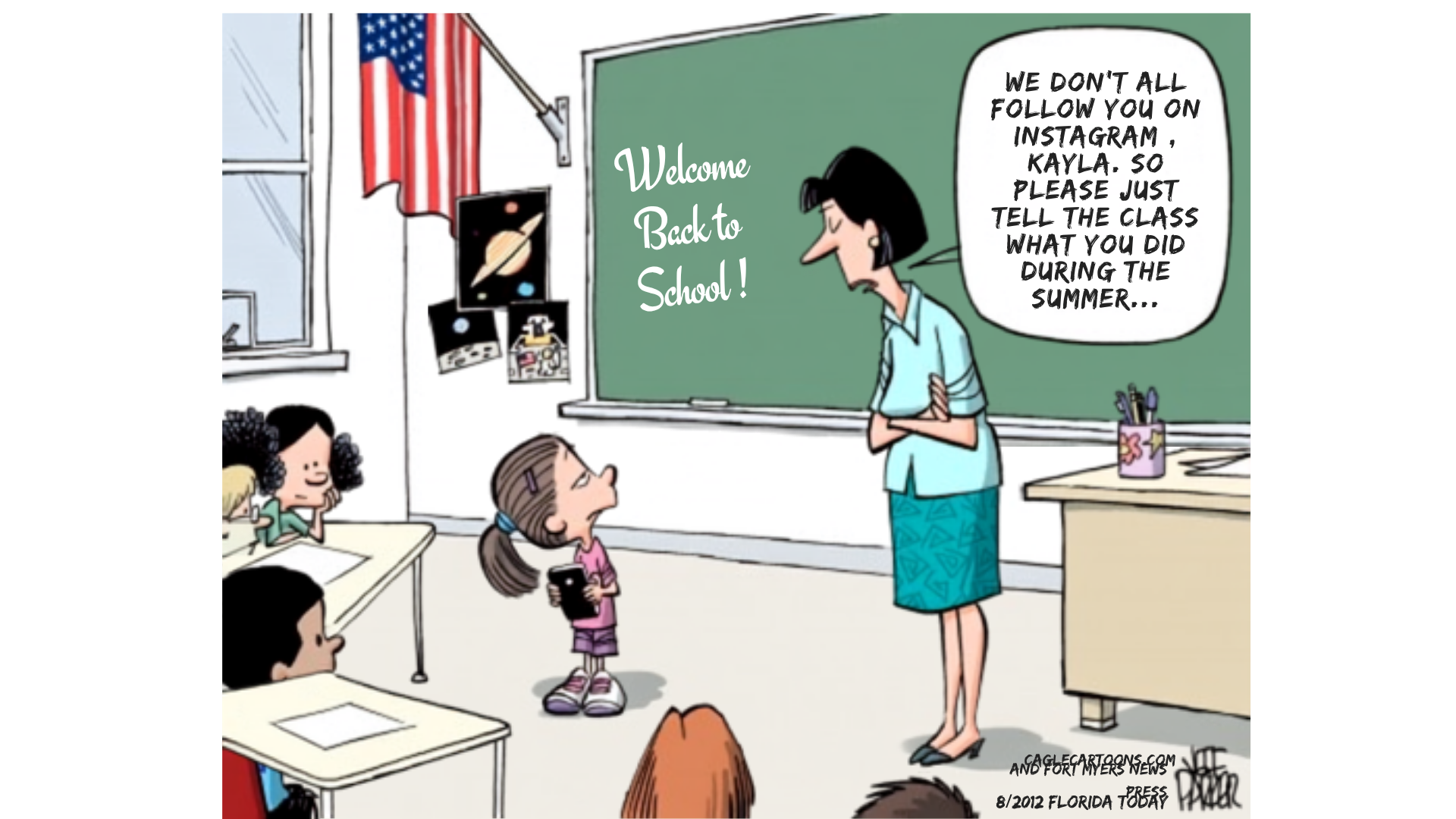
CARTOON 1:We don’t all follow you on Instagram, Kayla

Questions for adults:

  1. What’s funny about this cartoon?
  2. Do you think social media has changed the way young people communicate?
  3. What are the pros and cons of kids using social media?
  4. Do you follow any of younger relatives on social media?
  5. How is “sharing your summer” different today compared to when you were a kid?

Questions for teenagers:

  1. What does the little girl expect the teacher to already know?
  2. Do you post about your summer on social media? Which apps do you use?
  3. Have you ever assumed someone already knew something because you posted it online?
  4. What’s one thing you did this summer that you’d want to tell the class about?
  5. Do you think it’s weird when teachers follow students on social media? Why or why not?
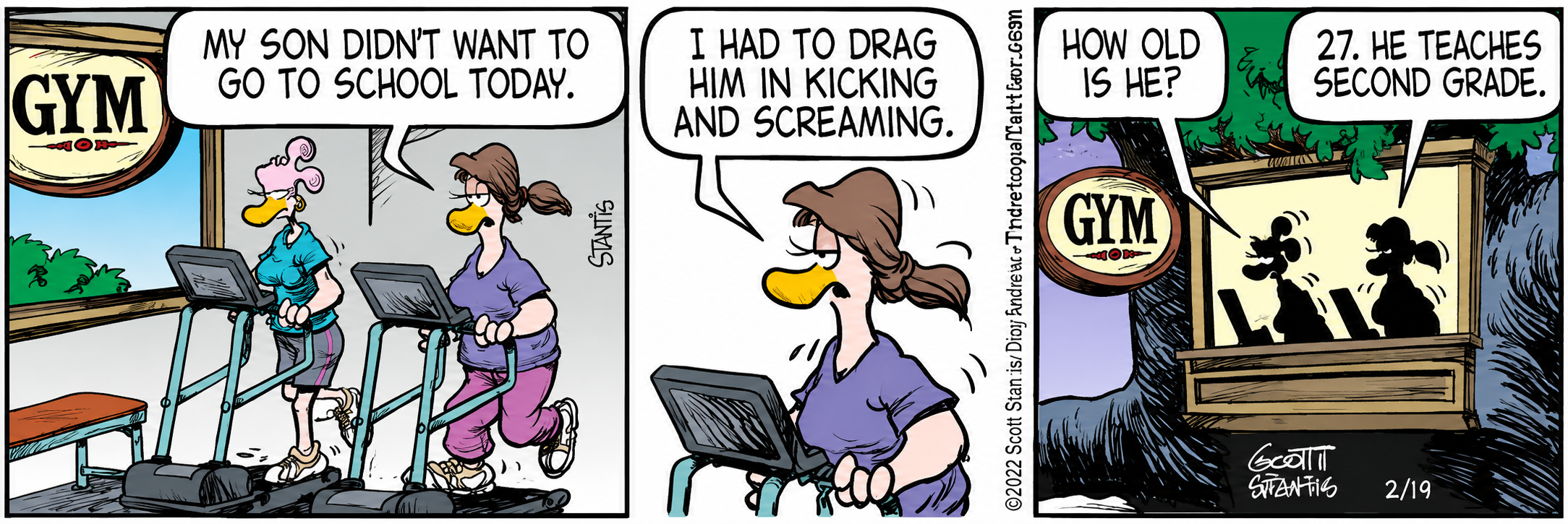
CARTOON 2: He teaches second grade

Questions for adults:

  1. Why do you think a 27-year-old teacher would feel the same way as a little kid on the first day?
  2. What usually causes that back-to-school dread for teachers — is it the students, the workload, or something else?
  3. What’s your own trick for getting motivated when you really don’t feel like going to work?

Questions for teenagers:

  1. Have you ever refused to go to school? What happened?
  2. Do you think teachers get nervous on the first day too, just like students?
  3. What year do you think would be hardest to teach, and why?
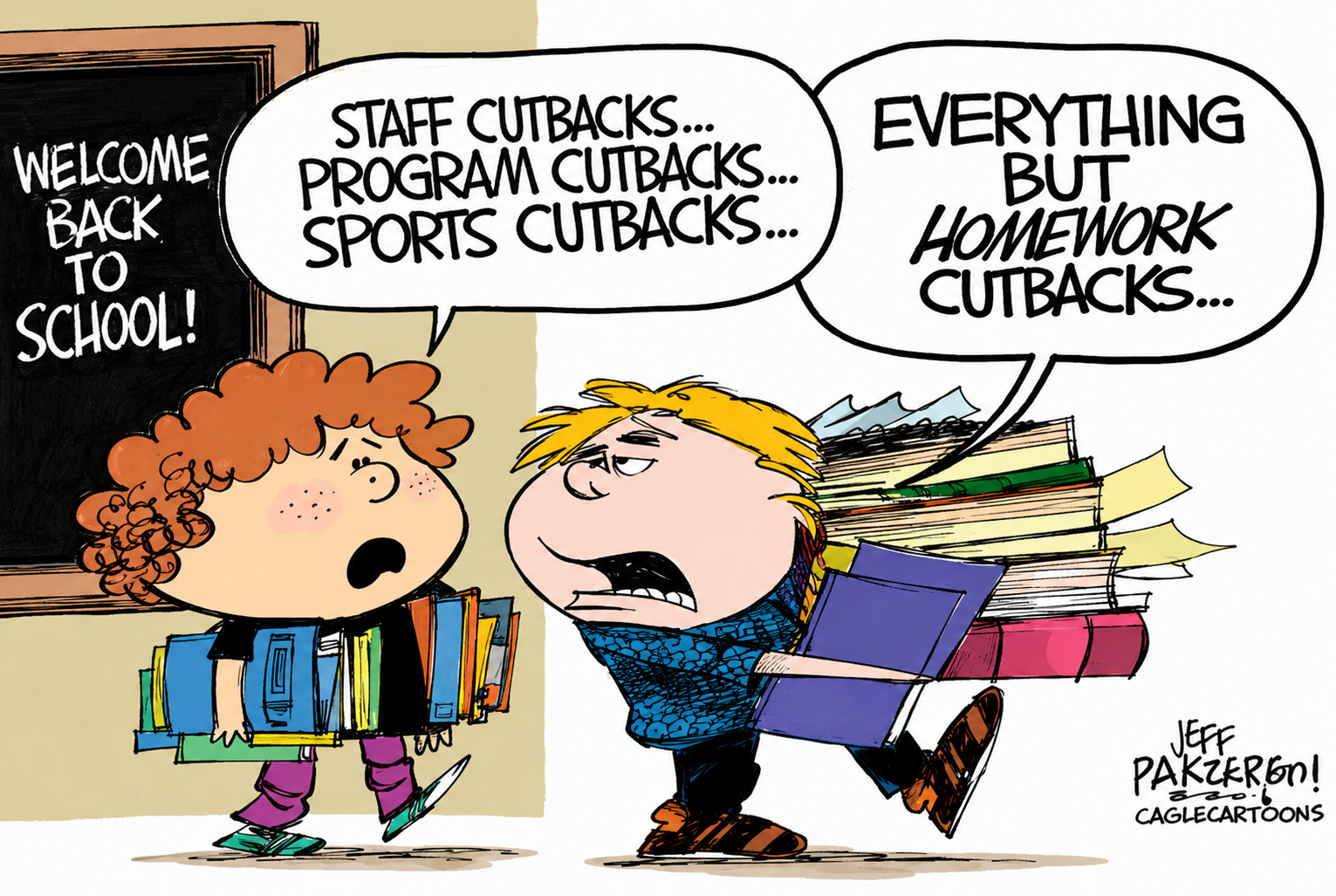
CARTOON 3: Everything but homework cutbacks

Questions for adults:

  1. Do you think schools in your area have enough resources? Why or why not?
  2. If you could cut one thing from your child’s school day, what would it be — and why?
  3. What’s something schools spend money on that you think is unnecessary?
  4. How has education changed since you were a student?

Questions for teenagers:

  1. Do you ever feel like you get too much homework? Give an example.
  2. If your school had less money, what would you miss the most — sports, clubs, or something else?
  3. What’s the worst homework you’ve ever had to do?
  4. Would you rather have more homework or a longer school day? Why?

Have a nice back-to-school day!!!

Tic Tac Toe Writing Challenge, Cristina’s Style

This project is a perfect example of what I love most: blending the latest AI tools with good old-fashioned participation and creativity. It’s simple, it’s fun, and it gives every student a voice.

In class, we rarely have enough time for long writing tasks. Between listening activities, speaking practice, and vocabulary reviews, written expression often gets pushed to “maybe next week.” But what if we could sneak writing practice into something short, fun, and completely engaging? That’s exactly what we did this week!

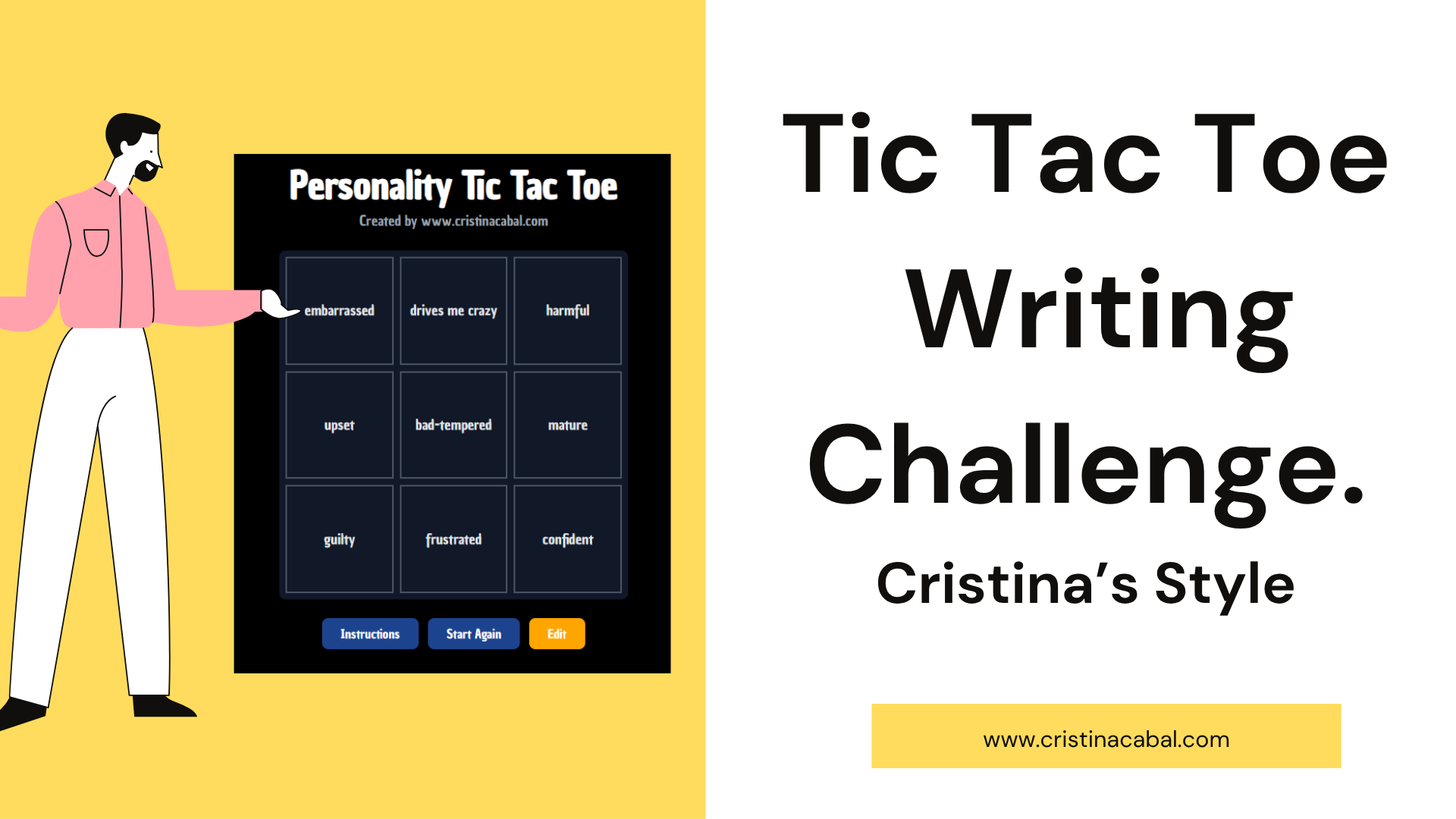
I am currently working on personality adjectives, so I decided to create a Tic-Tac-Toe game using the Canvas option in Gemini.

Canvas option in Gemini?  Yes, this is an option where you create an app using natural language — no programming degree required! I simply typed something like, “Make a tic-tac-toe game I can edit,” and voilà! In seconds, we had our very own interactive Tic-Tac-Toe app, ready to play and personalize. I have made it editable, so you can easily adapt it to your own classes.( Aside note: I give webinars teaching all about it 😆 )

In my case, each square on the grid contained an adjective like embarrassed, confident….. If these words mean nothing to you, click on the Edit button,change the words and click on Save.


Tic-Tac-Toe Writing Challenge – Classroom Instructions
  1. Divide the class into two teams: Noughts (O) and Crosses (X). Within each team, students work in pairs, since they’ll be writing together.
  2. The Noughts team starts. They, as a team, choose one square on the tic-tac-toe board.

3. All pairs (from both the Noughts and Crosses teams) must write one sentence using the word in that square.

    • The sentence must be at least 12 words long.
    • Give them about 1–1.5 minutes to write

4.Divide the classroom board (whiteboard) into two halves: O and X.

5. When time’s up, choose one student from each team at random to come to the board and write their sentence on their side of the board. Remember, though they might be Os or Xs, they have been writing their sentence in pairs.

6. Next, ask the rest of each team to read their sentence on the board carefully and look for errors.

    • If someone finds a mistake on their team’s  sentence, they stand up, underline it on the board, and wait for the teacher’s confirmation.
    • Once confirmed, he/she corrects the error.

7. The teacher checks both sentences, gives final corrections if needed, and decides which one is better.

    • The “winner” can be the most accurate, complex, or creative sentence.
    • The winning team claims that square on the Tic-Tac-Toe board

8. Then, it’s the Crosses’ turn to choose a square and repeat the process.

9. Continue until one team wins the tic-tac-toe game or the board is full.

My tip: If you’re looking for a way to turn writing into an active, competitive, and collaborative task, this game is a gem. It keeps every student involved and sneaks in grammar, vocabulary, and peer correction all at once.

Creative Collaborative Writing with a Touch of Fun to Fix Fossilized Errors

It might not be your case, but most teachers, including myself, do not dedicate enough time to practise writing in class. And this needs to be fixed because students may simply get better if given the right guidance and enough practice. However, I think it’s crucial that we ask them to reflect on their errors and then, ask them to make the necessary corrections, rather than just correcting them ourselves.

This exercise you are about to read is fun, creative, and collaborative; it gets students out of their seats but most importantly, gives them an opportunity to learn from their mistakes and fix fossilized errors.

On Fossilized Errors

Fossilized errors are persistent mistakes that students make despite repeated correction. You know what I am talking about, don’t you?  While teachers play an important role in identifying and correcting these errors, it is imperative for students to take ownership and  conscientiously analyse and rectify their errors; that’s, in my experience, the most effective way to eliminate them.  If you ask me and generally speaking, when students are given a composition with corrected errors, they just have a quick look at them, but they don’t truly reflect on their mistake and then, inevitably, they are bound to make the same mistake over and over again.

IMPORTANT:For this activity, I have used a classroom that has several small whiteboards on the walls. I am not going to deny that using these whiteboards is more appealing, but what if you don’t have these cute whiteboards? No problem, it will work just the same with A3 or A4 paper (the bigger, the better)

Step by Step

STEP 1: FORMING PAIRS AND GETTING A STORY STARTER

  1. Pair up students.
  2. Display the visual below and explain that the boxes contain different story starters. Ask pairs to choose a box. The sentence inside the box will be the beginning of their story. All pairs must choose a different box, meaning they will all have different beginnings.
  3.  I have asked each pair of students to stand next to a board  (alternatively, as explained, a A3 or A4 sheet of paper ) and write the beginning of their story.
  4. Give students about 5/6 minutes to continue the story in any way they fancy.

STEP 2: ADDING A RANDOM PROMPT AND A CONNECTOR OF CONTRAST

After approx 5 minutes, draw students’ attention and ask a volunteer for the whole class to

  • choose a box from the exercise below. Pairs will have to continue the story, incorporating the prompt in the box. Right after opening the box with the prompt,
  • click on the wheel  (fed with connectors of contrast and purpose and some verbs) and ask them to continue the story using the connector/verb randomly picked in the wheel.

Give students 5 or 6 minutes to continue the story.


How many times have I repeated Step 2? 

I have repeated this procedure three times (i.e. three prompts+ three connectors). Make sure you tell them when they need to finish their stories.

Step 3. Giving students Feedback on their Writing 

Give students something to do while you quickly underline the mistakes in their writings. Keywords here: underline their mistakes. I don’t correct them, I underline them. This is vital if you want students to get rid of errors.

Step 4. Students correct their mistakes

Ask students to stand up in their pairs and comment, reflect and try to fix the underlined mistakes.

Important: I ask them not to delete the original text so that I can have it as a reference.

Step 5.  Quickly give feedback on their corrections
Step 6. Students vote for the best story

Student stand up again, read their classmates’ stories, and individually vote for the best. They do it by drawing a heart next to the story they like best.

Follow me on