Has this ever happened to you? You’re chatting with your B2 students about personality, and someone proudly announces, “I’m very sensible!” Wait, do they mean sensitive? Or do they really mean they’re a model of good judgement? Chaos!
Personality adjectives look so easy on paper. They already know loads of them, right? And then the false friends sneak in and everything gets messy. That’s exactly why I love this topic. You can talk about yourself, have a laugh, get to know your classmates, and hunt down those sneaky mistakes all in one go.
Here’s how I do it, step by step. Let’s get into it!
Step 0: The coursebook
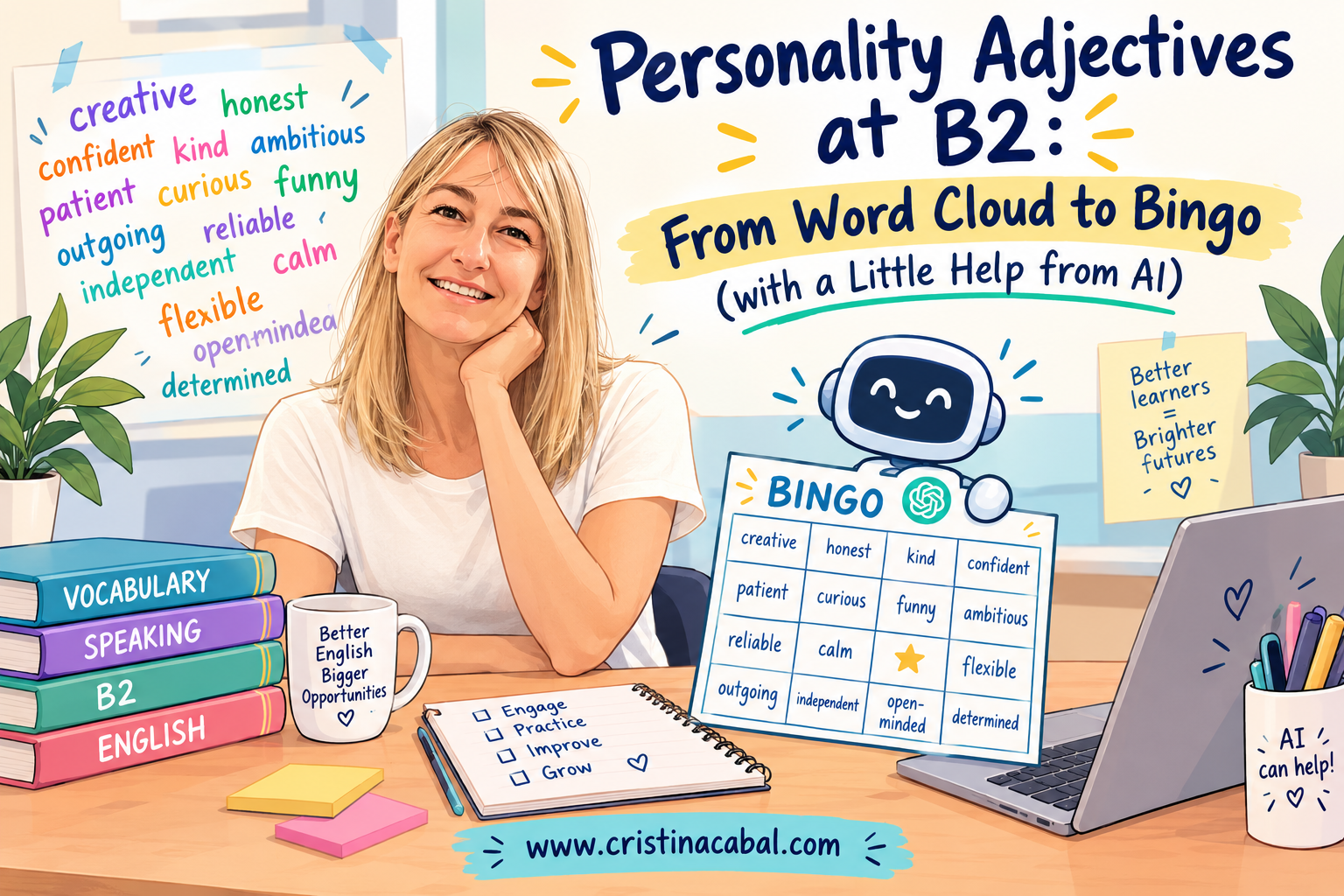
I start the way most of us do. We open the book, look at the adjectives in the unit, say them out loud, and chat about what they mean. Nothing fancy. Think of it as the warm-up before the real fun
Step 1: Build a word cloud
Now, they close their books and I want all the adjectives they can remember from the book. You’ve got two options here:
- The classic way: students shout out words and you write them on the board in a cloud shape. Old school, but it works every time.
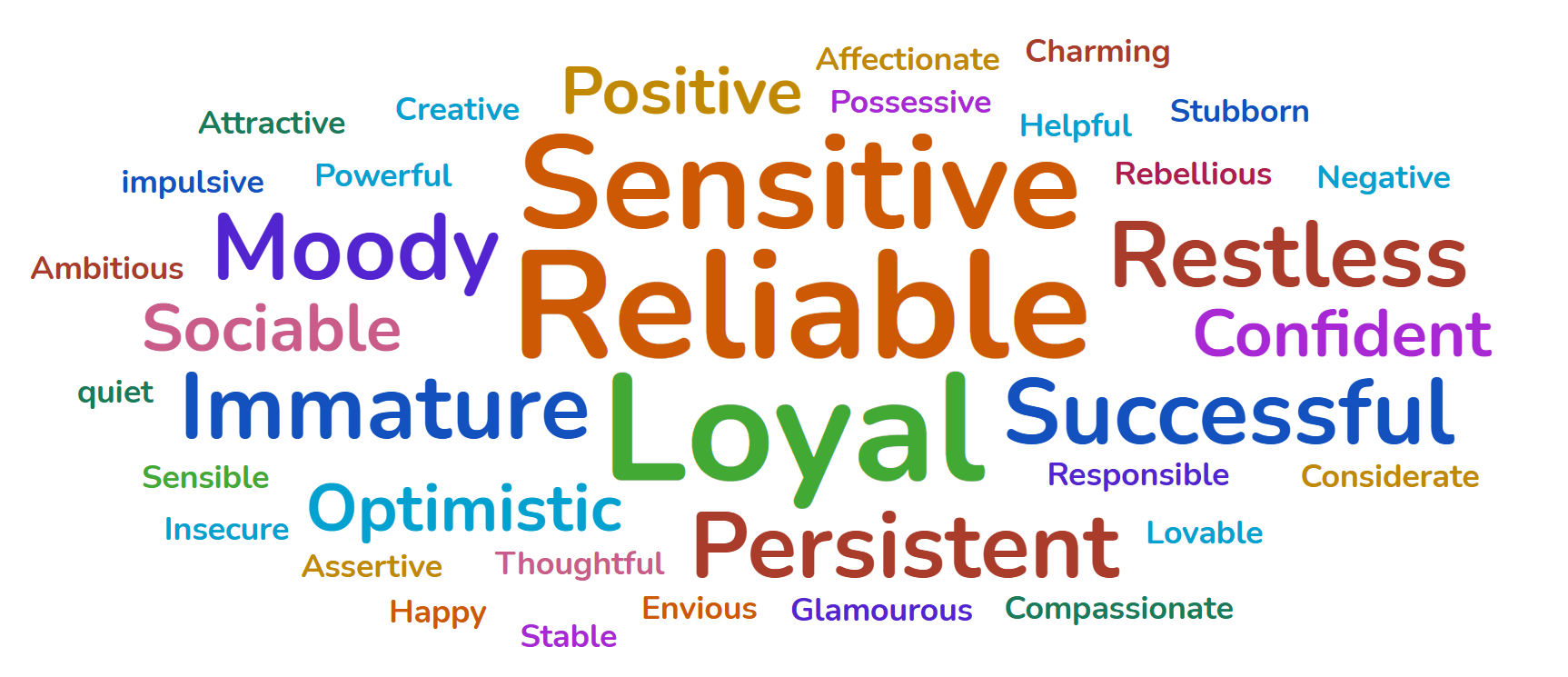
- The lazy-teacher way (that’s me, I’m a bit lazy when it comes to writing on the board!): I use Wooclap, which has a free version. I create the activity in Wooclap, show the QR code, students send their adjectives from their phones, and the cloud builds itself on screen. The more times a word is sent, the bigger it gets.
Two minutes later and the board (or the screen) is full of vocabulary
Step 2: Spotting the false friends
With the cloud in front of us, it’s time to zoom in on the adjectives that love to trip us up. My usual suspects:
- sensitive vs. sensible
- considerate vs. thoughtful
How do I explain them without spending my whole evening making slides? I let AI do the heavy lifting:
- I open Gemini and ask it to explain the difference between these four adjectives.
- Once I’m happy with the explanation, I ask it to build an HTML presentation with multiple-choice questions and gap-fill exercises.
- Done! A ready-to-project presentation with theory and practice included.
And because the words come from the cloud they created, it all feels much closer to them.
Step 3: Personality bingo
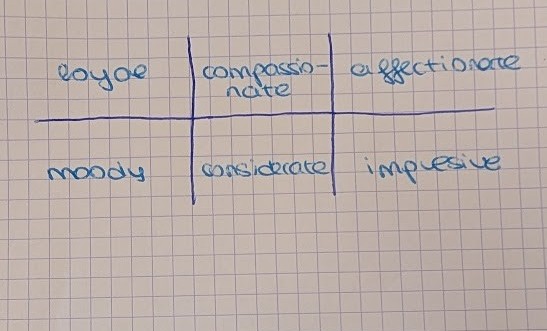
Time to play! Each student draws a 6-square bingo grid and fills it with adjectives from the cloud that describe them:
- 4/5 positive ones
- 1/2 negative ones
Yes, negative too. Honesty hour has officially begun! 😄
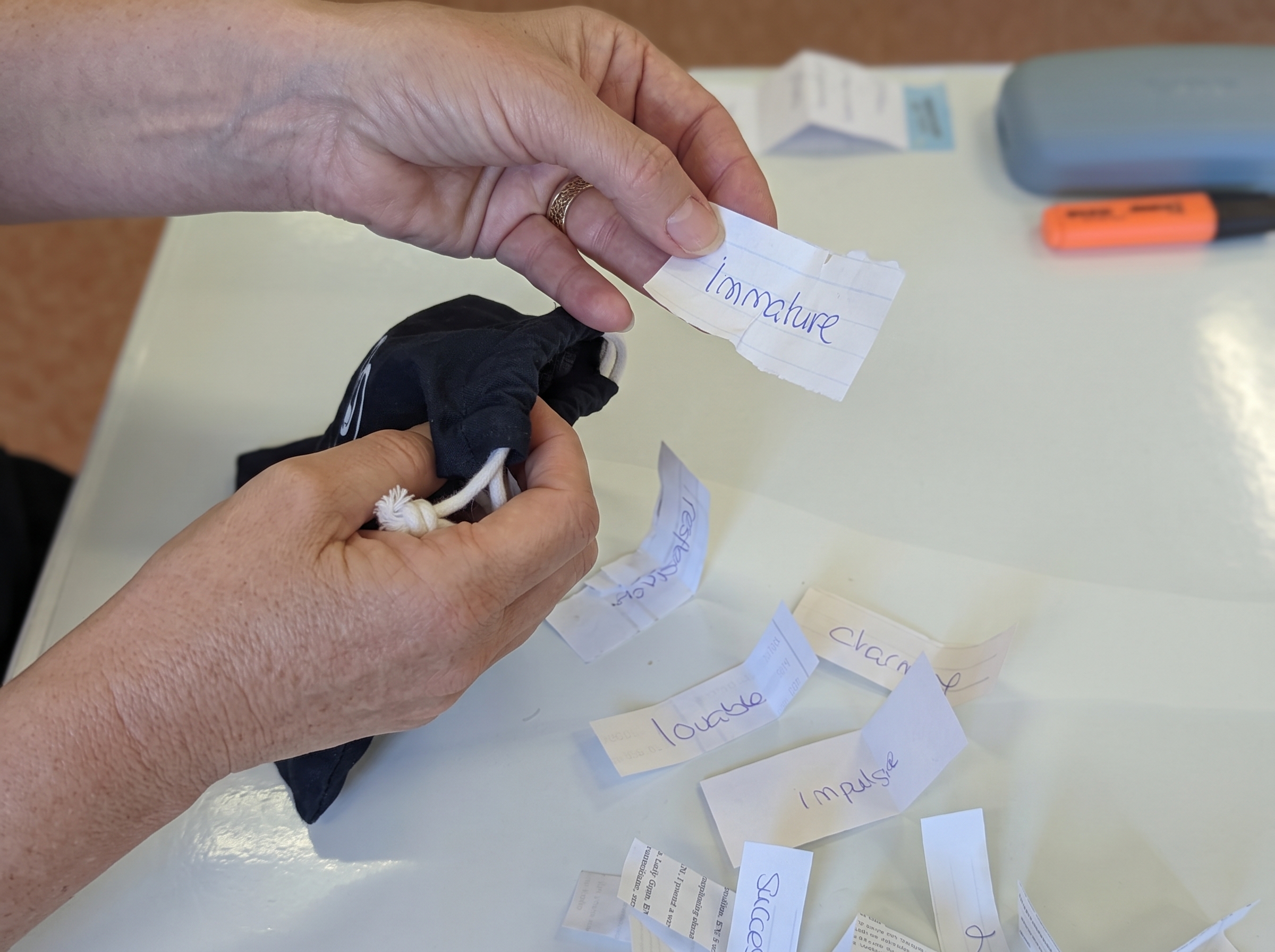
I have a bag ready with all the adjectives written on little papers. I pull them out one by one and, instead of just saying the word, I define it or give the opposite . Students have to work out which adjective I mean, and if it’s in their grid, they cross it off.
The first student to complete the cross off all the adjectives in their grid,calls “Bingo!” The teacher verifies the card before awarding a prize ( a sweet?)
Step 4: Let’s talk!
Now we reach the speaking part, which is where everything clicks. Every student has chosen six adjectives to describe themselves, so they have to tell their classmates why:
- Why did you choose “easy-going”?
- Can you give me an example of a time you were stubborn?
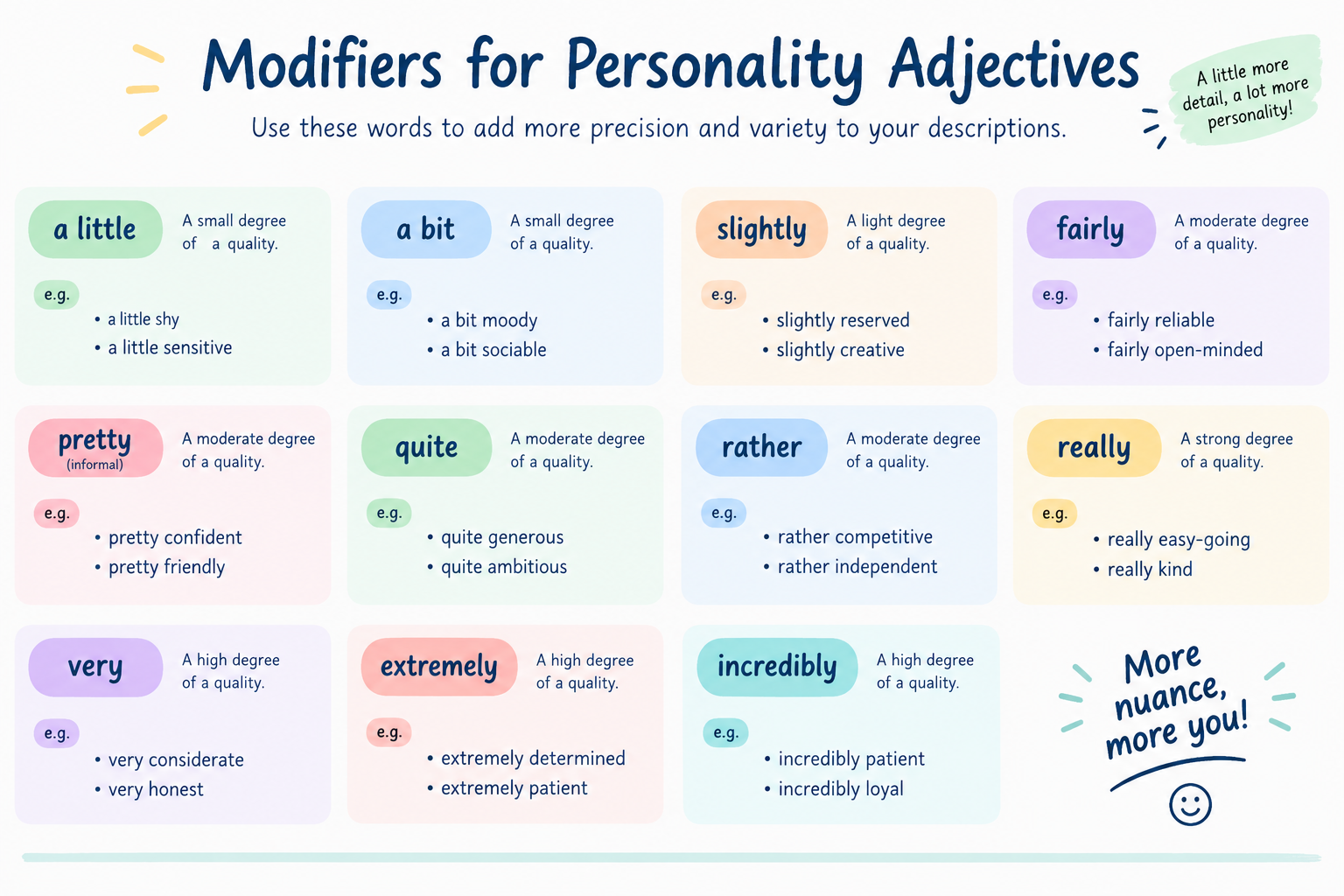
To help them sound richer, I hand out an infographic with adjective modifiers: fairly, quite, rather, pretty, extremely… Because saying I’m shy isn’t the same as saying I’m fairly shy or I’m rather shy, is it? Suddenly they sound way more natural.
Little secret: I make this infographic with ChatGPT. For now it’s the best one for the job because it doesn’t hallucinate typographically.
Step 5: Writing. Homework
This is what they”ll have to do this weekend. Keep posted if you want to know how I am planning to correct it!
Write an email responding to an online ad for a room in a shared apartment. You must introduce yourself, explain why you are a great fit using two positive personality traits, and confess one negative trait.
To soften the negative adjective,
1. Use language of tendency instead of the verb to be.Target Structures: I tend to be…, I have a tendency to…, I can occasionally come across as…
2. Use modifiers (e.g., slightly indecisive, a bit stubborn, somewhat forgetful).
Write 100-120 words
Wrapping up
In just one session, your students have reviewed vocabulary, cleared up false friends, played a game, spoken, and added nuance like proper B2 learners.
So next time personality adjectives come up in your syllabus, give this a go.