Right, personality adjectives are still on the menu, but stick with me here — this activity ‘ The Race LETTER is way more flexible than that. Fancy doing it with some other topic-specific vocab for an exam class? Works just as well.
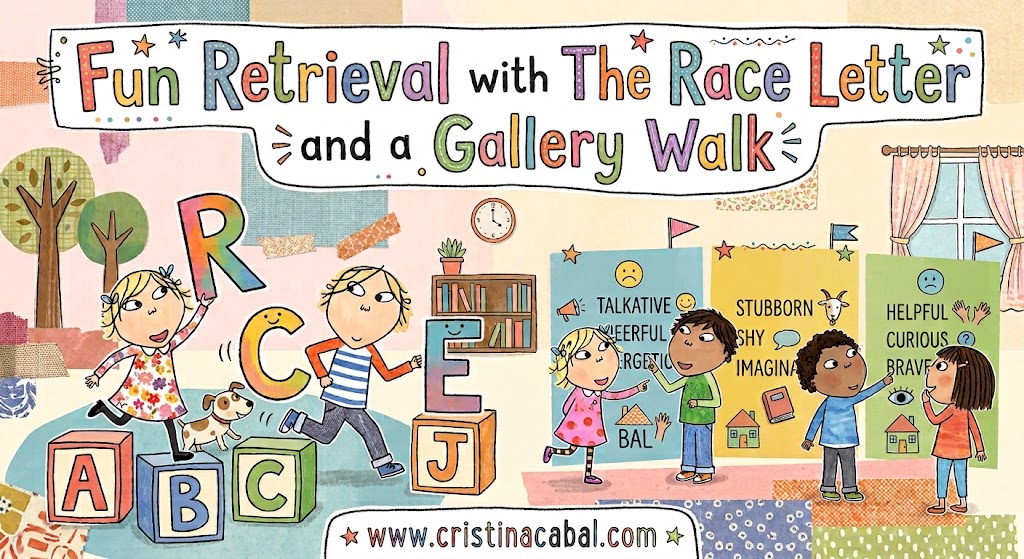
PART 1: The Race Letter
Picture this: your students are lined up in the aisle (or better yet, out in the corridor if you’ve got the space), each holding a blank piece of paper. You call out a letter – any letter – and they’ve got 20 seconds to think of a personality adjective starting with that letter and scribble it down.
- Get it right? Take a step forward.
- Blank or wrong? Stay right where you are.
Decide how many steps ( in my case, 5 steps) they need to take before reaching the goal and That’s it! . That’s the whole game!.
How to Run It (Step-by-Step)
- Set the scene. Line students up along the aisle between desks, or – if you’ve got the luxury of space – take them out to the corridor. This works brilliantly as an “outside the classroom” activity, and trust me, that change of scenery alone gets them buzzing.
- Hand out paper. One blank sheet each. No prep, no printing needed.
- Call out a letter. Start easy – think A, S, C – letters with loads of adjective options.
- Give them 20 seconds. Enough time to think, not enough time to overthink.
- Check answers. Walk down the line (or have them hold papers up) and check who’s got a valid personality adjective.
- Move the winners forward. Correct answer = one step forward. Wrong or blank = stay put.
- Repeat with a new letter each round.
- First to reach the end wins.
A Few Tips From Trial and Error
- Set the ground rules up front: does “kind” count for K, or are you asking for something a bit more B2-level, like knowledgeable? Decide your difficulty level before you start, and be consistent.
- Keep a mental list of adjectives per letter.
Part Two: Turning the Adjectives Into a Gallery Walk
This is a teacher-guided activity. Allow about 5 minutes per station and tell students when to move to the next. At each station, students will have to do different things.
HOW TO DO IT
Take some of the most useful adjectives that came up and stick them up around the walls of your classroom, spaced out so students naturally move from one to the next. Then send your students off on a gallery walk:every time they move to a new spot, they’ll find two or three adjectives waiting for them, and a little task to go with each stop.
Here are some ideas to fill those stations with. At each station, I would ask them to do a different speaking tasks with the adjectives.
- Station 1. Speaking: Can you think of someone who fits one of these adjectives? Students talk in groups
- Station 2.Opposite hunt. Ask students to guess the opposite of each adjective.Speaking: Do you identify with any of these adjectives?
- Station 3. Rate yourself. A quick 1–5 scale for each adjective: how much does this adjective describe you?
- Station 4.Sentence starters. Ask students to complete the following sentence using one of the adjectives on the wall. “The most ______ person I know is…”
You can use my presentatio or say/write the questions on the board