This lesson is aimed at students with a language level of B2 (upper-intermediate) and focuses on revising, learning and using vocabulary related to health and illnesses through a variety of engaging activities which will help them improve listening and speaking.
This lesson plan works well on its own, but I have used it to complement Unit 2 of the course book New English File Upper-intermediate.
The Hot Seat. Revising and consolidating vocabulary.
A fun way to revise and consolidate vocabulary is playing the hot seat with the wheel of fortune.
PROCEDURE
-
- Divide the class into two teams and ask them to choose a person to play for them and take the “hot seats”. These two students will be facing their teams and with their backs to the whiteboard
- Decide which team starts the game by tossing a coin. Let’s say Team A starts the game. Tell them each team will have one minute to describe and guess as many words as possible.
- Spin the wheel. Team A will have to define the word for its player. Once the player has guessed the word, the teacher will spin the wheel again for the same team. For every word they guess, they will get 1 point. If the player for Team A doesn’t know the word, then Team B gets the chance to define the word for its player. If he guesses, the team gets 2 points for this word.
- Repeat procedure for Team B.
Role-Play: at the doctor's
At this stage, students will have already learned the vocabulary for minor and more serious illnesses and conditions so now, it’s time to practise it.
Step 1. Working on pronunciation
On the board, write some of the words students have found most difficult to pronounce and revise their pronunciation. In my case, they might include:
| Stomach ache cough temperature consciousness sprained antibiotics antihistamine wound blood pressure medicine paracetamol |
Step 2. Visiting the doctor
-
-
- Ask students about the last time they were ill. What symptoms did they have? Did they go to the doctor? What was the treatment? Did you follow his advice? Could you go to work/school?
- Tell students that they are going to role-play a conversation at the doctor’s where half the class will be patients and the other half will be doctors.
- Students playing the role of patients will get a card with their ailment and they will need to talk to the doctor, describe their ailment and get some advice or treatment.
- Students playing the role of doctors will have to ask questions and then prescribe some medicine, if necessary, and give some advice (rest, diet…etc).
-
Step 3.
Build the basic guidelines of the conversation on the board with the students’ help
| Doctor: “Good morning/afternoon. What seems to be the problem?”
Patient: “I haven’t been feeling well for a few days/ I don’t feel well”. Explain your symptoms Doctor: Asks more questions like ” Are you taking anything for… ?“Do you have a headache”? When did it start?” Have you taken your temperature?” …etc |
Step 4.
Ask half the class (the doctors) to remain seated at their desks and ask the other half (the patients) to stand up and move to a corner of the room. Give each of the patients a card with their illness and ask them to choose a doctor and role-play the conversation.
When a student playing the role of patient finishes, he should go back to the corner and wait there for another student (patient) to swap the cards. Students will role-play as patients twice.Once this step is over, change roles: patients will now be doctors and doctors will role-play as patients. Give them new cards or reuse the previous ones.
Listening comprehension: Complementary and alternative medicine
Write “alternative medicine” on the board and ask students if they know what it is and if they have ever tried it.
Tell students they are going to watch a video where Dr Mc Cann discusses traditional medicine and alternative medicine. Ask them to listen once and then, in pairs, share any ideas they got from the video.
Ask students to listen a second time (even a third, if necessary) and answer the following:
True or False? Justify your answers
-
-
- Integrative medicine is a combination of traditional medicine and complementary and alternative medicine.
- At medical school, professors show you some alternative and complementary medical practice.
- Dr McCAnn thinks a doctor needs to treat patients with either conventional or alternative medicine
- According to alternative medicine, the human being can heal himself
- Patients of integrative medicine are willing to take an active role in their healing process.
- Some patients of integrative medicine are not ill at all.
- Dr McCAnn believes integrative medicine is here to stay.
-
Answers: At the end of this post
Going the extra mile: Introducing more advanced vocabulary
-
-
- To feel under the weather = to feel slightly ill
- To be as fit as a fiddle= to be healthy
- To phone in sick= to call work and say you’re ill
- To suffer from a disease
- To be a hypochondriac or a cyberchondriac /ˌhaɪ.pəˈkɒn.dri.ək/
- To give someone a diagnosis /ˌdaɪ.əɡˈnəʊ.sɪs/ Ex: The doctor cannot give a diagnosis without doing some tests
-
- To treat an illness such as asthma, depression, high blood pressure
- To relieve a headache, dental pain, arthritis /ɑːˈθraɪ.tɪs/
- To practise self-medication with non-prescription medicines /ˈmed.ɪ.sən//ˈmed.sən/
- To have an operation, to undergo an operation
- To donate organs, to be a donor
- To go down with a cold / the flu
- To need surgery /ˈsɜː.dʒəi/
- Symptoms
- A life-threatening illness
- A tumour /ˈtʃuː.mər/ (UK) /ˈtuː.mɚ/ (US). Ex: Brain tumours develop in fewer than one in 50,000 people
-
- The side effects of drugs
- Vaccination
- Integrative medicine: a combination of traditional and alternative medicine
- Home-made remedies
- Alternative medicine /ɒlˈtɜː.nə.tɪv/
-
- Homeopathy /ˌhəʊ.miˈɒp.ə.θi/: a way of treating illnesses using very small amounts of natural substances,
- Osteopathy /ˌɒs.tiˈɒp.ə.θi/: the treatment of injuries to bones and muscles using pressure and movement
- Yoga
- Reflexology: a treatment in which your feet are rubbed and pressed in a special way in order to improve blood flow and help you relax,
- Acupuncture /ˈæk.jə.pʌŋk.tʃər/: to insert very fine needles into the body at points along the meridians
-
Controversial Statements about health.Discussion Posters
Using vocabulary is key in this lesson. In fact, all the lesson is aimed at motivating students to use vocabulary they are already familiar with and to give them a chance to use newly-learnt terms.
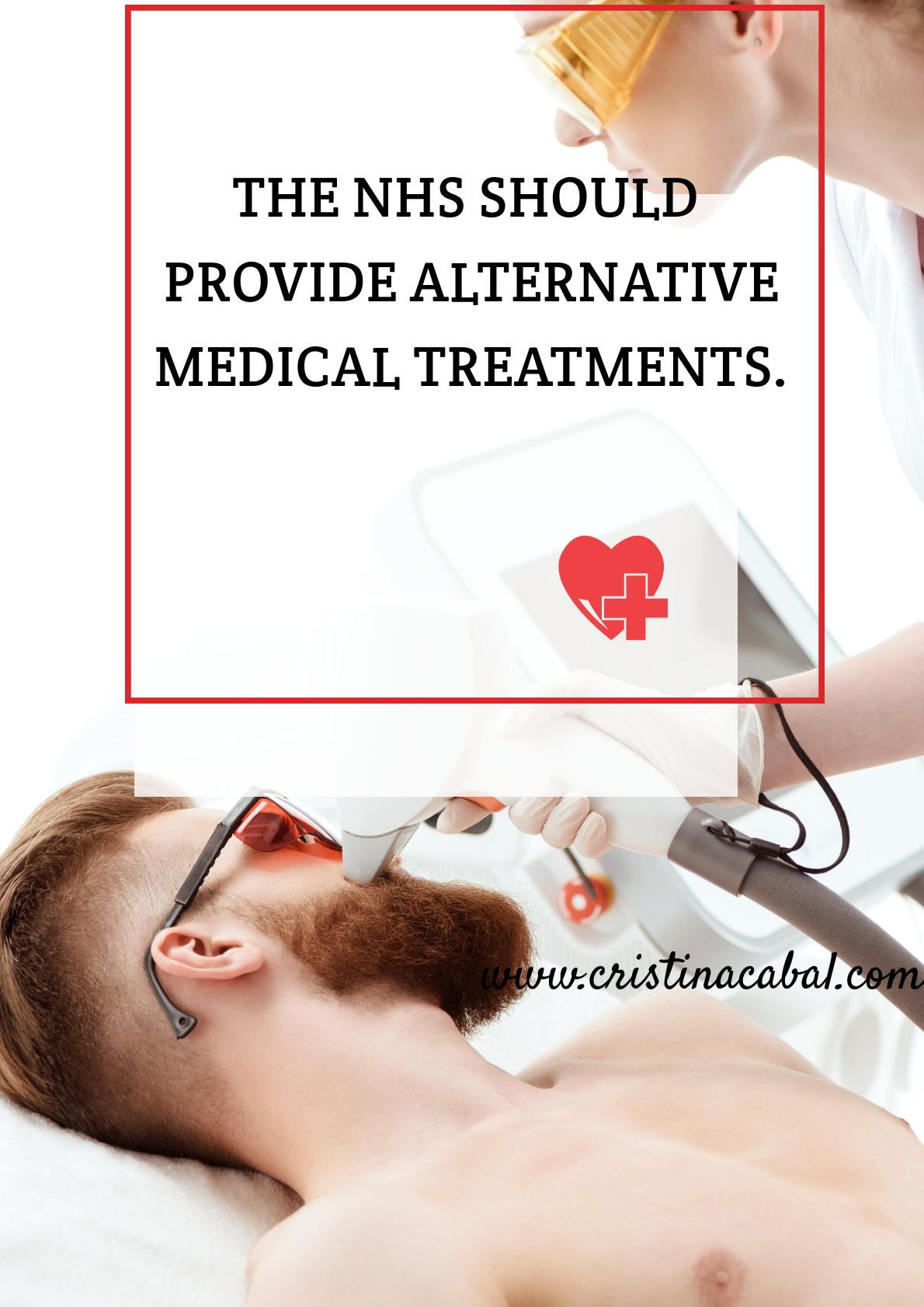
So, this lesson could not finish without devising another strategy to help them use the target vocabulary; this time with the help of visual images in the form of posters and with controversial statements that will, hopefully, spark discussion.
Procedure: Gallery Walk
On the wall of the class, display the posters. Ask students in threes to choose a poster and discuss the statement written on it. Encourage the use of target vocabulary.
You can download the posters here.
Listening Comprehension Answers:
1.T 2.F 3.F 4.T 5.T 6.T 7.T
Don’t miss any posts. Follow us on facebook