I must be doing something wrong. On second thought, perhaps my students are doing something wrong.
Do you know when your mum tells you off over and over again for not tidying your room and you just nod your head, promise it will never happen again and then, for some unknown reason, you seem unable to keep your promise? My students do it all the time. It’s called being nice. They are very nice, but being nice won’t help them pass exams.
So, you highlight the mistake, explain why it is a mistake, ask students if they have understood, they nod their head and say they do, you elicit some examples and give them exercises to consolidate and when you think you have seen the last of this mistake, here it is again, sticking its tongue out at you.
Below you’ll find a quiz with some of these very persistent mistakes students at intermediate level, and probably above, make.
This is how I suggest you do this quiz
Do the quiz. Obviously 🙂
Read the grammar and do the exercises when provided.
For spelling mistakes: try to remember the words commonly misspelt featured in the quiz and write them down with the correct spelling.
Grammar mistakes: Do you remember the mistakes? Can you remember why they were wrong? Write a sentence for each of the mistakes you can remember.
Do the quiz again and correct your own sentences and the spelling of the words now.
Were there any grammar or spelling mistakes you could not remember? Repeat numbers 3, 4 and 5.
Today I want to share with you an amazing screen recording tool Screencast-o-matic, which has a lot of potential to teach and learn English.
Hey! Wait! I know, you are not tech-savvy. You don’t need to be. Trust me. When you finish reading this post, I’m sure you will be willing to give it a go . The reasons?
It’s super easy to use! Do you know how to press a button? Then, you know how to use this tool.
You don’t even need to register.
It has a lot of potential to teach/learn English.
Let’s start:
What is Screen-o-matic?
Screencast-o-matic is a free (you don’t even need to register) easy-to-use screen recording. You can use your webcam or both. Screen-o-matic will capture everything on your screen and then, if you wish, share it.
How can I use it in the classroom?
As a teacher
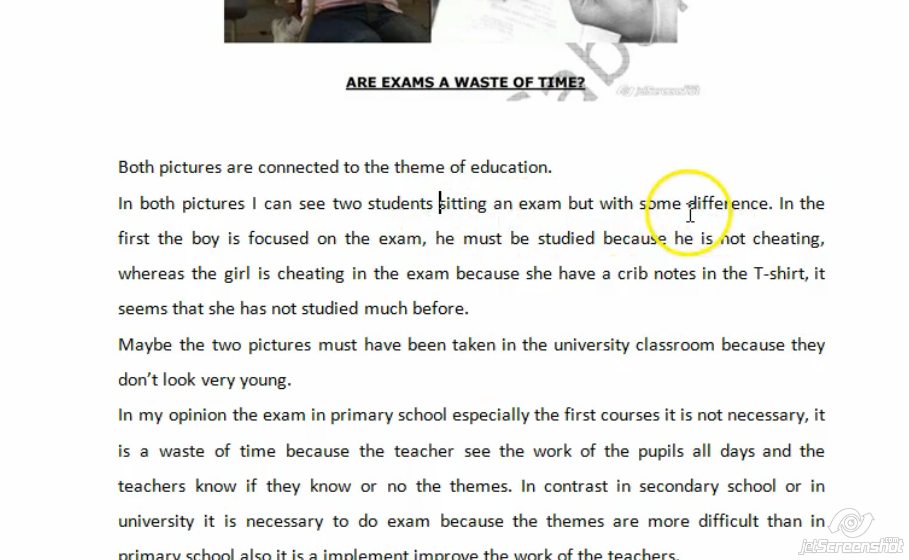
1. For correcting your students’ written assignments. We all have been in this situation: a student is ill or away on a business trip, but he still needs to have some feedback on his written assignment. With this tool, it’s very easy to offer visual constructive feedback by giving audio and visual cues.
Have your students send you their essays by email. Record yourself correcting and explaining their mistakes. Then, send them the video. Thanks to Russell Stannard for this awesome idea. Here’s an example uploaded to screen-o-matic. Sorry, I don’t sound very energetic. It was very late and I was dead tired!
2. For assessing students’ speaking skill, especially when describing pictures or talking about slides. Ask them to choose one or several pictures and ask them to record themselves. Here’s an example of one of my students uploaded to youtube. Thank you Elsa! 🙂
3. For a variety of speaking activities:
To explain a recipe
To talk about your favourite group, hobby, family…etc
To describe, for example, traditional games, unusual customs…etc.
For first-day presentations
For book/film reviews
The only limit is your imagination.
4. For recorded contests:
It’s St Valentine’s day, ask them to invent a romantic story
It’s Halloween, time for a horror story!
Give them a set of pictures and ask them to create a story
Give them some words and expressions and ask them to create a story
For recorded minisagas (maximum of 50 words)
5. For asessing students’ reading fluency and pronunciation. Ask students to read a given text online and ask them to send their recording.
6. For flipping your classroom. Not every student learns in the same way so it would be a good idea to record some of the most difficult grammar points for weak students to revise at home.
7. Doing exams at home. You can even make things easier for students who, for personal reasons, cannot sit exams in the classroom. Send them the test and ask them to record themselves answering the questions either in written or oral form. It might be a good idea to give them a time limit to send back the video with the answers. You can ask them to use the webcam, too (for obvious reasons).
8. To make tutorial videos to explain a task they need to do online or how an online tool works, for example this one. The yellow pointer makes it easy for students to follow your explanations. Example here
9. Help your substitute teacher. You can even make a video to help your substitute teacher if you’re going to miss class.
As a student
10. Using your webcam, for collaborative projects.
11. As an alternative to a Power Point presentation individually or in groups.
12. To do any oral assignment with one or several slides.
13. To state your opinion on any given topic.
14. To record yourself when practising for oral tests.
Why do I like it?
You don’t have to register or give your email address unless you want to upload it to their server.
You can record up to 15 minutes
You can create different folders for your different classes. If you create an account and share the email address and password with your students they can upload their own assignments and have everything neatly organised in folders.
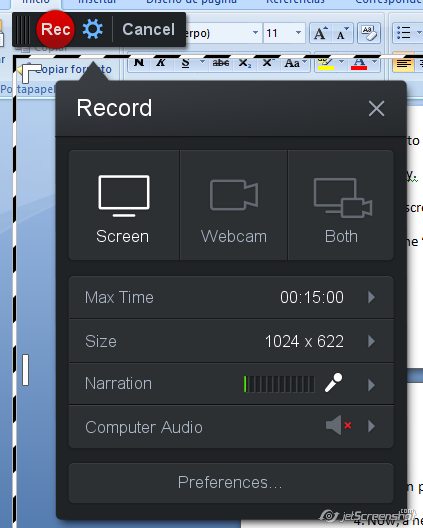
You can choose to record only your computer screen, you can use your webcam or both
You can resize your recording window.
You can choose the microphone you want to use and adjust the volume. For laptops you can use the built-in microphone.
The first time you use it, you’ll need to download a small program.
Click the “Start Recording” button and the recording button will be launched.
Click the red button Rec and everything inside the frame will be recorded.
You can pause or restart or click Done when you finish.
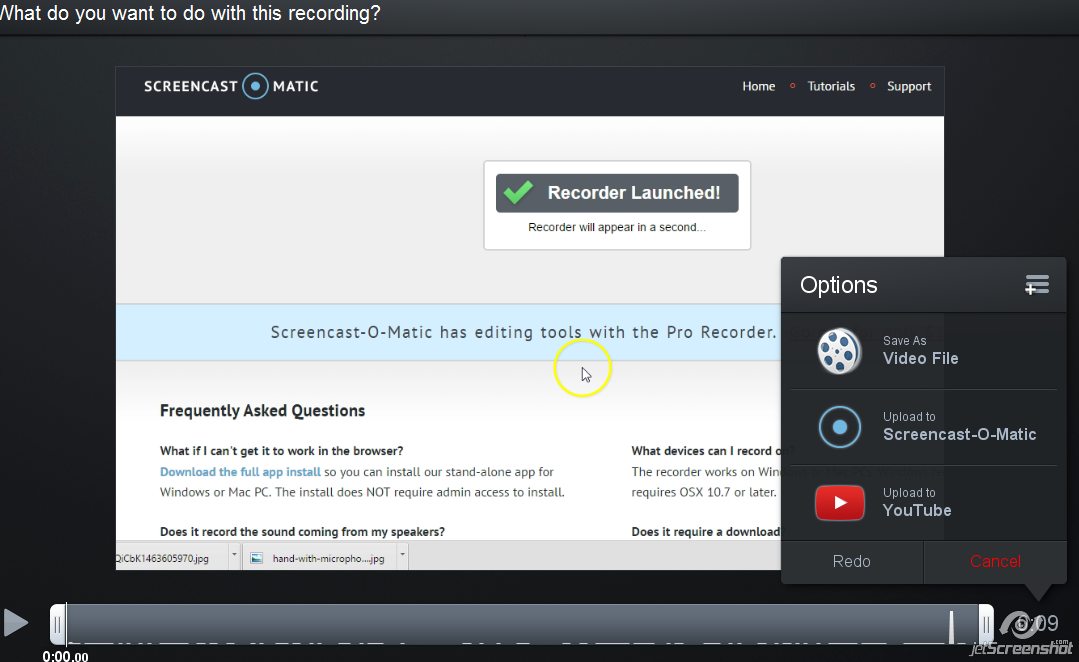
Now, a new window will open offering you the possibilities of downloading your video, or uploading it to youtube or to Screen-o-matic.com (to use this last option you will need to register). Uploading to Screen-o-matic.com is free and it has some advantages:
It gives you a unique url or an embed code to use on your website or blog
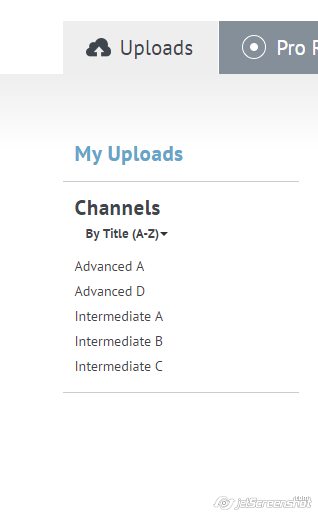
You can create different channels and upload your recordings in an organised way. This is particularly interesting if you want to create a channel for your students to upload their recordings.
There is an online version, which works pretty well with Windows but not so well with Mac, and a downloadable version which works with both PC and Mac.There is a free and a pro version, but I should say that the free version works just fine.
Oh boy. Does it bring back memories!
Dictations! To be completely honest with you, I have mixed feelings as regards dictations. I remember back in primary school when the language teacher gave us lots of dictations like a well-deserved break after a tough grammar lesson; and then, this feeling of “I don’t want to ever hear the word dictation again” that I got from my classes at university where the teacher gave us one-page-long dictations so quickly that when he finished, he was panting for breath, and we were seeing red.
Although doing dictations is somewhat regarded as an old-fashioned technique, it is undeniable that a lot of benefits can be derived from doing this exercise. In fact, it is an integrative activity requiring the use of various skills like listening, writing and reading -when you read the passage you have written, looking for grammar or spelling mistakes. You might even add speaking if the dictation is used as a prompt to encourage discussion of the passage.
In case you are not fully convinced that dictations also have their place in the twenty-first century classroom, here are some more benefits you might want to consider:
• It improves spelling.
• It improves recognition of grammatically correct sentences.
• It helps students distinguish sounds in continuous speech.
• It improves students’ awareness of punctuation.
• It gives students practice in comprehending and helps them gain fluency in writing.
If I have managed to convince you, here are some links to online dictations you might want to try or if you are a teacher, heartily recommend to your students.
This site specializes in dictations and although it is free, you can sign in to do more dictations or keep track of your score and view your score history. They are graded from elementary to advanced.
The students hear the dictation four times
The first time, the whole passage is read at normal speed to listen for gist.
The second time, each phrase is read slowly twice, with punctuation.
Then the whole passage is read again to check your work.
And finally, the written text is shown for you to see your mistakes.
I like the site. It is very user-friendly. The dictations are graded going from Elementary, with short recordings of one or two phrases, to Advanced with recordings of one or two paragraphs.
This site features two levels: elementary and intermediate. It has a very clean interface where you’ll see two recording of the same dictation. One recorded at a normal speed and the other one at a slow speed with pauses to give you time to write down what you hear. You only need to follow the instructions.
I won’t spend much time introducing this post, mainly because today is one of these days when the muse has decided to leave me.
Perhaps you’re wondering what else you can do to pass your listening test with flying colours apart from doing every single listening comprehension exercise in your student’s book and all the ones in the workbook. I’m not trying to reinvent the wheel, but here are a few things you might want to try.
1.Read a few tips and put them into practice. Students often complain that despite grasping the main information content of the recorded material, they sometimes seem to be unable to provide the right answer and this leads to frustration.
Getting a high mark in a listening comprehension exercise requires practice, lots, and also knowing a few tips. The most common types of listening exercises are Blank Filling and Multiple Choice and there are a few handy hints on how best to deal with them that you might want to read. The tips below aim at teaching students to listen effectively to enable them to select the information they require from what they hear.
2.The obvious. Find a good listening site with plenty of listening exercises to choose from.
One of the sites I have been recommending my students lately to practise Listening is Ingles en Aviles, a fantastic blog aimed at B2 (upper-intermediate) and C1 (advanced students) where you’ll find lots of listening comprehension exercises to choose from.
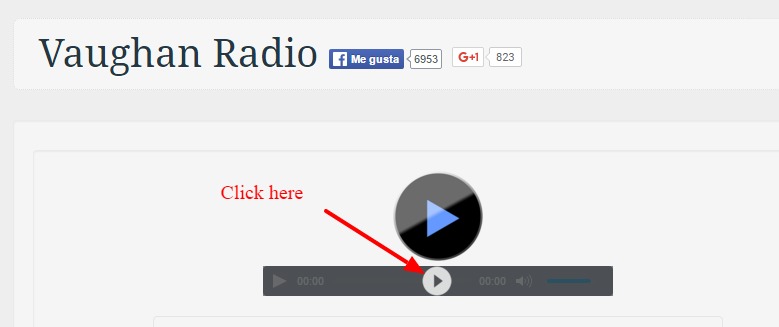
Vaughan Radio is a live radio station broadcasting from Madrid, Spain that provides listeners the chance to improve English language skills. So while you’re at home, maybe cleaning or ironing and bored to death, you might want to give it a try. From time to time you’ll hear some Spanish words to help Spanish listeners, but most of the time the show is in English and really worth listening to.
Here’s the link to listen on the computer. Alternatively, you can download the app on your smart phone. Type Radio Vaughan in the search box to download the app. My favourite programme? “The show with no name”.
4. Watching series.
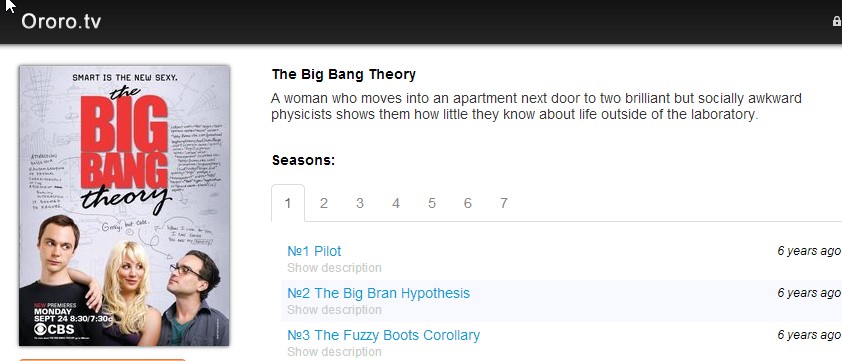
Here, I would recommend ororo.tv. What can ororo.tvdo to help you improve your English? What will you find on this website? An amazing number of TV shows and films in their original versions and with subtitles in English. Right now, I am hooked on the Big Bang Theory, an American sitcom about four young scientists, but surely you’ll find attractive alternatives here to suit every taste and mood.
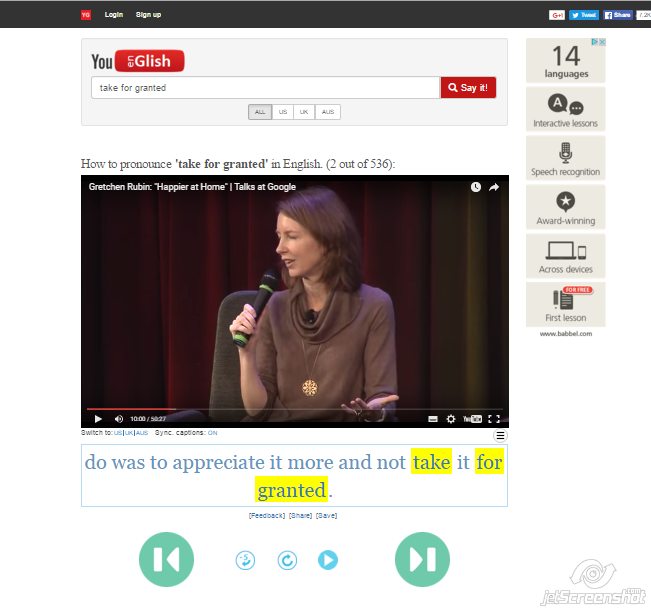
A very interesting tool to help you with your pronunciation and your listening is Youglish. In the search box, type the word or expression you want to hear in context. Youglish provides you with videos, from You Tube, where the word/expression is spoken by real people and in context.
In case you’re wondering, this is not a sponsored post. It’s just a few recommendations from a humble teacher trying to help students by sharing some useful links.
When I was a kid in my hometown, a little village in the north of Spain, there used to be a cinema. Not any more and not for a long time. In fact, it seems to me there are very few towns or even cities which still have a cinema and I’m not talking about the outdoor cinemas, which are so popular in summer, I am talking about the real thing. Cinemas with endless rows of seats smelling oldish and where the usher always told you off before you even got to your seat and started cracking up. I remember we didn’t get to see the latest films until they were 4 or 5 years old and then, they were not new any more as our friends from the capital city kindly reminded us rolling their eyes in disbelief when they came on holiday, but all the same it brings back very good memories. I must be getting old!
So today I’m sharing with you an engaging lesson with lots of activities around the theme of films and the cinema. Hope you enjoy it!
This lesson is aimed at students with a language level of B2 (upper-intermediate) and focuses on revising, learning and using vocabulary related to films and the cinemathrough a variety of engaging activities which will help them improve listening, writing and speaking.
Activity 1. Warming-up. Learning and using vocabulary.
Step 1.Wordcloud.
Display the word cloud and ask students to guess the topic. Click on the words you want to highlight and ask students to guess meanings and try to use them in a sentence. Alternatively, you can choose the latest box-office hit and ask students to give you a sentence about this film containing the targeted word.
Step 2. Mind mapping. Handout with vocabulary here
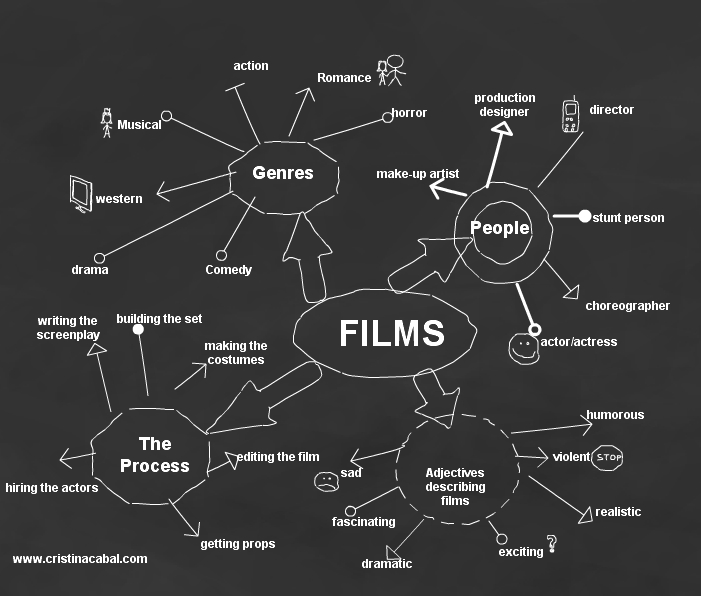
Ask students to work in pairs. Write on the board a mind map as the one below (give them only the words inside the circles) to help them revise vocabulary related to this thematic area. Allow them some minutes to complete their mind maps and get feedback from the whole class, completing the mind map on the board with their suggestions.
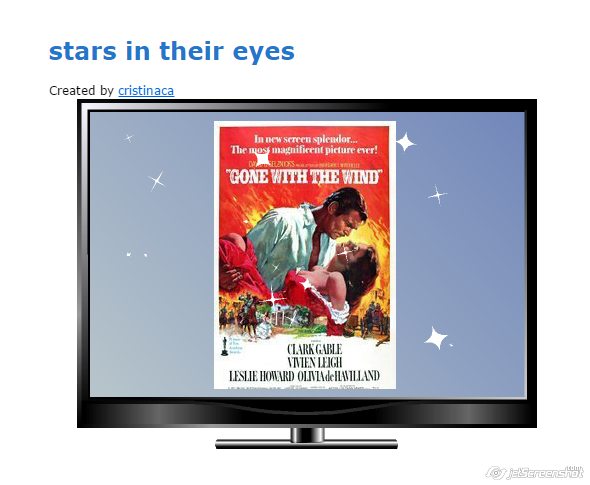
The class is divided into two groups. In turns, one member from each group sits on the Hot Chair facing away from the whiteboard. The members of their group have one minute to describe the film being displayed without mentioning the title ( that goes without saying, but just in case, I’m saying it). The aim is to guess as many films as possible in one minute. Then, it’s the other team’s turn.
They will need to talk about:
Kind of film/ Nationality of the film/ director/ plot/
Some hints:
♥The film ‘_______’ is a(n) _______ film which takes place in _______.
♥The film is set in __(ancient Greece)__.
♥The story is based on __(a popular novel)__.
♥The film is directed by _______.
♥The main character(s) in the film is/are _______.
♥_______ is a character who _______.
♥__(Johnny Depp)__ stars as __(Captain Sparks)__.
♥In the film, __(Jack Black)__ plays __(a rock guitarist). The story is about _______
♥The best scene of the film is_____
Activity 3. A listening : interview with Hitchcock talking about his film Psycho.
Ask students: What kind of films do you like? Do you have a favourite director?
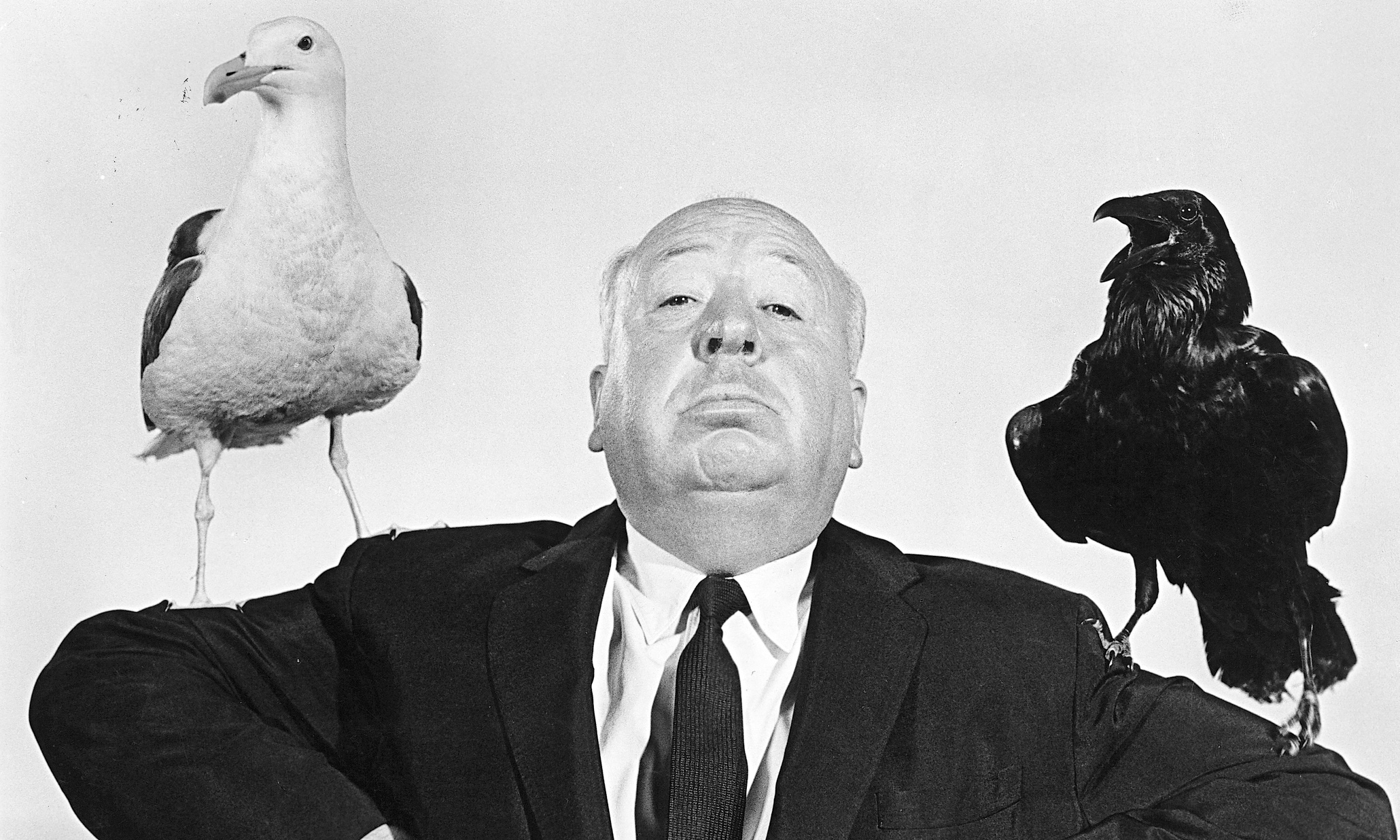
Write on the board Alfred Hitchcock and Psycho and ask students if they know who he is and if they know any of his films. Students most probably will have heard about Hitchcock and seen some of his films, but in case they haven’t, tell them Hitchcock is considered “the master of suspense” and “Psycho”(1960) s is arguably Hitchcock’s best-known film.
Play the video and ask students to answer the questions. (Find the answers at the end of this post).
What’s Hitchcock’s opinion of films such as Frankenstein?
What’s his idea of a horror film?
When he made Psycho, did he have a mind a horror film or an amusing film?
Was the film “Psycho” a very violent film? If not, why did it make people scream? Explain in your own words.
Activity 4. Speaking.
Ask students to work in pairs or in small groups and answer the following questions.
Activity 5. Writing a film review.
Handout with the task and useful vocabulary and expressions to use in your review.
What’s Hitchcock’s opinion of films such as Frankenstein?He thinks they are very easy to make and that they are props.
What’s his idea of a horror film?
He believes in putting the horror in the mind of the audience and not necessarily on the screen.
When he made Psycho, did he have a mind a horror film or an amusing film?
An amusing film
Was the film “Psycho” a very violent film? If not, why did it make people scream? Explain in your own words.
There is only one violent scene in the film, which is at the beginning when the girl is violently murdered in the shower. As the film developed, there is less and less violence. The horror and the tension are transferred to the mind of the viewers, which are the end of the film are screaming.
Tools used
Tagul, Hot Potatoes, Picture Trail, Thematic