So here come three super practical ideas to get students talking about city life in a way that feels real, relevant, and totally adaptable to wherever your learners are. In my case, that city is Avilés — the place most of my students actually move through every single day.
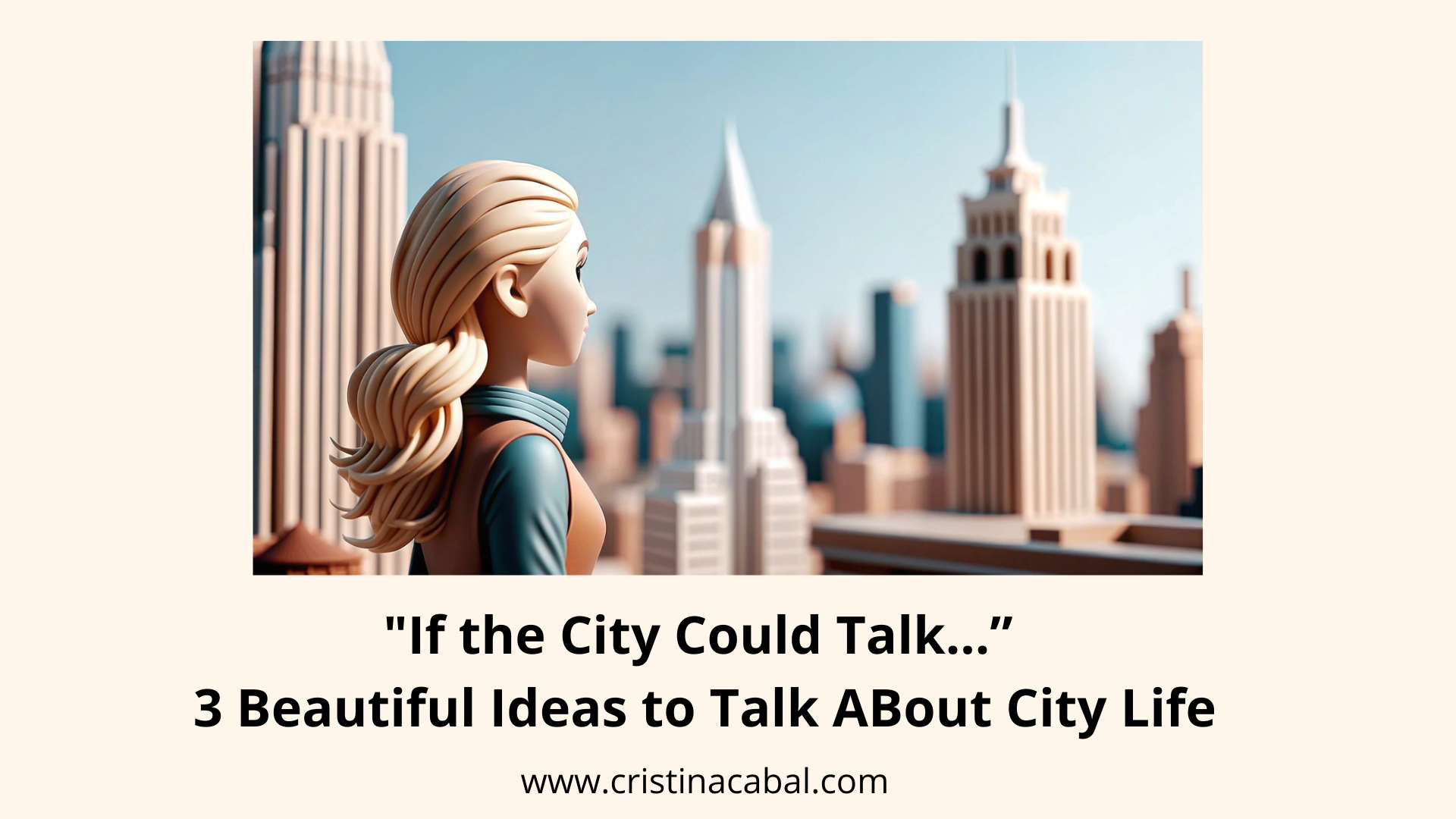
ACTIVITY 1. If the City Could Talk
Wait… what if the city could talk? That’s exactly where this activity begins.
Students talk using a speed-chatting format where everyday city objects suddenly have a voice. A fountain. A Monument. One by one, these objects “speak” and ask students questions about city life. Students have to really understand the questions before they can respond.
(Note: if you are wondering. Yes. AI Generated. And it is so much fun!)
ACTIVITY 2. The “Buzz & Swap” Gallery Walk
Prep time. You can print my posters here, but let me tell you they personalised for my own context.
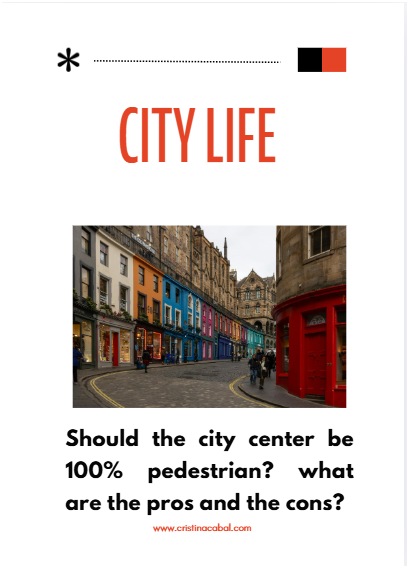
- Stick 6–8 sheets of paper around the classroom walls. On each one, write a debate-style question connected to city life.(And yes — I use Avilés because it’s their city, but you can swap this for any local context in seconds.) For example:
- Should the city center be 100% pedestrian?
- Are holiday rentals becoming a real problem for locals and students?
- Is the presence of large factories like ArcelorMittal a blessing for the economy or a curse for the city’s future environment?
- Would Avilés benefit from becoming a completely car-free city? What are the pros and cons?
- If you were the Mayor of Avilés, what would be the very first thing you would change to improve quality of life?
- Is the city center becoming too focused on tourists (gentrification) rather than on the needs of local residents?
- Has The Niemeyer Center been a failure in terms of bringing real wealth to the average citizen?
2. How it works
Put students in groups of three. Each group stands in front of a poster containing a question. They’ve got 3-4 minutes to discuss the question on the poster.
3. The Upgrade: Here’s where we level it up: at each rotation, they must use a different connector: on the other hand, therefore, additonally, …etc which you will write on the board after each rotation and before they start talking.