Tic-tac-toe is about to become your favourite speaking activity. Yes, that game you used to play on the back of your notebook during maths!
Add a poster, a timer and one rule (“you have to justify everything”), and suddenly your quietest students are arguing about why they’d never travel by coach. I’m not exaggerating. I’ve seen it happen!
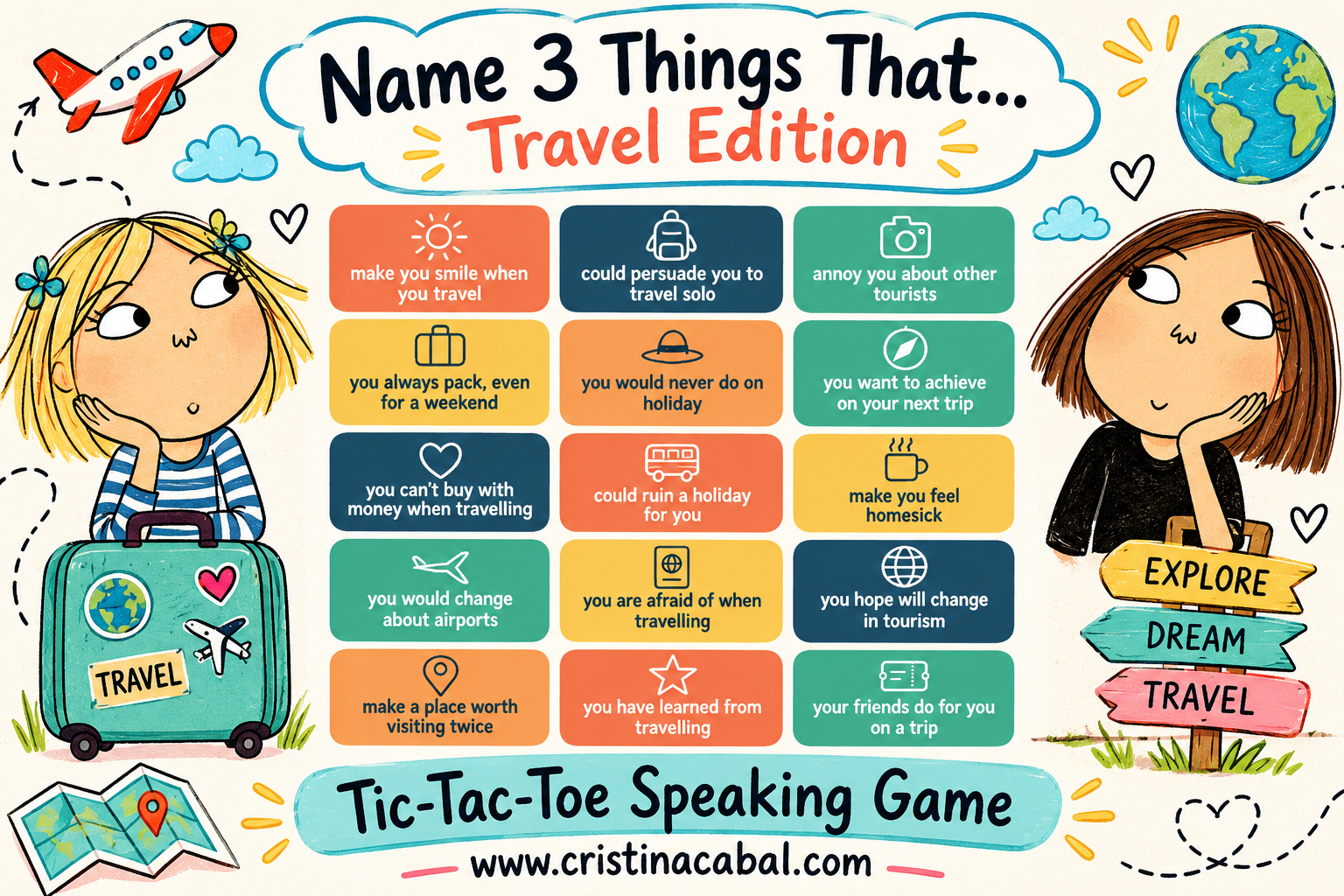
Step 1: Make your own poster (in one minute)
You’ve probably seen the “Name 3 things that…” posters floating around. They’re brilliant, but they’re generic. For a lesson on travelling I wanted prompts, doodles and colours that fit my topic. So I made my own with Gemini.
Here’s the prompt I used. Copy it, paste it, tweak it:
A vertical infographic educational poster for adult English learners, clean layout with high contrast, white background. At the very top, large playful handwritten title: “Name 3 things that…” with a smaller neat subtitle below reading “www.cristinacabal.com”. Underneath the title, a regular 3×5 grid composed of exactly 15 distinct, rounded-corner rectangular blocks in a vibrant, balanced palette of warm coral, mustard yellow, deep teal, olive green, and terracotta. Each card contains clear, legible, clean handwritten typography with travel-themed prompts, paired with whimsical, colorful hand-drawn doodle illustrations (such as a passport, backpack, compass, aeroplane, vintage suitcase, map, coffee cup, camera, train ticket). Hand-drawn sketch style, charming felt-tip and ink linework, subtle watercolor texture accents, educational poster design, professional graphic illustration, aspect ratio 2:3, clean vector-style aesthetic, highly readable, crisp details –ar 2:3 –v 6.1
Step 2: The game
Download the board here
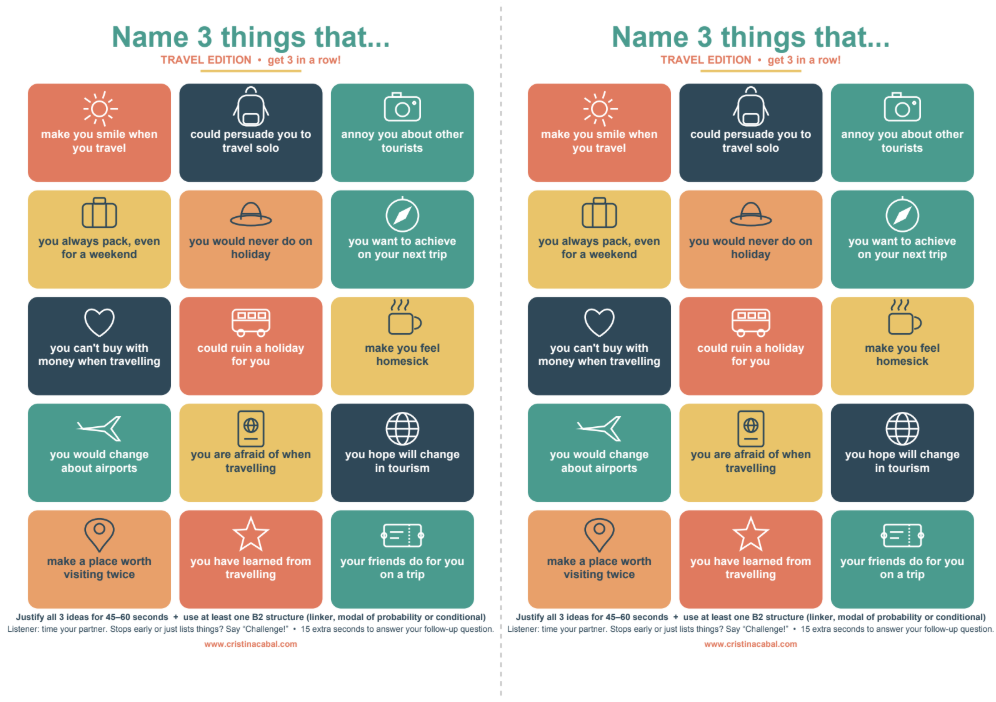
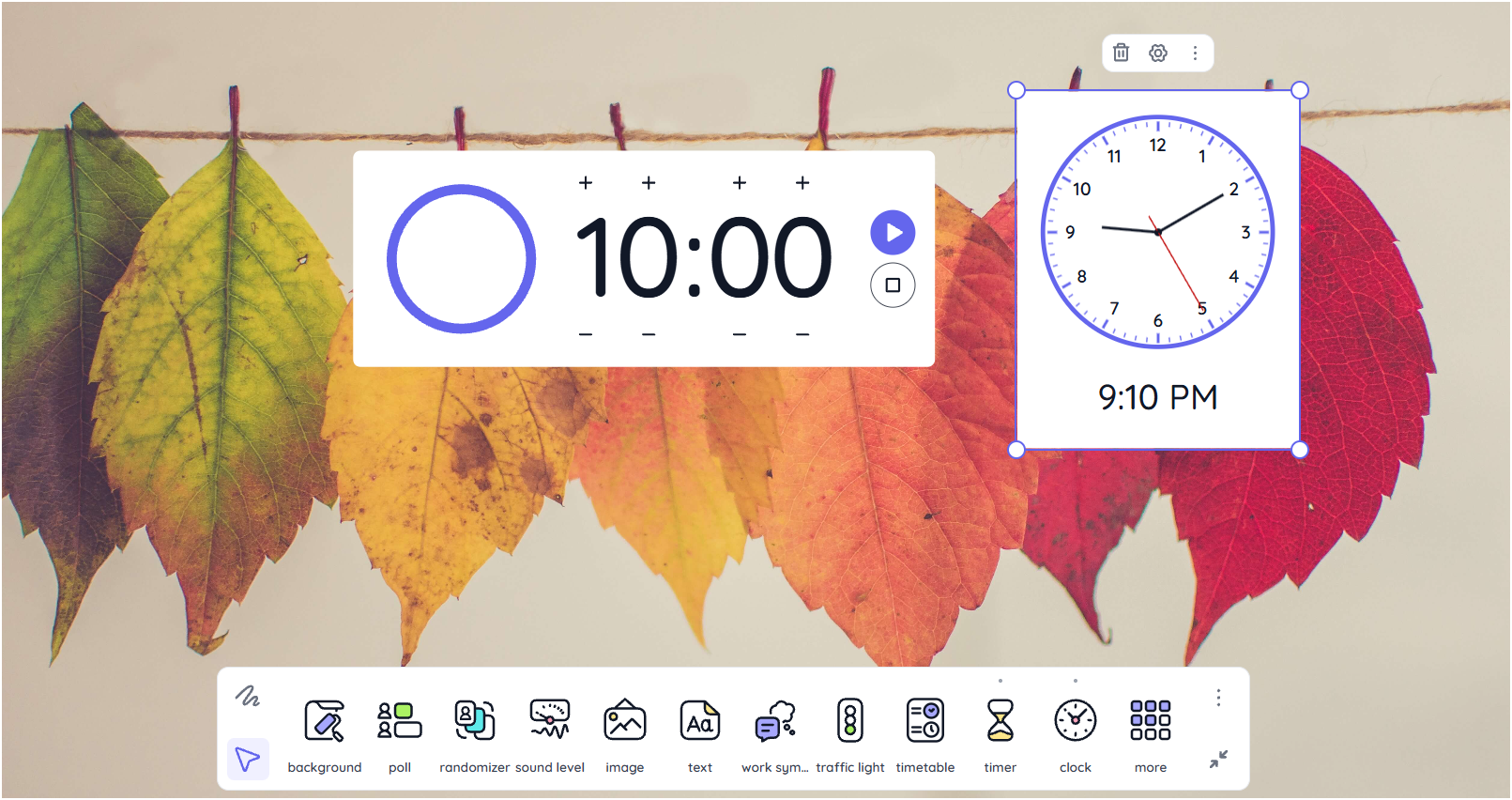
Print one board per pair, and put a timer on the screen where the whole class can see it. A big countdown adds a bit of pressure, and that’s exactly what we want! I use ClassroomScreen
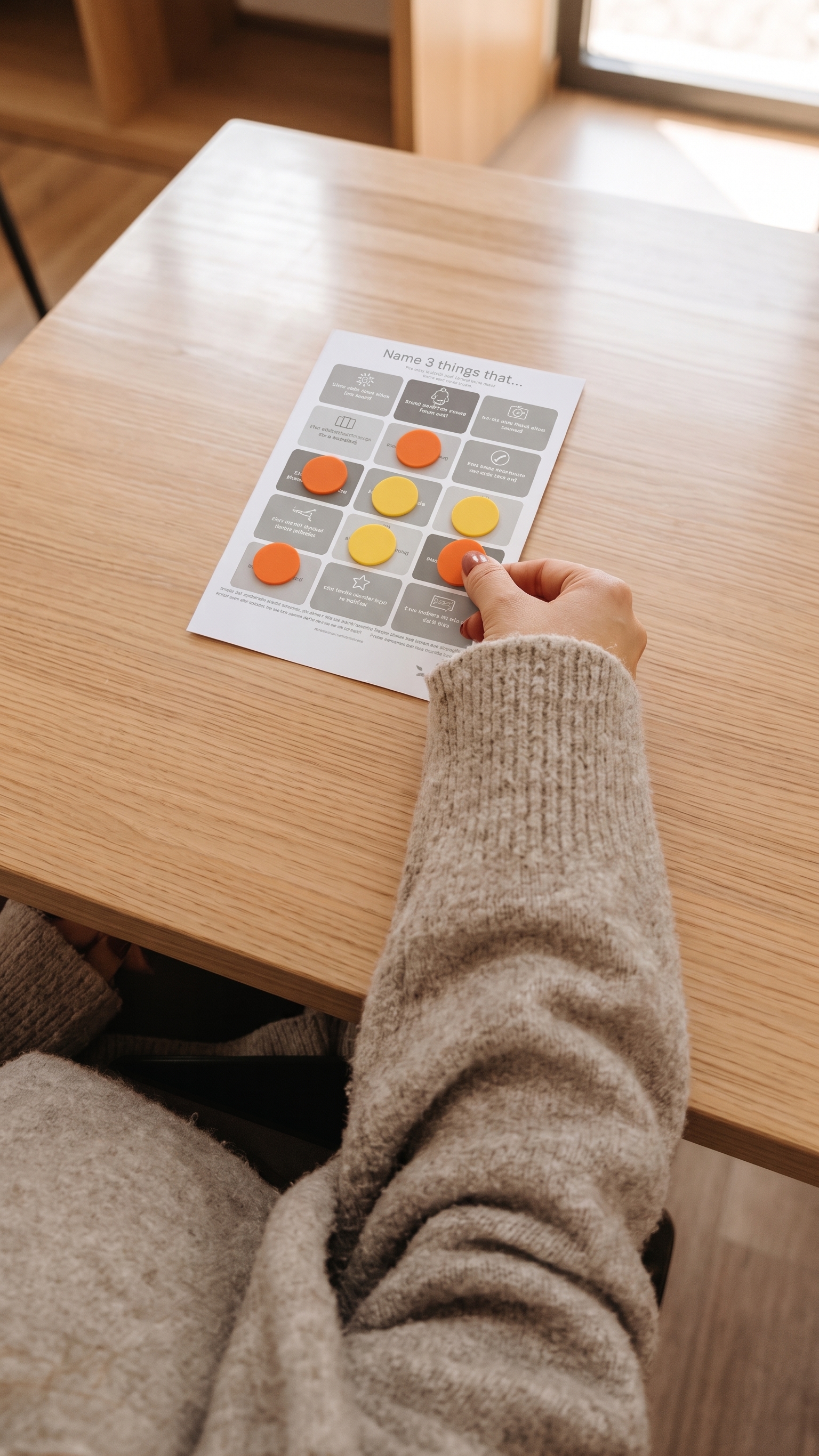
The aim is simple: get a line of 3 squares in a row. Horizontal, vertical or diagonal.
- Students work in pairs.
- One is X, the other is O. You can use different coloured counters, coins, paper clips or little scraps of paper to mark squares. Anything goes!
How to win a square
- Pick a square. Say it’s “could persuade you to travel solo”.
- Now name 3 things. But here’s the catch: just listing them doesn’t count. You have to develop and justify all three ideas, fluently, for 90 seconds, they will have to talk nonstop
-
Do all that and the square is yours.
The listener (the other student) isn’t just sitting there
The listener isn’t a passive audience. They’re the timekeeper and the judge.
-
- They time the speaker.
- If the speaker stops early, just lists random items with no explanation, or hits a proper communication block, the listener shouts “Buzz!”
- Buzz means no square. The turn passes straight to the other student and the square stays open for anyone to claim later.
Winning and rematches
The first to complete a line of 3 wins the round. Then wipe the board, swap who starts, and play again, starting from a different corner of the grid.