Tag Archives: B1

A Project-Based Learning Activity: Unusual Traditions

These past few days have been hectic with lots of exams to be written and then marked, plus all that red tape I can’t stand involving end-of-term exams. To top it all, my old friend the flu decided to pay me a visit. Very timely.  Right now, thank goodness, deadlines have been met and everybody seems to be winding down for the holiday season. Me, too. So, that’s probably going to be the last blog post of the year.
 

  • Organisation: Group work
  • Level: B2 and upwards
  • Materials: tackk tutorial here (optional)
  • Aims: to encourage collaborative work by giving students the challenge of researching, selecting and presenting a project about unusual traditions around the world.
  • Online tools: Padlet and Tackk

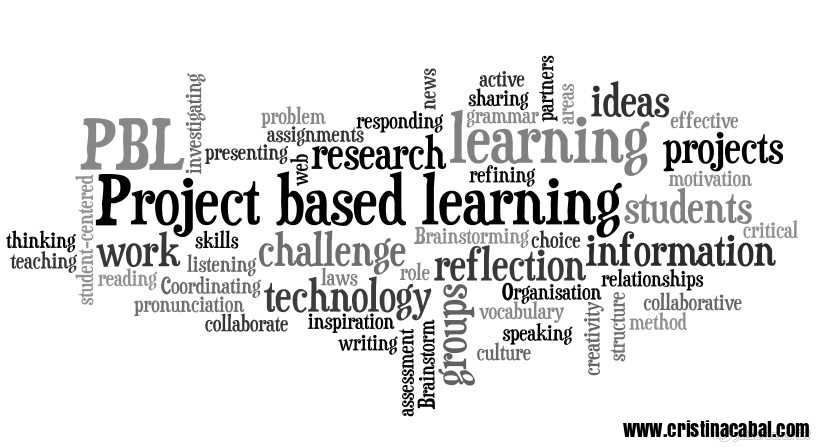
Project Based Learning- What is it?

It is a student –centred teaching method in which students acquire knowledge and skills by investigating and responding to a complex question, problem or challenge.

PBL is an active learning style which inspires and motivates students because they take an active role in their learning process and experience success in their own learning. The role of the teacher here is of mere facilitator and coach.

In PBL students are encouraged to work in pairs or in groups, which is also good because it creates a friendly atmosphere which is a boost to their motivation and creativity.


Project-based learning structure

  1. Choosing the problem or challenge
  2. Organisation
  3. Brainstorming
  4. Coordinating
  5. Sharing learning and refining
  6. Presenting and sharing

1.Choosing the problem or challenge.

For this project, students will be rising to the challenge of presenting information about unusual customs in the world.

2. Organisation.

My classes are quite large so students will work in groups of 4 or 5.

On the board the class as a whole decide on 4 or 5 areas, they want to talk about. There should be the same number of areas as groups you have. Each of these areas is assigned to a group to research.

In this project

  • Relationships
  • Festivals
  • Law
  • House and Home
3. Brainstorming

This step is done entirely at home with the help of an online collaborative free tool. My students are adults, some as old as 70,  and they only see each other in class  twice a week, so it was important to provide them with some kind of free online tool  they could use to brainstorm ideas, share them with the members of the group and organize their project (timing, visuals, specific assignments..etc). I used a Padlet, a well-known collaborative tool, which is very easy to use, something really important as some adults are reluctant to use new technologies. Each group was assigned a different Padlet and given a week to do research on the internet and post on Padlet their ideas.

Below is the Padlet the group”House and Home” used.

Hecho con Padlet


4. Coordinating.

This stage might take the first or last 10 minutes of your lesson. Once they have shared their ideas on Padlet, in class they decide on the number of traditions they are going to present, who is going to do what, the order in which they are going to present the information and the visuals or videos they are going to use.

5. Sharing learning and refining

In the next class, allow students time to get together in their groups and share their drafts. Offer help and guidance but ask students to help each other by swapping their drafts within their group  to improve and proofread their written work.

6. Presenting and sharing

Agree with the students on the order of the groups and let the show begin. Below is a picture of one of the groups on stage.
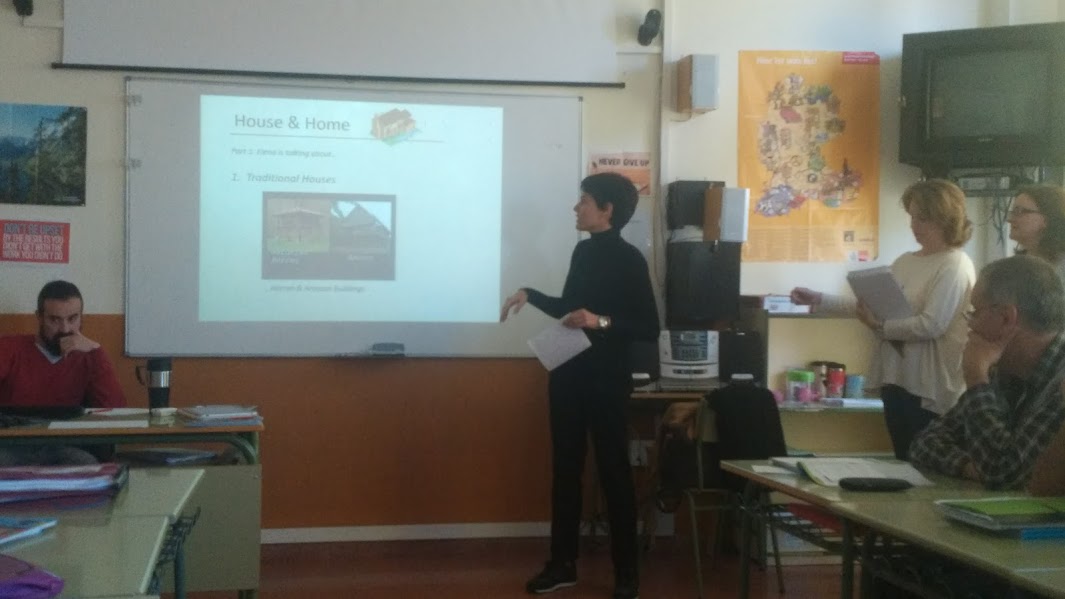
Sharing it with the world is also important. Here’s how we did it. Again, we used a free online digital tool called Tackk.com, which allows  you to beautifully showcase your projects. I gave my students this simple tutorial to help them get familiar with the tool.

Here’s the tackk my students have created.
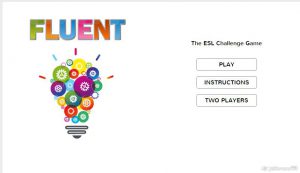
 

I’m Shamelessly Addicted to this Game

Yes. It’s true. I love this game. It’s just the right kind challenge for someone studying English.

The game is called Fluent and this is how it works:

  • There are 20 different trivia categories all dealing with grammar and vocabulary.
  • You’ll have to answer each question before you run out of time.
  • You have 3 lives.
  • You’ll need to answer 5 questions correctly to go to the next level.
  • As you level up, you are given less time to answer.
  • You can play it pairs (or 2 teams) and the winner is  the top scorer after 8 questions.

Ready for some fun, a bit of challenge and lots of learning. Here we go, then!

Click on the picture.

fluent

Blog de Cristina is on Facebook, too. Join us!

Using Genial.ly to Create Visual Activities for the Classroom

Here I am again. Trying another tool.

To be honest, the tool was suggested to me by one of the teachers (Marga Valdés) attending a talk I gave last year. It was a talk about creating activities for the classroom using free online tools, and when I finished the presentation, this teacher came up to me and said she was surprised I hadn’t mentioned Genial.ly. I confessed to her I didn’t know the tool and promised I would give it a go.

It was almost the end of the course and although I gave it a quick try, my mind was in holiday mode, and I didn’t put my heart into it. Now, after trying the tool, I run the risk of becoming addicted to it!.

Genial.ly works like Thinglink but, in my opinion, it’s a lot better.  Genial.ly is a web tool to create engaging interactive visual content. You can make interactive pictures, infographics, presentations, posters and questionnaires or guides. And, for me, the best thing about this tool  is that you can choose from a wide variety of free templates to create very professional interactive content or you can upload your own pictures and start from scratch. It also gives you the ability to integrate videos, audio, and any embeddable code among other things.

THREE ACTIVITIES I HAVE CREATED USING GENIAL.LY
Using how long+present perfect in combination with simple past

Aim: To orally practise asking and answering questions using Present Perfect and Simple Past.

Competition: revising irregular Verbs.

Click on “instructions” to see how to play


Indirect questions + questions about money.

A speaking activity revising the grammar for indirect questions and questions about money.


Quiz: Word of the Year 2016 and 15 New Words Added to Dictionaries

After much discussion Oxford Dictionaries has decided to choose the adjective “post-truth” as its Word of the Year 2016. The adjective means ”relating to or denoting circumstances in which objective facts are less influential in shaping public opinion than appeals to emotion and personal belief” and although it has existed for a decade now, this year has seen a spike in its use due, mainly, to the referendum in the United Kingdom and the US elections.

Some common collocations for the adjective are:

  • post-truth politics
  • post-truth age
  • post-truth era
  • post-truth democracy
  • post-truth society

The term, closely associated with the noun“post-truth politics” has been chosen ahead of terms such as “Brexiteer” (someone who supports the Brexit) and “alt-right”, (group of people with far right ideologies who reject mainstream conservatism in the United States).

I would gladly explain and elaborate a bit more on this adjective, but it isn’t worth the effort as Oxford Dictionaries has published a beautiful explanatory article giving all the details. You can read it here.

I’m not going to lie. This week has been tough for a multiple of reasons, and believe it or not, one of the things that brought a smile to my face was designing this little quiz with all the new words added to dictionaries this year. To be honest, I didn’t know most of them and learning what they meant and inventing false definitions for the quiz was something I really enjoyed.

So, without further ado, here’s the quiz. I hope you enjoy it!

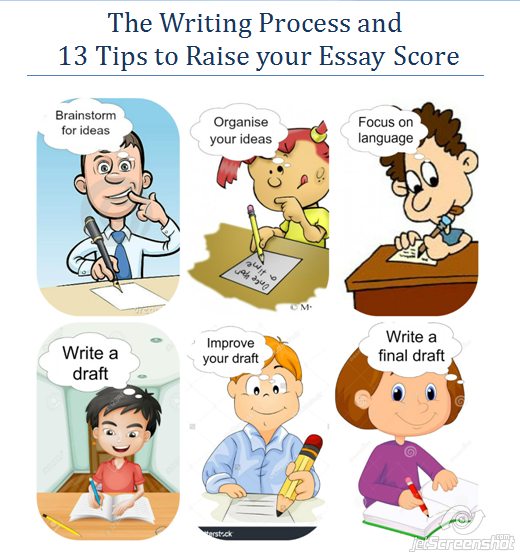
The Writing Process and 13 Tips to Raise your Essay Score

Writing is a process. For some students it might seem like a daunting task, but if you look at it as a succession of small steps to follow instead of looking at it as the big final product, writing can be fun and easy.

Useful Links:


Part 1. The Writing Process


Brainstorm for ideas

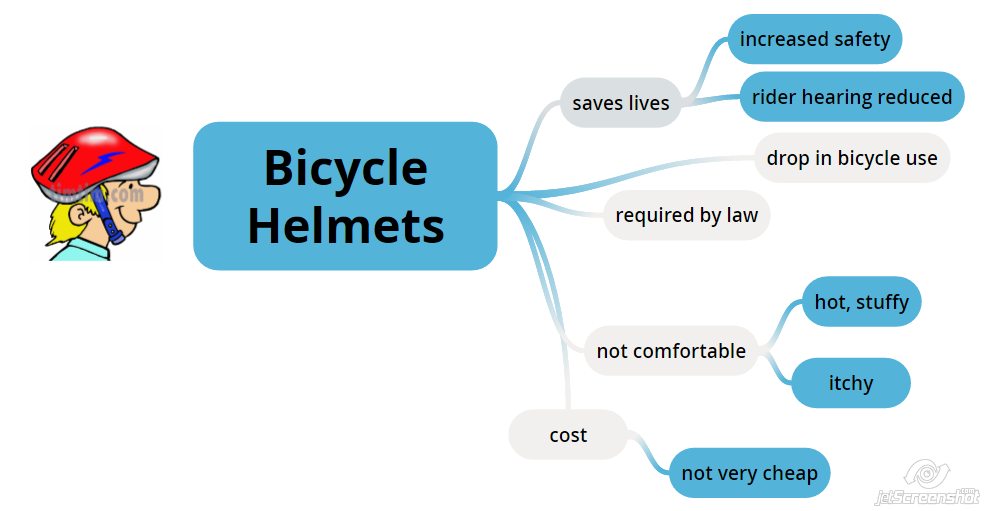
  • Write down all the ideas you can think of. You can try mind mapping your ideas. It is a good technique to generate ideas and expand on them. You can begin by writing a big bubble in the middle of the page with the topic and then use arrows to draw new bubbles with ideas and again arrows with more specific points or observations about this idea.
  • At this stage, don’t worry about spelling or grammar mistakes.

Organise your ideas

  • Decide which ideas to keep.
  • Group similar ideas together.
  • Organise your ideas according to the writing task.

Focus on language 

  • Think of words and expressions you will need in your work.

Write a draft

  • Write quickly. Don’t worry about things such as accuracy or neatness.
  • Use a pencil so that it is easier to make corrections and erase things.
  • If you are writing your draft by hand, leave a wide margin for notes and space between the lines for additions and corrections.
  • If you can’t think of a word in English, write it in your own language. You can look it up in a dictionary later.
  • If you don’t know the spelling of a word, write it anyway you can. You can look it up in a dictionary later.

Improve your draft

  • Do it slowly and conscientiously.
  • Check spellings in the dictionary and look up any word you felt unsure of. Here’s a very useful post Six Amazing Websites that Make your Writing Stronger.
  • Use a checklist to improve your work. See the one my students use here.
  • Read your draft aloud. Circle the things that need to be improved, reworded or clarified.
  • Take a break from writing and reread your draft after 30 minutes. Does everything sound right?

Write a final draft

  • Copy your corrected work neatly on a clean sheet of paper.
  • Make sure your paragraphs are clearly indicated.

Adapted from Burlington Books


 Part 2. Writing an Essay


An essay consists of several paragraphs about a topic. Although there are many different kinds of essays, they all have the same basic structure.

Opening

It is the general presentation of the topic. Try to get the reader interested in your essay. How can you do that? For example, by beginning

  • With a surprising fact.

Humans usually imitate the speech of someone with a strong accent due to empathy and to create a bond and assimilate with them.

  • With a short anecdote.

“If you could interview anybody in the world, who would you choose?” asked the teacher. “Nelson Mandela”, I replied.

  • With a question.

Did you know that there is an island in Japan that has more than 450 people living above the age of 100?

 The Body.

The body can have one or more paragraphs which develop the topic. The first paragraph should contain the strongest argument or example. The second paragraph the second strongest argument and the third the weakest.

A paragraph consists of several sentences about a certain topic. It has the following parts:

  • A topic sentence, i.e. an idea.
  • One or several supporting sentences to expand on the idea.
  • A concluding sentence.

The parts should flow logically and the ideas should be easy to understand.

  • Go from general to specific. Give a general idea and then expand it.
  • Avoid unnecessary repetition by using pronouns to refer back to nouns already mentioned.
  • Use connector to join sentences and show the connection between ideas.

 The Closing

It is the paragraph that summarizes the main idea or presents a conclusion, depending on the kind of essay you need to write. Some things to bear in mind:

  • It should not bring new ideas.
  • It shouldn’t be very long.
  • It can be similar to the opening, but presented in different words.


13 Tips to Raise your Essay Score


  1. Read the assignment thoroughly, several times if necessary and underline anything relevant. Sometimes there is a question or several. Make sure you cover all of them. Focus on the purpose of the composition, on the tone and the style required and also on the length requirements.
  1. Plan your writing. You need to dedicate several minutes to planning what you are going to say and how you are going to say. It makes a big difference.
  1. Write a first draft. Use pencil, if possible, to erase or correct errors.
  1. Begin each paragraph with a topic sentence and then write some supporting sentences about this topic sentence. 1 idea= 1 paragraph.
  1. Use a variety of vocabulary and grammar structures. Avoid repeating the same words over and over again. Use synonyms or paraphrase. A thesaurus or a lexicon is useful as a source of alternative words. Use a range of grammar, sentence structure should be varied and clear.
  1. Use connectors to join ideas. They also play an important part in stringing together sentences and paragraphs.
  1. Time management. Organize the time you are given to write the essay. If you have one hour to complete the task, dedicate 10 minutes to planning and organizing your ideas and allow about 10 minutes at the end to proofread your essay before giving it to the teacher. You will still have 40 minutes left to write and develop your ideas.
  1. Keep to the topic. Don’t write about things that have nothing to do with the assignment.
  1. Sound natural. Just because you know lots of connectors, it doesn’t mean you have to use all of them.
  1. Punctuation. Pay attention to punctuation, especially to the correct use of commas and periods. Your text can be confusing if you don’t use them adequately.
  1. Style. Think about the purpose of the assignment and the audience it addresses and use the correct style and tone. If it’s informal, you can use colloquial language, simple and shorter sentences, contractions, abbreviations and emotional language. On the contrary if it’s a formal assignment, you will need to use more complex sentences, avoid contractions and abbreviations and you should definitely avoid emotional language or colloquial expressions.
  1. Proofread your essay. Have a coffee or go for a walk. Come back, take your essay and reread it aloud. Does it sound “right”? Then, it’s ready!
  1. Read a lot and try to write about anything for 30 minutes every day. You’ll soon get better.

Thanks for reading!

Blog de Cristina is also on Facebook. Follow us