This is a very simple activity to do some speaking about films I intend to try with my Elementary students. Nothing too complicated but I guess they’ll love to see how film titles are translated into English. Who, in the name of God, translated the film DIE HARD starring Bruce Willis into LA JUNGLA DE CRISTAL or SOME LIKE IT HOT starring Marylin Monroe into CON FALDAS A LO LOCO. Was it Google Translator???
Anyways, there is a whole lesson plan about films ( complete with vocabulary, listening, reading and writing) that I created some time ago, if you feel like doing some more practice ( Click on the picture if you are such a hardworking student), otherwise and for the time being we will just focus on speaking.
THE GAME: SPEAKING. The game is easy: the class is divided into two groups. In turns, one member from each group sits on the Hot Chair facing away from the whiteboard. The members of their group have -like one minute- to describe, without mentioning the title ( that goes without saying, but just in case, I’m saying it), the film being displayed .
They will need to talk about.
Kind of film/ Nationality of the film/ director/ plot/
Some hints:
♥The film ‘_______’ is a(n) _______ film which takes place in _______.
♥The film is set in __(ancient Greece)__.
♥The story is based on __(a popular novel)__.
♥The film is directed by _______.
♥The main character(s) in the film is/are _______.
♥_______ is a character who _______.
♥__(Johnny Depp)__ stars as __(Captain Sparks)__.
♥In the film , __(Jack Black)__ plays __(a rock guitarist)The story is about _______
♥The best scene of the film is_____
I wasn’t planning on posting right away but my gym is still flooded so I can’t work out. It is still cold and rainy here in Asturias so I don’t seem to have many options but to stay at home looking after my kids.
Plenty of time in the afternoon to prepare classes and still so hooked on Picture Trail that I have decided to use it again, and this, only when I have used it for the first time on Monday. Addictive!!
ACTIVITY 1
Funny!!! Students are given a job and they won’t know what it is. They are given a worksheet with questions about their job to ask the other students in the class, see worksheet here. Read the instructions on the worksheet, go through the questions and possible answers.
Ask students to come to your desk to get the jobs stuck on their backs (post-it). Students walk around the classroom mingling freely, asking each person a couple of questions and writing down the answers. Stop the activity after 10 minutes of questioning or when the first student has correctly guessed their job. Ask the rest of the students to sit down and write down what they think their job is.
Source : InsideOut Resource Pack
ACTIVITY 2.
Students in pairs talk about the questions in Picture Trail
I love teaching reported speech. I don’t know if students can feel when a teacher enjoys teaching something though I have the impression that somehow it shows. Here are some ideas to get my students “love” (well, maybe I’m getting a bit carried away) reported speech. Hopefully, some of them will do the trick.
This video is great to practise statements, questions, orders and suggestions!
Setting the context: tell students they have had a big argument with their boyfriend or girlfriend and they are going to meet their closest friend to tell them all about it. Divide the class into “girls” and “boys” and ask each group to focus on what the girl or the boy says in the video. Ask them to write down as much as they can using the exact words said in the video. Working together within their groups, they’ll need to report in as much detail as possible the conversation to their closest friend (the teacher).
For weaker students I would do the whole lesson plan as presented by the British Council. Click here
♥ Song: My name is Luka by Suzanne Vega. A song about child abuse. It tells the story of a frightened boy who is forbidden to talk about what he’s going through.
The idea is the same as above. I´ll let the students do all the work (we, teachers, need a break from time to time, don’t we?). The song is quite easy to understand and though they might not pick up everything, they will still be able to come up with some good reported statements. The idea is:
Students listen to the song once and write down whole sentences. (ex. My name is Luka, I live on the second floor…)
Students in pairs share with their partners.
Students listen a second time and pair again one last time.
Correct using the video+lyrics and ask students as a class to report the sentences one by one. (For ex. He said his name was Luka)
♥ Gossiping about the teacher (from Begem Tonyali -original post here)
Students think about 10 things they want to know about their teacher and ask the questions, which are written on the board. The class is divided into 2 groups. The first group leave the class and wait outside. The first group members take turns in asking the teacher the questions and write down the answers. Now, they leave and the second group does the same thing. However, what they do not know is that the teacher is honest and gives correct answers to only one group, but lies to the other. It’s a good idea not to tell them beforehand. Then, students pair off as 1st and 2nd group partners. The activity goes like this and one of the students tells his partner “I asked the teacher how old she was and she told me she was 16.” Then the other partner goes “I asked the same question, but she told me she was 36.” etc…until all the questions are reported. Here they have to pay attention to the usage of the reporting verbs and have fun in finding which group the teacher lied to.
Preparation: before the game, students have been taught the following reporting verbs: ask, tell, warn, advise, suggest and offer.
Students are given some scrap paper and asked to write a yes/no question, a Wh-question, a request, a warning, a suggestion, a piece of advice and an offer .
When they finish, they are asked to make balls from the papers. And the fun begins….Time to play snowballs!! Allow them to play snowballs for some time and play some music. Tell them they can play snowball for as long as there is music. Stop the music and ask students to open the ball of paper and report the things written on it. Remember, the bigger the ball, the easier it will be to catch it! You don’t want to be looking for missing balls!
♥ Indirect into Direct Speech Cards.
Not so funny, maybe, but still worth doing! Students love competitions- me too, if you want to know the truth- so I’m planning to disguise this exercise as a competition with the students getting the card and scoring points for each correct answer. Now, this activity requires some preparation on my part, namely writing on one side of a card reported speech and, on the other side, direct speech of the same sentence. I’m planning to include statements, questions, commands, suggestions, offers…etc. Show the students the reported speech side of the card. The student who guesses the direct speech sentence, gets the card and the point.
Writing is probably one of the most difficult tasks students have to tackle but it is also true that we never dedicate enough time to improving this skill; there never seems to be enough time during lessons. Added to this is the fact that we are not used to writing in our own language, let alone in a foreign one. Therefore, what we normally get from our students are short sentences which usually fall short of our expectations.
In this session I have used two activities, slightly modified, from two different blogs; Stretching a Sentence (original source here) and the Verb Shaker (original post here)
♥STETCHING A SENTENCE I have created a PPT presentation (see below) to heighten the idea of a telescopic sentence.
The main idea is starting with a verb or a noun and stretching the sentence by giving the students some hints in the form of questions (who, when, where, what, why). In the end, they easily and effortlessly come up with a sentence that has some consistency and that I hope will help them get rid of their fear of writing. This exercise does not focus on complex sentences as it is aimed at elementary and pre-intermediate students. It might also be necessary to point out that previous to this exercise, we have worked on the order of adjectives before the noun (basically Opinion+Size+Age+Colour) so you can imagine how colourful their sentences were.
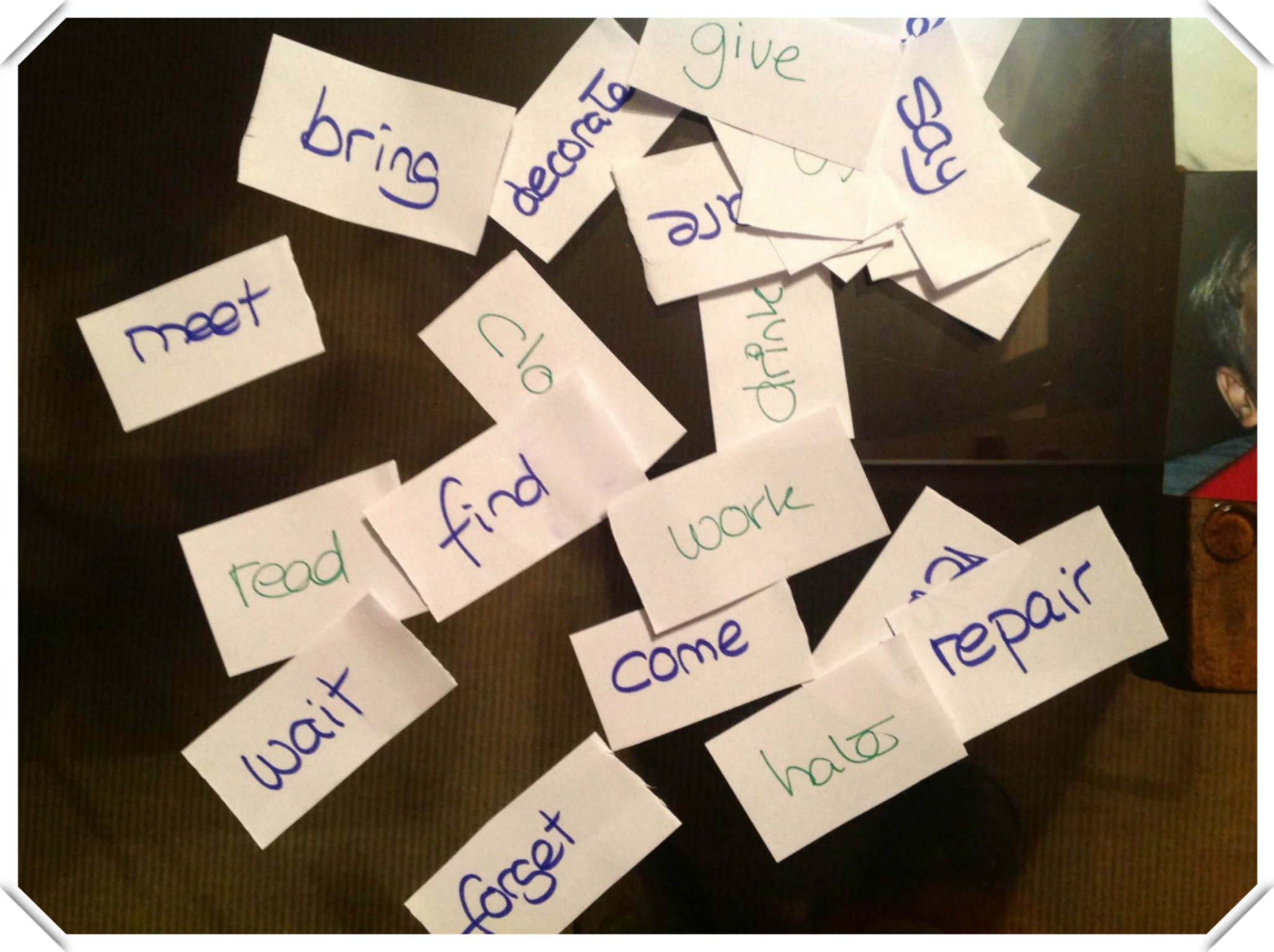
This funny idea came form the wonderful blog Crazy Speech World and though dyeing the rice and laminating the cards is an awesome idea I have to confess that I don’t have the time, so my students will have to make up do with just the box and the paper cards.
My idea is using this game with elementary and pre-intermediate students. I have written the verbs in two different colours: in green, the easiest verbs to use in a sentence and in blue, verbs which could be a bit more difficult to use. Using two colours, they can be easily separated. I have also included some blank cards in the box.
The game:one student picks up a verb (eyes closed) from the box and students, in pairs, have about 90 seconds to write a sentence including the verb. The longer the sentence, the more possibilities they have of getting the point, which will be awarded to the pair with the best sentence. (Remind students of the Who, What, When, Where, Why from the previous exercise). If a student draws a blank card, he can choose the verb he fancies.
To make things easier for me, I’ll provide them with slips of paper to write their sentence so that when the time’s up they can raise it up and I can have a quick check. Sentences with mistakes will be automatically discarded and the remaining sentences will be read aloud and voted. The pair with the best sentence gets the point.
Whether you are a fan of this kind of programmes or not, nobody can deny this talent show has been a big success worldwide. In case you don’t know what I’m talking about The Voice is a singing competition that consists of a blind audition where four coaches (famous singers ) select the members of their teams, a battle phase and then the final, where the audience selects The Voice. It started in The Netherlands like two years ago and since then the format has been sold to many countries where it has also been a big success.
The idea for this activity came from the French teacher in my high school, Yolanda (see picture). Just by chance she commented on how much fun their students had just had doing this activity and right away I asked her to borrow her idea for my English class.
The instructions are fairly simple.
♥Students in pairs and with their backs to the whiteboard listen to someone singing but they won’t be able to see them, that’s why it’s called Blind Auditions.
♥Working with a partner, they decide what the person they are listening to looks like (see handout). ♥When the audition finishes and without turning their backs, they need to decide whether they want this person in their team to be THE VOICE. If they want them, they should raise their hand making the V gesture and saying I WANT YOU! ♥Now, they’ll have to compete against the other students who also want the singer. The singer will belong to the team who has the most accurate physical description of the singer.
I have selected these two videos you don’t like the game, at least enjoy the music!!
 This is a very simple activity to do some speaking about films I intend to try with my Elementary students. Nothing too complicated but I guess they’ll love to see how film titles are translated into English. Who, in the name of God, translated the film DIE HARD starring Bruce Willis into LA JUNGLA DE CRISTAL or SOME LIKE IT HOT starring Marylin Monroe into CON FALDAS A LO LOCO. Was it Google Translator???

 and ask the questions, which are written on the board. The class is divided into 2 groups. The first group leave the class and wait outside. The first group members take turns in asking the teacher the questions and write down the answers. Now, they leave and the second group does the same thing. However, what they do not know is that the teacher is honest and gives correct answers to only one group, but lies to the other. It’s a good idea not to tell them beforehand. Then, students pair off as 1st and 2nd group partners. The activity goes like this and one of the students tells his partner “I asked the teacher how old she was and she told me she was 16.” Then the other partner goes “I asked the same question, but she told me she was 36.” etc…until all the questions are reported. Here they have to pay attention to the usage of the reporting verbs and have fun in finding which group the teacher lied to.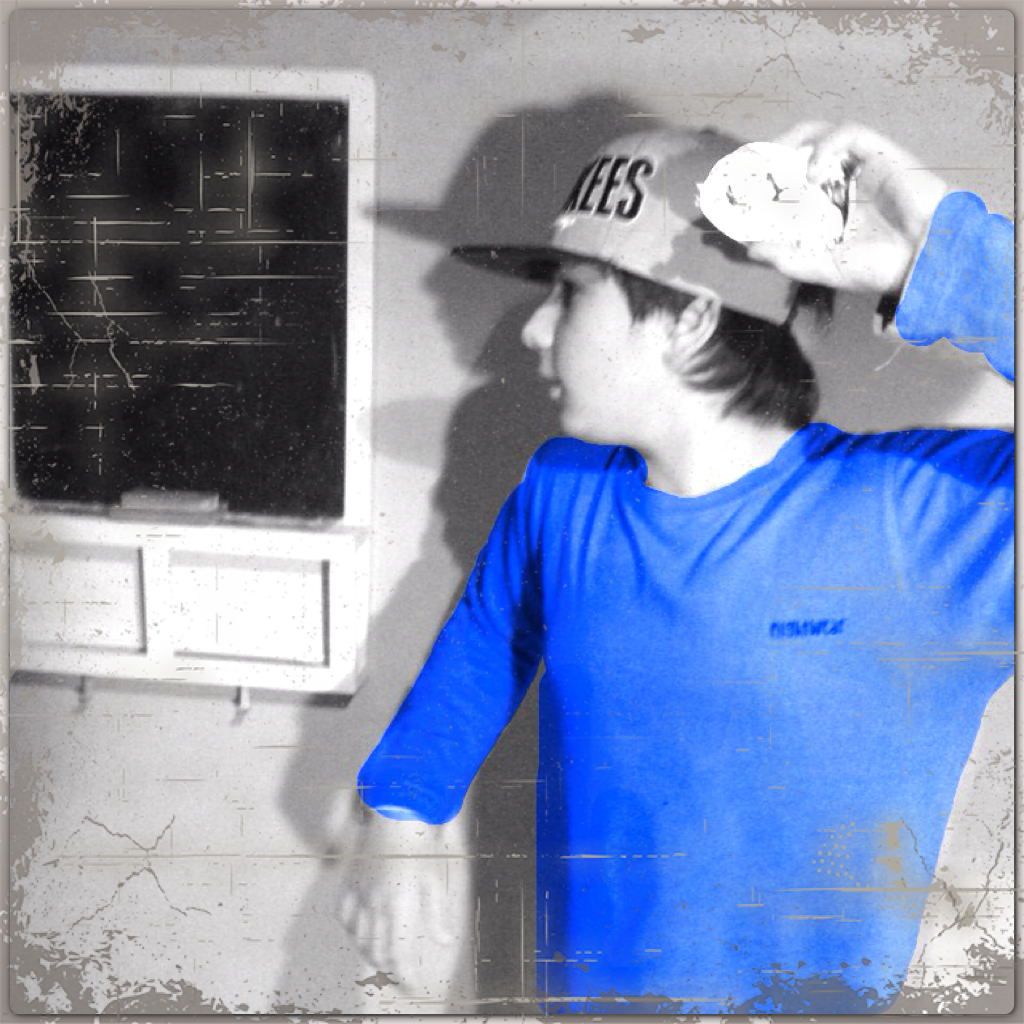
 Writing is probably one of the most difficult tasks students have to tackle but it is also true that we never dedicate enough time to improving this skill; there never seems to be enough time during lessons. Added to this is the fact that we are not used to writing in our own language, let alone in a foreign one. Therefore, what we normally get from our students are short sentences which usually fall short of our expectations.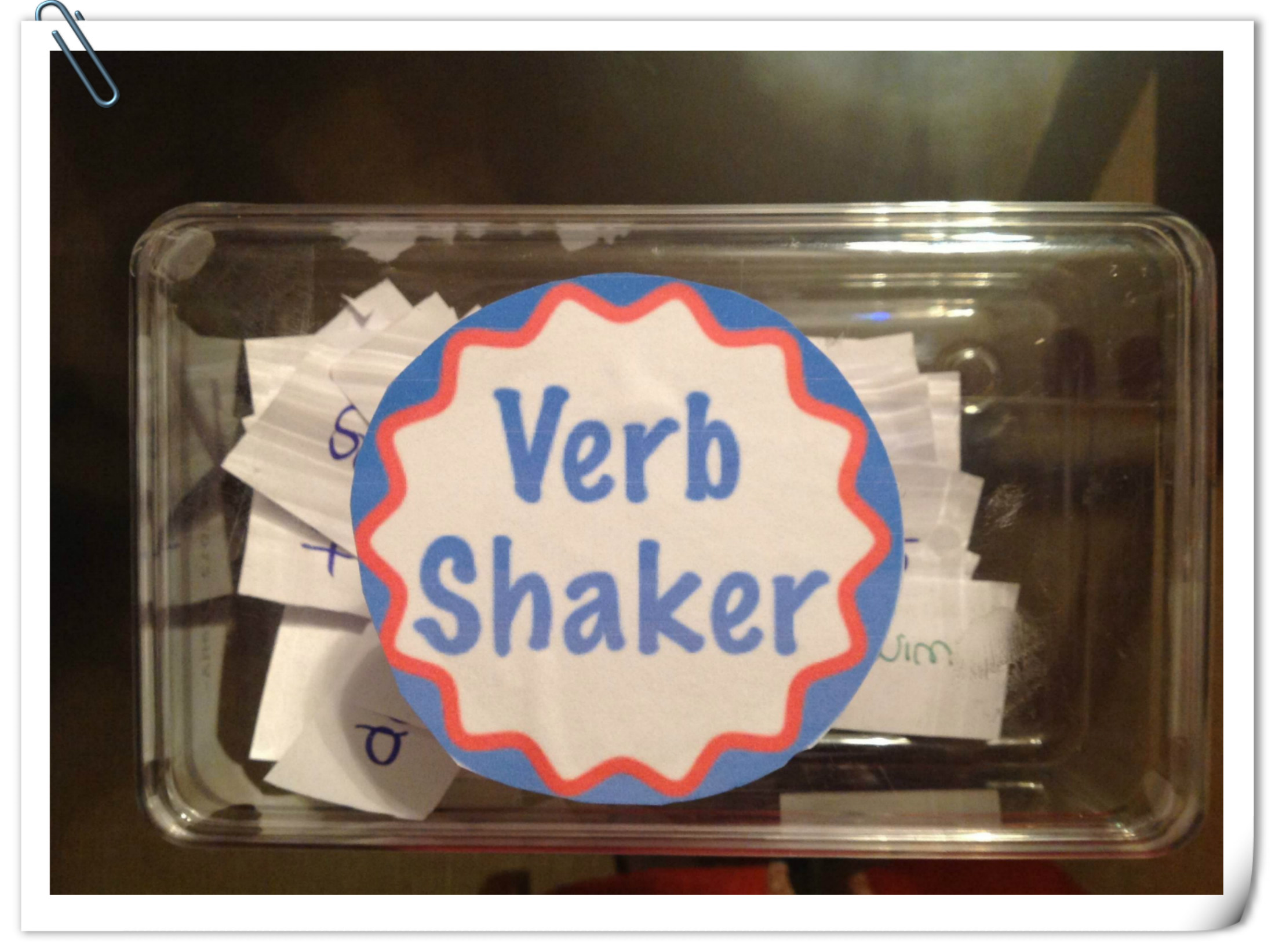
 show has been a big success worldwide. In case you don’t know what I’m talking about The Voice is a singing competition that consists of a blind audition where four coaches (famous singers ) select the members of their teams, a battle phase and then the final, where the audience selects The Voice. It started in The Netherlands like two years ago and since then the format has been sold to many countries where it has also been a big success.
 The idea for this activity came from the French teacher in my high school, Yolanda (see picture). Just by chance she commented on how much fun their students had just had doing this activity and right away I asked her to borrow her idea for my English class.