Tag Archives: vocabulary

Writing lesson: Stretching a Sentence and the Verb Shaker

Writing is probably one of the most difficult tasks students have to tackle but it is also true that we never dedicate enough time to improving this skill; there never seems to be enough time during lessons. Added to this is the fact that we are not used to writing in our own language, let alone in a foreign one. Therefore, what we normally get from our students are short sentences which usually fall short of our expectations.
In this session I have used two activities, slightly modified, from two different blogs; Stretching a Sentence (original source here) and the Verb Shaker (original post here )

♥STETCHING A SENTENCE
I have created a PPT presentation (see below) to heighten the idea of a telescopic sentence.
The main idea is starting with a verb or a noun and stretching the sentence by giving the students some hints in the form of questions (who, when, where, what, why). In the end, they easily and effortlessly come up with a sentence that has some consistency and that I hope will help  them get rid of their fear of writing. This exercise does not focus on complex sentences as it is aimed at elementary and pre-intermediate students. It might also be necessary to point out that previous to this exercise, we have worked on the order of adjectives before the noun (basically Opinion+Size+Age+Colour) so you can imagine how colourful their sentences were.

♥VERB SHAKER

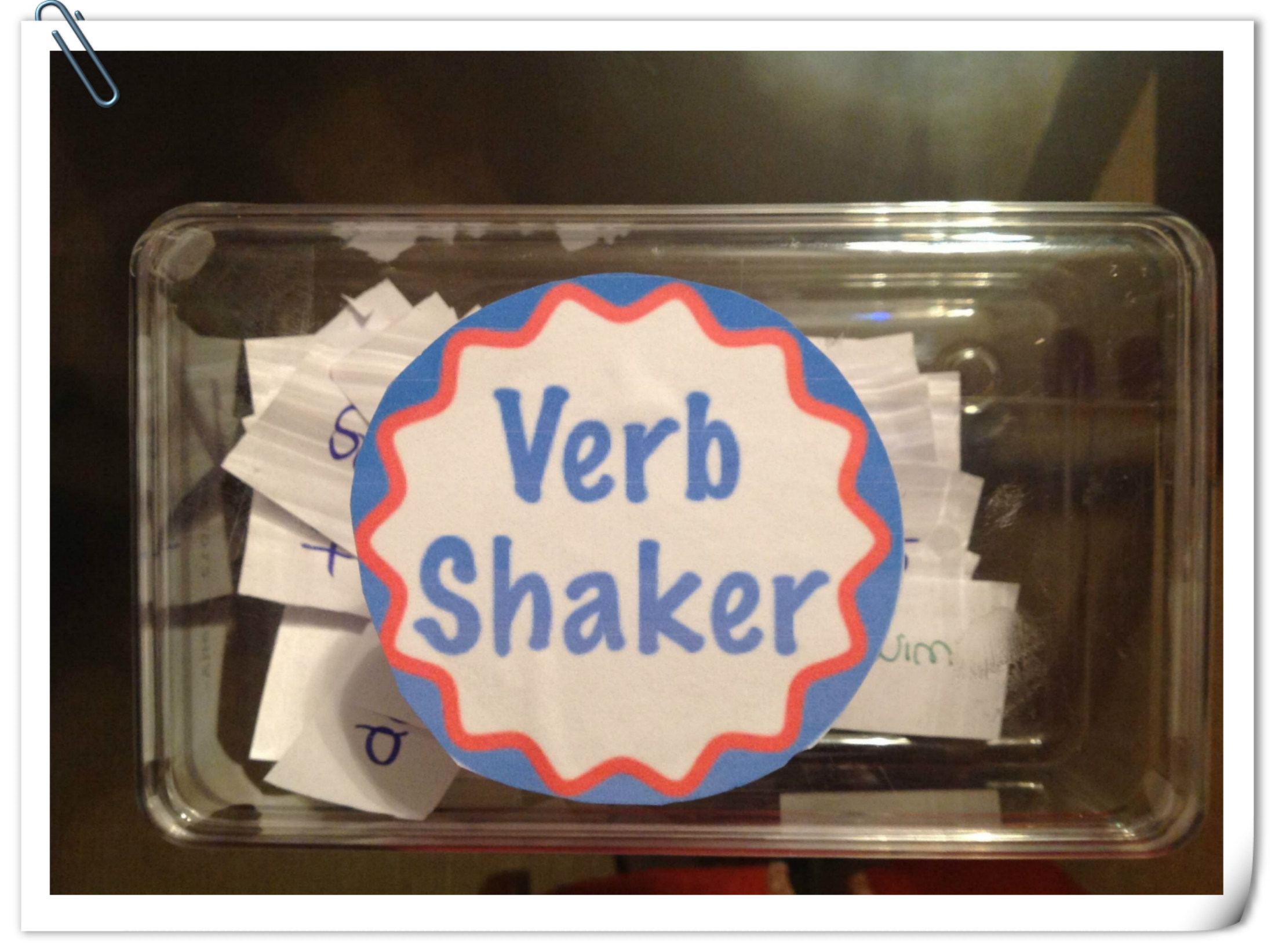
This funny idea came form the wonderful blog Crazy Speech World and though dyeing the rice and laminating the cards is an awesome idea I have to confess that I don’t have the time, so my students will have to make up do with just the box and the paper cards.
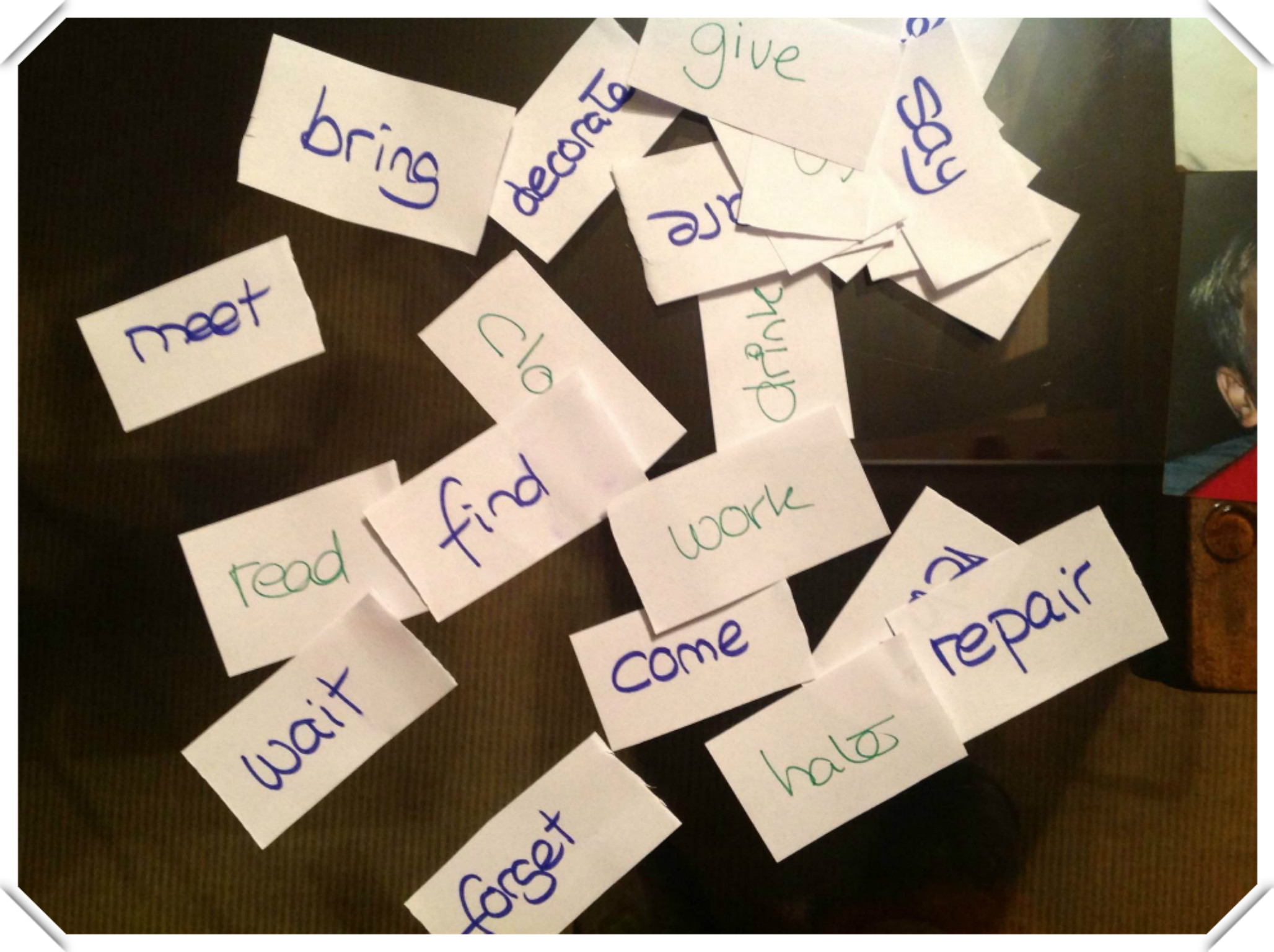
My idea is using this game with elementary and pre-intermediate students. I have written the verbs in two different colours:  in green, the easiest verbs to use in a sentence  and in blue, verbs which could be a bit more difficult to use. Using two colours, they can be easily separated. I have also included some blank cards in the box.

The game: one student picks up a verb (eyes closed) from the box and students, in pairs, have about 90 seconds to write a sentence including the verb. The longer the sentence, the more possibilities they have of getting the point, which will be awarded to the pair with the best sentence. (Remind students of the Who, What, When, Where, Why from the previous exercise). If a student draws a blank card, he can choose the verb he fancies.

To make things easier for me, I’ll provide them with slips of paper  to write their sentence so that when the time’s up they can raise it up and I can have a quick check. Sentences with mistakes will be automatically discarded and the remaining sentences will be read aloud and voted. The pair with the best sentence gets the point.

Edited: Intermediate 1 and Intermediate 2 verbs
Word of the Day: crib notes

What’s  a “crib note” in British English or a  “cheat sheet “ in American English?

It is a small piece of paper containing the answers to an examination . The note is very small so it escapes detection and can be easily destroyed or eaten if detection is imminent.

I never thought I would write a post about crib notes, not with me teaching adults, but when you are teaching teenagers this is something you have to become an expert at .Don’t get me wrong here! I am convinced that most teenagers do not cheat  and that it was only  by sheer chance that  in these two weeks of exams I’ve  caught two students red handed .New technologies? No way! The picture accompanying this post is real ,from one of my classrooms: the students used the inside of the curtain to write his crib note. I wonder if I should send the curtain home to his mum to wash it!

I have done some research on the Internet looking for alternatives to spoiling a – if not beautiful- curtain , at least , the only one we’ve got.

I have learned that the most important thing is to be able to conceal the crib note successfully. Now, pay attention , I have become an expert!

♥ Hide your notes under the exam . This is the traditional one but I am going to give you a very important tip. Don’t look at the teacher. This is the most common mistake because it immediately gives you away.

♥ Use a bottle of water. Cut the outside wrapping , glue your notes and glue the wrapping back to the plastic bottle. Please, don’t stare at the bottle for too long or I might think you have gone postal.


♥ Use a cap with the notes glued on the inside. Take off your cap and let the show begin!

♥ Use glasses . Give yourself a rest to rub your eyes and … you know what to do!

♥Use your mobile phone.  Easy, no effort , but a lot more expensive than the rest!

The truth is that if you are going to write your notes by hand  ( in the computer , use Times New Roman font, size 6) you’ll find that you have  accidentally studied and you might end up never even using it.

A Word on Grammar: Arrive At or Arrive In

You’ll never believe the number of times I have corrected this mistake! I sometimes ask myself: “If I explained this mistake in Mandarin Chinese, Would they pay more attention? Let’s try this way:

THE VERB “TO ARRIVE” IS NEVER FOLLOWED BY THE PREPOSITION “TO”

See? I have used red, put it in bold, inside quotation marks…. will it work now?

The verb ARRIVE is followed by two prepositions AT or IN. See? NEVER “TO”

Arrive at a building , station, airport

Arrive in a country, city. etc

Be Careful: You arrive at someone’s house BUT you arrive home

Surely, it isn’t that difficult to remember. Why don’t you try reading this post like two or three times and then doing the exercises below?  I bet you will never ever make this mistake again. Naive? 🙂 Maybe! Fed up with correcting this mistake? Absolutely!!!

Blog de Cristina is also on Facebook. Click to follow

<

Fashion Victims?

So, once again, here we are, working with items of clothing and talking about fashion!

Though I cannot consider myself a shopaholic, I wouldn’t be completely honest with you if I didn’t tell you that, once a week, I leave husband and kids at home and I……. burn plastic!!!!  Well, I reckon I deserve a treat or two from time to time, don’t you think so?

Now, this is the activity I’m going to do with my fourth-year students (Pre-intermediate). I hope you find it useful!

The main activity will be displaying a video of a catwalk where students will have to be the commentators, describing what the models on the catwalk are wearing. A video such as this one … or maybe the one below it… to add more variety.


They have previously worked with patterns and materials (striped, checked, plain, silk, leather…etc) but I used some pictures from my iPad, so this vocabulary has already been covered.

Though I hate to say it, most of my students will know “trousers and shoes” but they will probably need some help with some other less common items of clothing. That’s why I’ve prepared these slides about clothes, divided into Elementary and Intermediate.

English Media Lab

I’m sorry I haven’t posted for some days now but I’m up to my eyes. Preparing and marking exams takes up most of my free time. June is chaos!

I imagine you have plenty of ideas  when half the class is taking an exam and the others ,sort of have already passed all the tests, but here’s another one in case you’re running short of them.

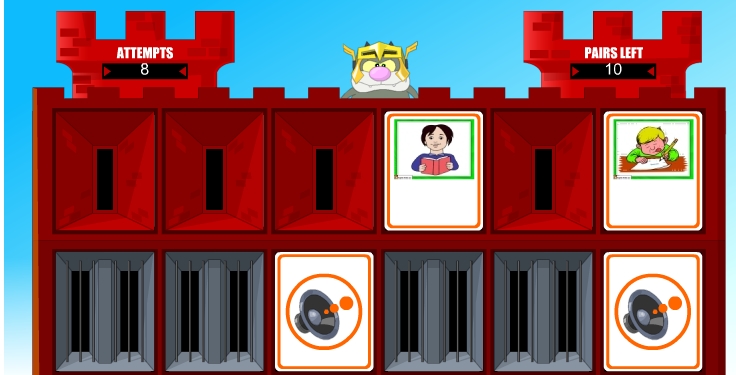
I have taken my students to the computer room and let them roam a bit about this website. English Media Lab offers Grammar, Vocabulary , Pronunciation  , Videos and Games for different levels, though I have only used the  Elementary Level. They have all loved the Memory Games revising Vocabulary and they’ve made me promise to take them to the computer room once again before the course ends.

The website is a bit confusing because it has a lot of things and it might sometime take you outside their own website. I don’t really mind as long as the new website has what I’m looking for. Anyway , have a look at it and tell me what you think!