Monthly Archives: March 2026

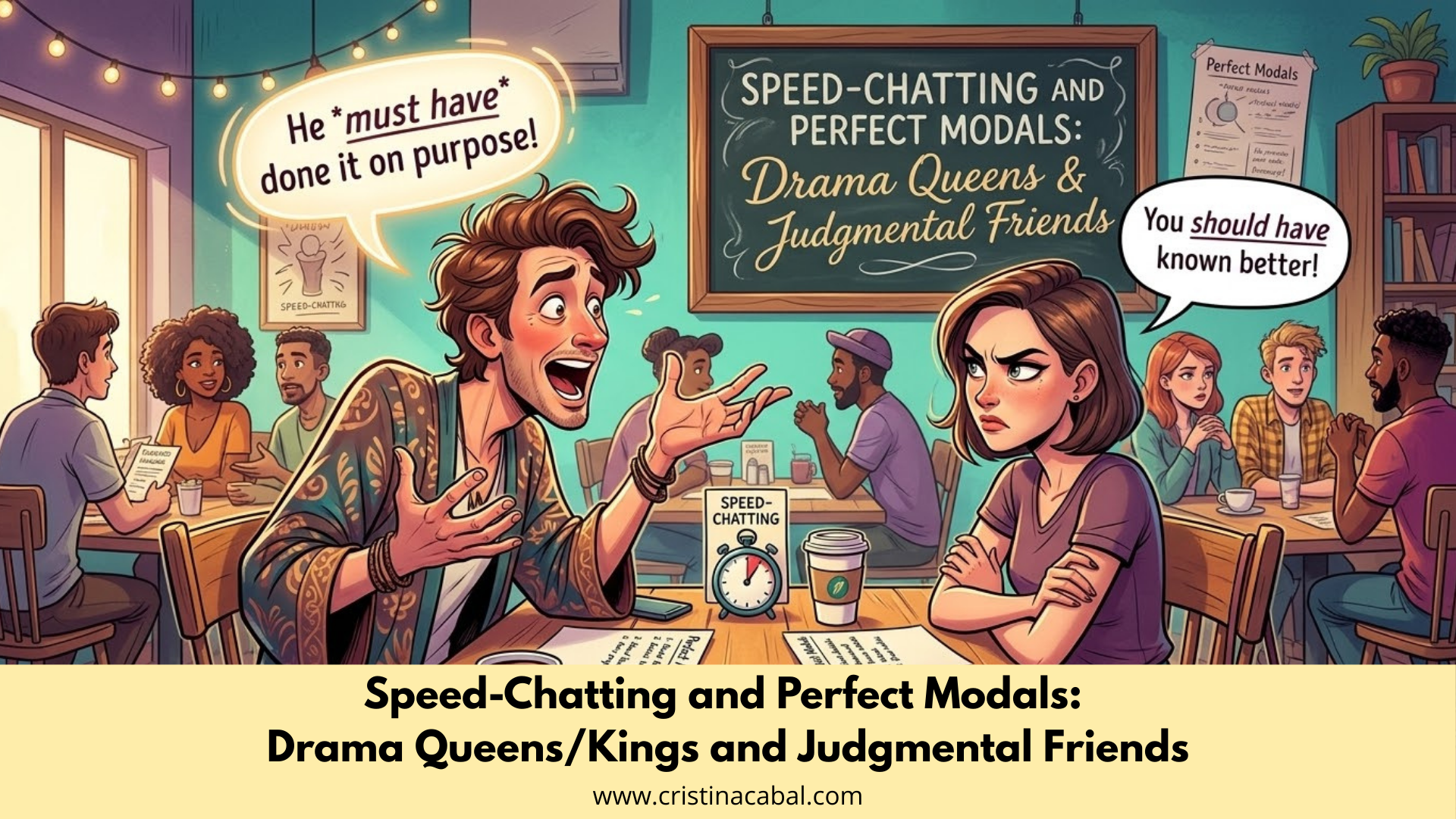
Speed-Chatting and Perfect Modals: Drama Queens/Kings and Judgmental Friends

When you’re looking for a speaking activity that gets everyone talking, speed-chatting is a fantastic option. On this occasion, to work with perfect modals. Yes, in this activity we will have translation, grammar, speaking and lots of interaction.
Cards with Problems.  Spanish_English Translation

Step-by-step setup
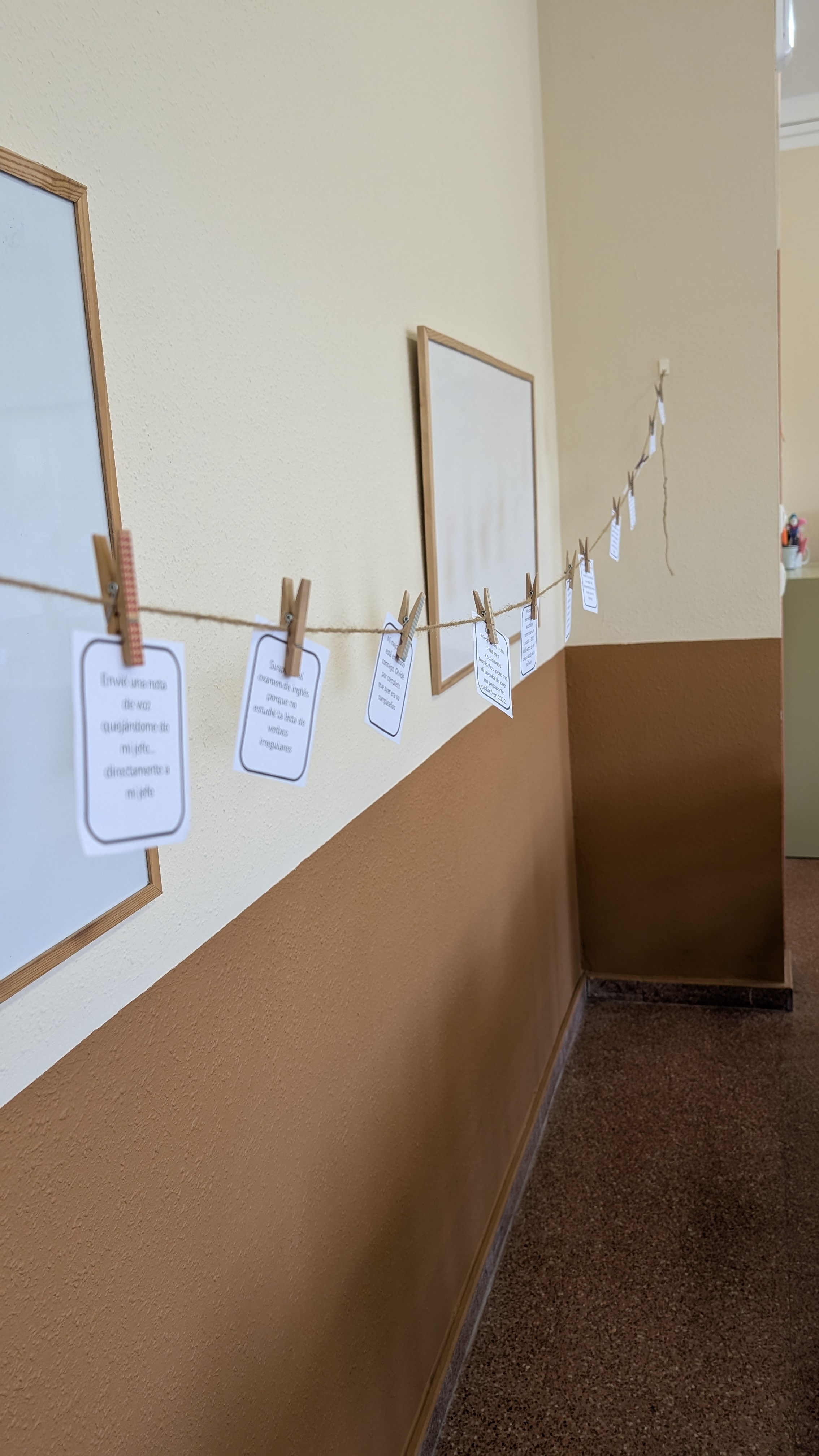
Choose and Translate: Hang the “Laundry Line of Problems”

The teacher hangs problem cards written in [Spanish] on a clothesline around the classroom—little everyday disasters students might relate to.

Students stand up, walk around, and choose one problem that catches their attention. Then they sit down and translate the problem into English. The teacher circulates and helps if needed.
Revising the grammar and exemplifying

The key language focus is perfect modals for giving advice about the past.

Students should try to use:

  • should have + past participle
  • could have + past participle

Example of a potential interaction:

  • Drama Queen/Kings: “Oh no! I stayed up all night watching Netflix and I missed my final exam this morning!” Judgmental Friend: You should have set five alarms!” or “You shouldn’t have started a new series last night!”
  • Drama Queen/Kings: “I missed the bus by ten seconds. I stayed talking at the school gate for too long” . Judgmental Friend : “You should have looked at your watch!”

Because students repeat the interaction several times, these structures start to stick naturally.

Assign the roles

Now divide the class into two equal groups:

  • Group A: “Drama Queens/Kings” – their job is to present the problem dramatically.
  • Group B: “Judgmental Friends” – they listen and give advice.

Speed-chatting begins

Students form two facing lines or circles.

  • Drama Queens/Kings explain their problem.
  • Judgmental Friends react and give advice using the target structures.

Rotate every 1–2 minutes

After each mini-conversation (about 45 seconds) , the teacher rings a bell and students move to a new partner.

Reverse the roles

Once everyone has given advice, students switch roles.

  • Drama Queens/Kings become Judgmental Friends.
  • Judgmental Friends now present their own problems.

And just like that, the room quickly fills with advice, laughter, and dramatic stories. Students practice the  grammar again and again in a natural, communicative way, and everyone has the chance to speak with several different classmates..

Sometimes the best speaking activities are the simplest ones: a bit of movement, a bit of drama, and lots of chances to talk.


Lesson Plan: Technology. Using Gallery Walks to Bring B2 Tech Vocabulary to Life.

This gallery walk feels like all the interaction we want in our classrooms — but in one dynamic activity. A strong mix of movement, discussion, and reflection runs throughout. And the atmosphere? Energetic, student-led, and genuinely engaging. Pair it with carefully designed posters and open-ended questions, and you get one of those lessons where students don’t just complete a task… they learn together as they move, talk, and reflect.

Yes, the unit in the textbook is about technology. And no — I don’t hate textbooks. I actually think they’re useful. They give structure. They give students that quiet moment to sit, process, reflect. And honestly? Sometimes we all need that calm, focused time.

But here’s the thing. Textbooks don’t move. My students do.

They need energy. They need interaction. They need to stand up, look at each other, disagree, laugh, negotiate meaning. And that’s where this activity comes in.

The Gallery Walk: Technology Reshaping Life

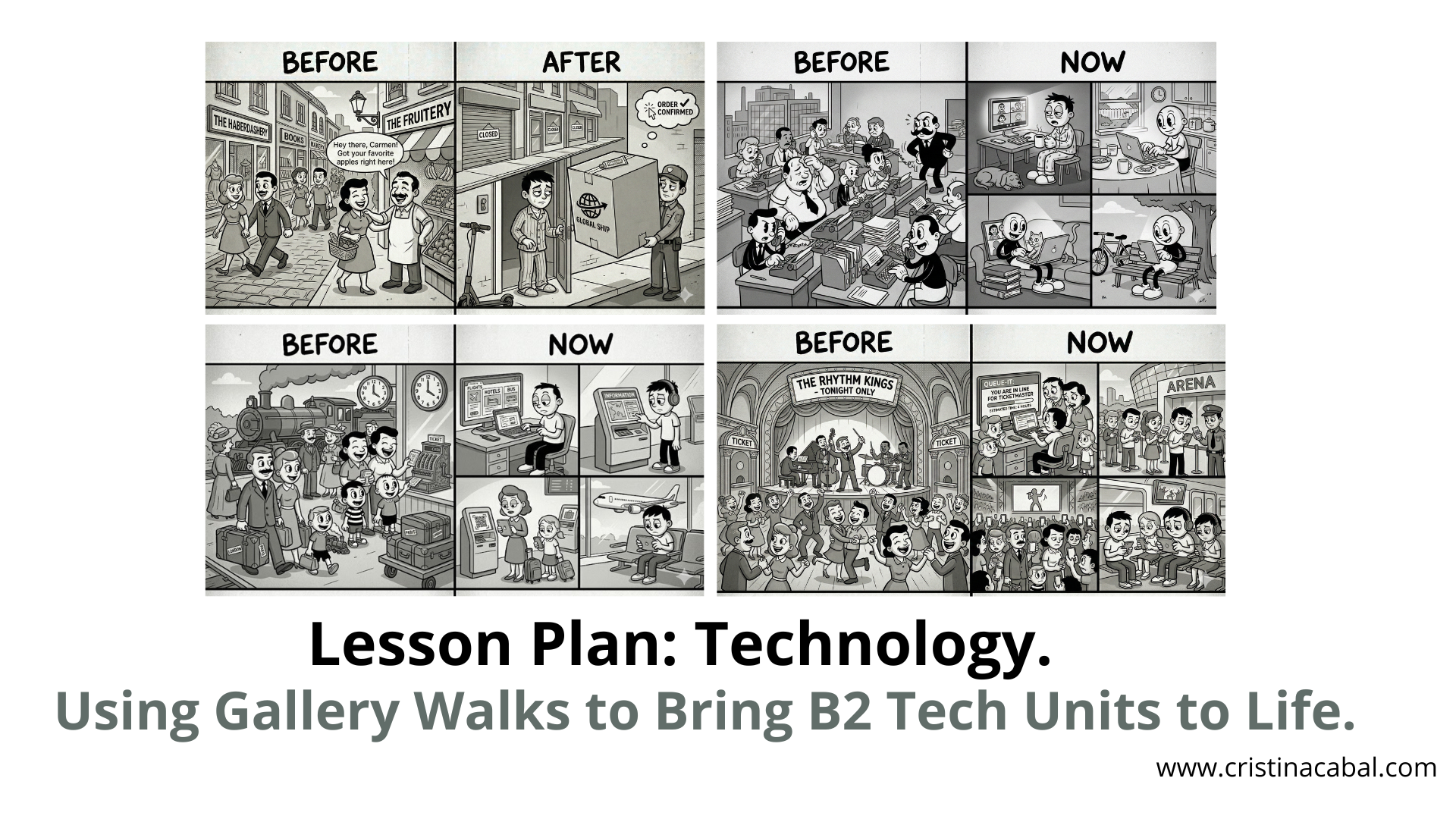
I designed a series of posters (inspired by the idea of how technology reshapes different areas of life) focusing on:

  • Entertainment
  • Travelling
  • Family Life
  • Work
  • Education
  • Shopping
  • Dating

Each poster shows a powerful “Before vs. Now” visual contrast. Old world. Digital world. Analog vs. hyper-connected.

What’s on Each Poster?

Every poster includes:

  1. A visual comparison (before and after technology)
  2. Useful vocabulary (so students feel supported, not lost)
  3. Thought-provoking discussion questions

PDF Download the posters

Technology reshaping Life de cristina.cabal

How the Gallery Walk Works
  • Students stand up. Maximum groups of 3. They choose a poster. They discuss the images. They read and use the vocabulary. They answer the questions.

And this time, I don’t control the timing. They decide when they’ve talked enough and move to another poster when they feel ready.

Why? Because some posters spark quick reactions. Others? Deep debate. Sometimes they disagree and stay longer. Sometimes they laugh and move on.

Where AI Comes In

Could I have created these posters without AI? Yes. Would it have taken me three times longer? Also yes.

AI helped me:

  • Generate tailored vocabulary lists
  • Create  discussion questions
  • Adapt complexity to my students’ level
  • Design cohesive visual contrasts

But here’s the key: AI didn’t replace a classic strategy. It enhanced it. Gallery walks have been around forever. They work. Movement + collaboration + visible thinking = engagement.

Now we just have better tools to build them.