This vocabulary activation game is quick, lively, and takes barely 2 minutes to set up. It’s one of those low-prep routines that instantly wakes up students’ brains before any speaking or writing task. You just need to think of around 10–12 key words you want to revise, and that’s it! Learning+ engagement: no AI this time!
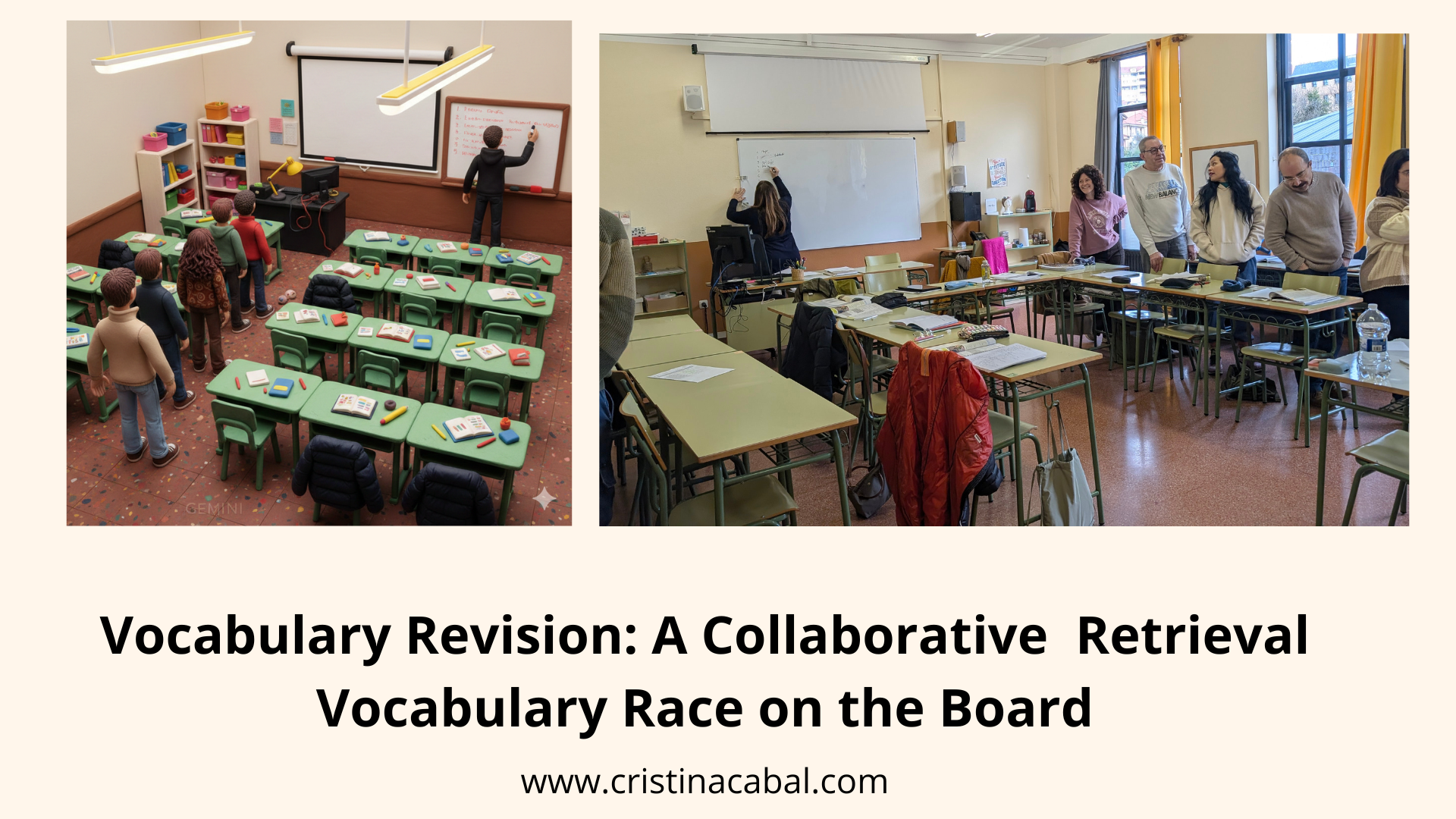
Here is how it works:
1. I divide the class into two groups and place them on opposite sides of the room, each one with their own board. This small detail is gold. Why? Because they can’t peek at the other team’s answers, so everyone has to really think and retrieve the vocabulary from memory.
Plan B: if you don’t have two boards on opposite walls, you can simply divide the main board into two sections and assign one side to each team. In that case, I just ask students to turn slightly away from the other group while they write, so they stay focused on their own answers.
2. I tell them we’re going to revise 10–12 key words related to our topic (in this case, ” City Life”), and someone in their group must write the numbers from 1 to 12 on their board. That’s Step 1 and should be done before the activity begins.
3. Then, each team stands in a line at a reasonable distance from their board. The first student in line walks to the board, I say a word in Spanish, for example, Number 1. “las afueras,” and the student writes the English translation. Once they finish, they go to the back of the line. Next word: Number 2 “semáforo.” The following student writes, next to number 2, the words “traffic lights.”
IMPORTANT: First, the student in turn walks to the board and then you say the word to be translated. This is key and will prevent other members of the team whispering the right translation
4. What happens when a student goes to the board and suddenly doesn’t remember the word? Total panic, right? Well, not in this game. If a student doesn’t know their word, they have a strategic choice.
- They can either write the word they are given to translate
- Fill in any missing previous translations
- Carefully look at their team’s board and correct a spelling or translation mistake that someone else has already written.
But — and this is the key rule — they can only choose one option.
Meanwhile, the students waiting in line are far from passive. They can quietly discuss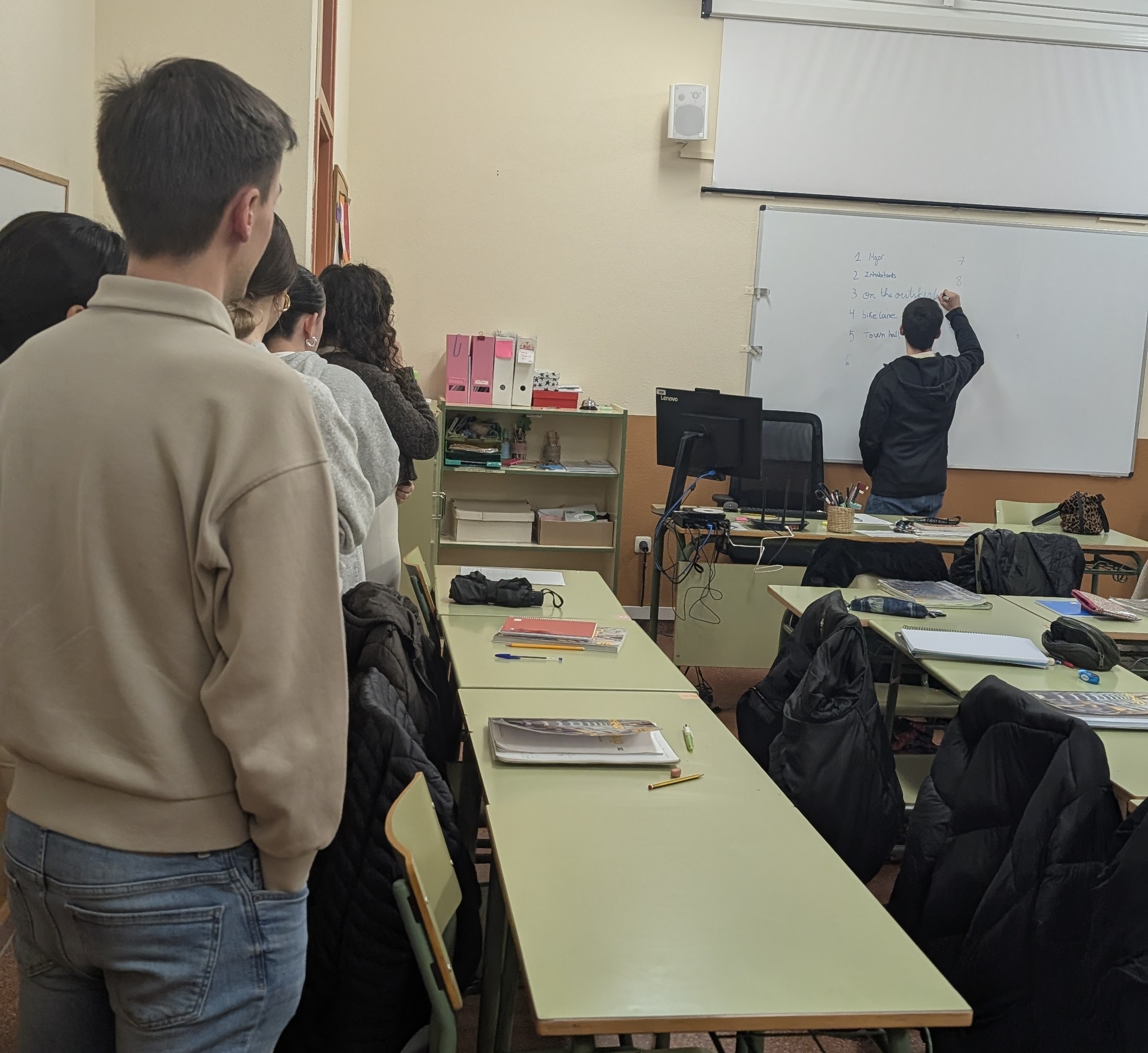 possible mistakes or check the vocabulary already on the board. However, they are not allowed to communicate with the student who is at the board, which keeps the retrieval process individual while still encouraging collaborative thinking within the group.
5. Once the game has finished, I tell groups they have the possibility to go to their board and correct two mistakes. More discussion. More learning.
6. At the end, I quickly go over both boards, correct the answers, and award one point for each correct word. It’s fast, energising, slightly competitive, and pedagogically powerful.
GOLDEN RULES: Recap
-
Before the activity starts, one member of each group writes the numbers from 1 to 10–12 on the board. This should be ready in advance so everything runs smoothly.
-
Don’t reveal the word to be translated until the student whose turn it is has stepped away from their group and is standing next to the board. This helps prevent teammates from whispering the answer.
-
If a student doesn’t know their word, they need to make a strategic choice. They can choose one of these options:
-
Write the word they were given to translate.
-
Fill in any missing translations from earlier turns.
-
Check their team’s board carefully and correct a spelling or translation mistake already written.
-
I hope you give it a try and see how it works with your students.