Tag Archives: grammar

A Guessing Game Using Tenses

Clear a spot in your lesson plan for this engaging activity because you are going to love it. This is a small writing guessing activity using Present Perfect Simple and Present Perfect Continuous- you can also throw in Past Simple if you are feeling adventurous-  with an added touch of technology.

  • Skills and subskills: writing, vocabulary, speaking  and grammar
  • Strategy: whole class, individual work, whole class
  • Level: B1,B2
  • Magic Touch: Wordwall
Step 1: Learning Vocabulary: Jobs

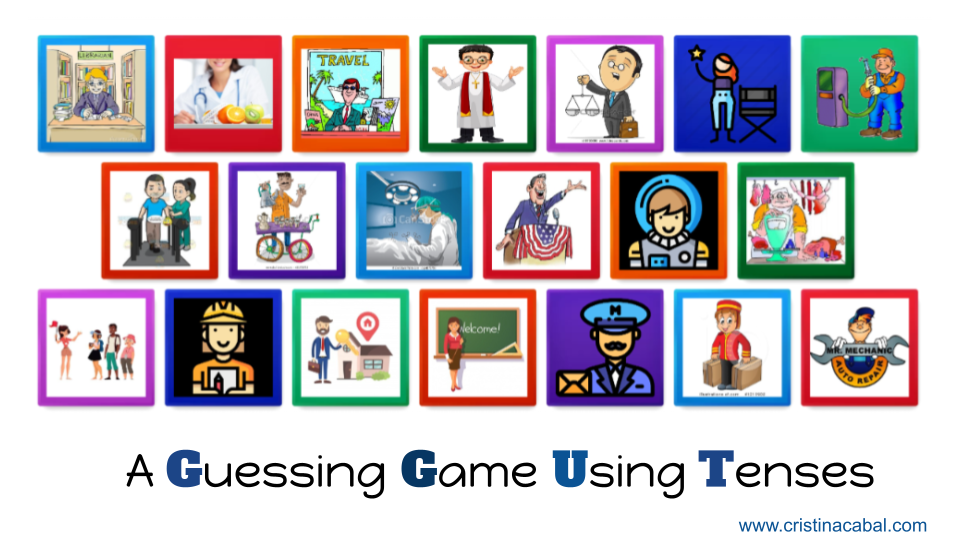
Revise vocabulary related to jobs using the FlipTiles template on Wordwall- see the game below. If you don’t want to create your own, you can always use mine. I’d be honoured.

In the Flip Tiles, you will see vocabulary for professions or jobs they already know like  teacher, architect… and some more challenging ones like priest, street vendor or surgeon. That was the idea, to revise old content and introduce new.

And so, we spent some time guessing the words and flipping the tiles.

Bonus. Fun revising activity:  after revising all the vocabulary on the tiles, I pointed at one job and instructed students to repeat after me but only if the word matches the tile and remain silent if I was making a mistake. Fun! I told you.

More? Yes! You can do the same with pronunciation. Instruct students to repeat after you only when you have pronounced the word correctly. 😊(most of the times  I give myself away when doing this exercise)

Step 2: Writing. Using Grammar.

Individually, students choose a job from the ones displayed.

Ask students to write clues for this job without mentioning the job. Tell them they will then read their sentences aloud one by one and the class will have to guess their job.

They will need to write three sentences:

  1. Using the present perfect continuous
  2. Using the present perfect
  3. Optional: using the past simple

Example.

  • I have been training all morning  ( 3 points)
  • I have scored two goals today (2 points)
  • Yesterday, I played a match (1 point)
Step 3: Here comes the fun

Ready to play? Divide the class into 2 teams. Instruct a student from Team A to read his/her first sentence, ie, his/her first clue to the job. If members of the other team guess the job only by listening to the first sentence, they score 3 points; if the second sentence needs to be read, they score 2 points and well, you know what the score is if the student needs to read sentence number 3 or if they can’t guess the job.

I hope you have enjoyed this little game. If you use it, let me know how it goes.


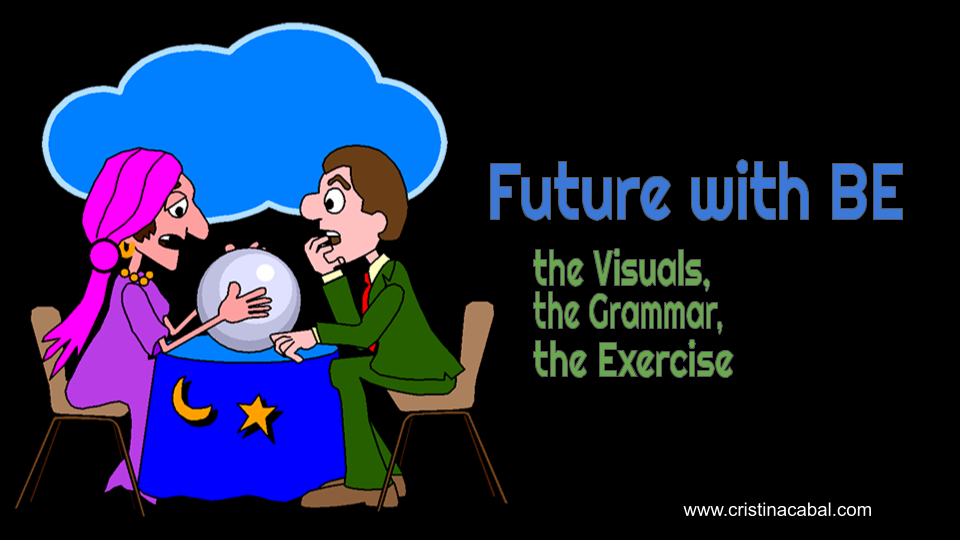
The Future with Be: the Visuals, the Grammar, and the Exercise

After over a decade of running this site, if I have developed one signature post, I would say it’s ideas to bring to life content from the course books.  That’s, at least, the posts I enjoy writing the most.

But, in this post, the star of the show is grammar and the featured tool is one of my favourites, for its versatility and visual impact. I am sure you all know and tried and fallen in love with Genial.ly, so I am not going to waste your time or mine talking about it.

Whether explaining grammar or doing a speaking activity, visuals play a very important role in my teaching. Is it the same for you?

Finding the right visuals to accompany a point of grammar is not a task you do in the blink of an eye; it takes time and it is never entirely fulfilling as you are left with the feeling “there should be a better picture to represent this if only I kept looking”. Unfortunately, time is tight and sometimes you just have to make do with what you have.

Without further ado, let me introduce to you the visuals.

The Visuals:

After writing on the board the point of grammar we are addressing –the future with the verb “to be”– and eliciting some structures they might already know, I display the first picture.

  1. Students, in pairs, try to come up with a sentence that describes the picture.
  2. Listen to their sentences. In most cases, they will give you a “be going to” sentence, but someone is likely to give you the “right” one. If not, don’t despair; this will only happen the first time you show the pictures. The second time -yes, there is a second time and even a third- they will do better and quickly come up with your same sentence or a similar one.
  3. Click to show your sentence, explain without getting into much detail, move to the next picture and repeat procedure.
  4. Once, you have shown them all the pictures; start again, this time a little bit faster.


The Grammar

Now that students are familiar with the structures, let’s jump right into the grammar. Rules should be very easy to understand now.


The Exercise

This grammar exercise is from their textbooks and yes, I know you can do this same exercise in their books, but it is not the same, is it? The exercise in their textbooks can be set for homework to reinforce this point of grammar.

You can even divide the class into two teams. Display the first sentence, give them a minute to rewrite the sentence using the future with the verb to be and then ask Team A to challenge a student from Team B to say the sentence. If the student from Team B gives a correct answer, he will score a point for his/her team; if incorrect, the point will be awarded to Team A. Display the second sentence and repeat procedure with Team B.

3 Fun No-Prep Games to Practise Present Perfect Simple and Simple Past

Although I might seem like an organized and methodical person from the outside, the truth is that, in some areas, I am or can become highly and hopefully disorganised.

Context: this week I am teaching Present Perfect Simple /Continuous and its use in combination with the simple Past. I know that, over the years, I have written several posts with games and activities featuring these tenses. Problem? I have so much content on the blog, that, sometimes, it is hard to find what I am looking for. See my problem?

The idea when I started this blog was to have a repository of activities I could resort to, when needed, quickly. For the most part, I have managed to do it. However, in this case, I had to trawl the blog looking for these activities. And this is precisely what has prompted this post. Having them together. Easy to find. Up for grabs! I am not sure which activity I’ll use this year but what  I know is,  it will be easy to find now.

1.How Long?

AIM: To orally practise asking and answering questions using Present Perfect and Simple Past.Suitable to practise for and since and the present perfect simple/continuous and the simple past.

INSTRUCTIONS


  • Organize students into pairs.

  • Student A selects a picture and asks Student B a question based on the image, using “How long” + Present Perfect.

    • Example: “How long have you had your car?”

  • Student B answers using the Present Perfect and for or since.

    • Example: “I have had my car for 8 years.”

  • Student A asks a second question related to the picture using the Simple Past.

    • Example: “Was it very expensive?” / “Did you pay a lot for it?” / “Where did you buy it?”

  • Student B answers using the Simple Past

  •  Another picture is chosen and it’s now Student B’s turn to ask.

R
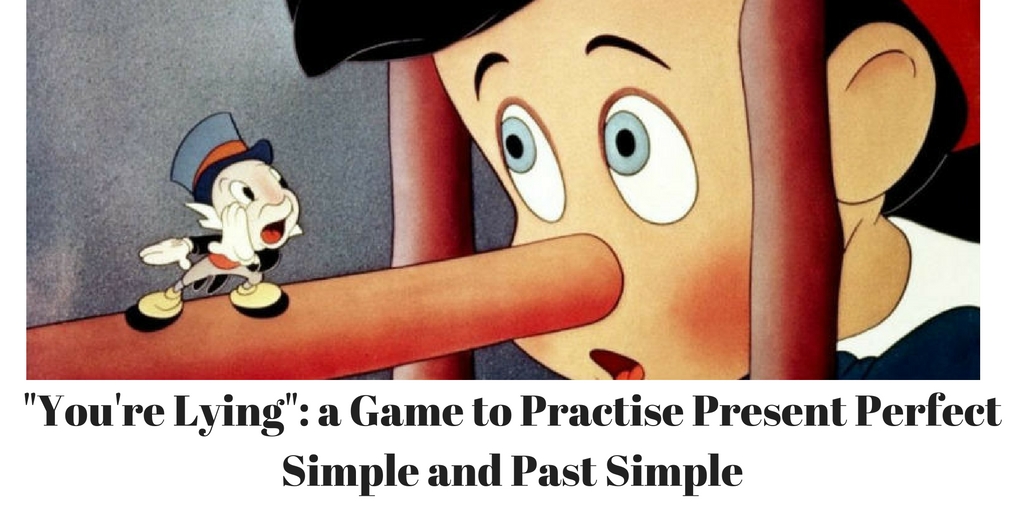
2. You are lying
A speaking game to consolidate the use of present perfect simple and past simple. Ready for a lot of fun!  Handouts provided.
Read all about it here!
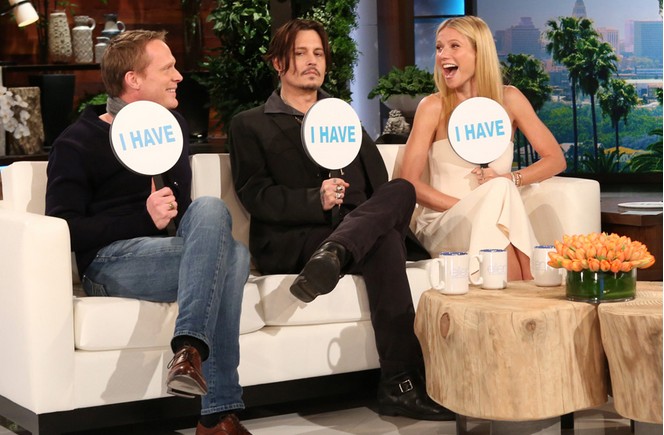
3.  Never Have I Ever
This hilarious speaking activity is fairly simple and requires little preparation. It helps consolidate the use of the present perfect to talk about life experiences.
Read all about it here

A Digital Board Game to Use “Would you Rather” in Speaking and Writing

Is there anything better than a little game to break the ice?

This board game I am sharing with you today is meant to be used as a get-to-know-each-other activity for my first class, but I am sure it can be used in other contexts.

Here’s the thing, I like games as much as the next girl;  buut…, although I haven’t started teaching yet, I already feel the pressure of an overwhelming curriculum. Is it the same for you? So, first-day fun speaking activities? Totally. But, and this is a big “but”, adding a grammar structure that needs to be learned.

This year, goodbye normalcy. So long. See you next year. Hopefully.


  • Aim: to teach or revise “would rather” in positive, negative, and interrogative sentences
  • Skills: speaking and writing
  • Level: B2 and upwards
  • Handout: “would rather” grammar, here

After explaining/revising the grammar and giving and asking for lots of examples both in written and spoken form, it’s time to play with our digital board game. I have used Genial.ly, one of my fave sites, to create content for my classes.

The instructions are pretty simple.

  1. Ask students to work in pairs.
  2. Throw the built-in dice and move the counter.
  3. Click on the square and a would you rather question would be displayed.
  4. Ask students to work in pairs expressing their preferences. Encourage them to elaborate on their answers.
  5. Choose a couple of students to express their preferences aloud for the rest of the class. You can always ask someone who has chosen a different option in the would you rather question. Students answers should follow this model:
  •            Question: Would you rather be Donald Trump or Melania Trump for a moth?
  •            Answer: I’d rather be Melania Trump than D. Trump because…

       6. Writing: if they land on a square with the question gif, students will need to write a “would you rather” question for the teacher. Yes. You have to answer. You are allowed some white lies, though.

EXTRA: to spice up this activity a bit more, you might ask random students to guess your preference.

Note: You might want to click on the arrows to enlarge the board


FOLLOW UP: Working with Would you Prefer

Below, you will find the same board; only this time, students will be required to use a Would Prefer structure

  • Would you prefer to be Donald Trump or Melania Trump for a month?
  • I’d prefer to be Donald Trump rather than Melania Trump because…


This is a perfect example of killing two birds with one stone: same board, two grammar points.

Passive Sentences: from Basic Grammar to More Advanced Points

Oh dear, another bizarre and unreal week. I know we will all be struggling to get through it so thank you for stopping by. I hope you can find on this blog lots of ideas and lesson plans which will make your teaching easier.

Today, what I want to share with you is nothing fancy but probably useful.  A bunch of teachers from different Official Language Schools in Spain have gathered together to host webinars trying to help teachers shift to online teaching. In one of them, given by Fernanda from EOI Málaga, I learned how to use Google Sites to create, in a flash, beautiful websites. It literally took me less than 15 minutes to put together what you can see when you click on the picture.

You can see her webinar here and subscribe to the channel for more interesting webinars here. You might also want to see mine covering Flipgrid  here

Anyway, this is a Google Site I have shared with my students to help them revise Passive Sentences. There is also a board with a speaking activity I am planning to play with them in our weekly speaking session via 8×8.vc

Without further ado, here’s the lesson. I hope you find it useful! https://bit.ly/2UMtzJ4