Tag Archives: B1

Please, Come In! 3 Activities to Start Off the Course on the Right Foot

Ahh almost October! How are we here already?

I can’t even wrap my head around the idea that this is going to be my 27th year teaching English. Time, please stand still! OMG, It makes me cringe to even think about it! Ugh. But, here we are.This is life.

I know, I know. Most of you have already started classes in late August or early  September, but here in the EOI in Asturias, we dedicate the whole month of September to assessing written and oral exams. Nothing to envy here, trust me!
Anyway, a new school year, new students, a fresh start, a clean slate. I feel like in these 27 years I have tried all the different get-to-know-you activities that have been used all around the world, so this year I’m going to recycle and tweak some of my favourite activities,  changing the context to fit the mood.

So, the plan for the first day is the one below. An interactive game to revise grammar and vocabulary from the previous year (lots of fun, but also lots of learning) and not one, but 2 highly engaging speaking activities that can be considered, if you wish, get-to-know-each-other activities but that can be easily adapted to any context.

Activity 1. A Kahoot to revise

We will start the course playing a Kahoot to revise some of the content studied in the previous course. Always fun and to be honest, I am going to be recycling the one I did last year. That’s one of the things I like about technology, it’s paperless, recyclable and “findable”( meaning, easy to find,  yes, I know, I have just invented the word)

If you ask students to play in pairs or in threes, you’ll just need a device for each group. I like playing Kahoots in groups. It enhances learning as students will need to discuss the right answer and it’s more engaging and therefore much more fun.

This is the link in case you want to use my Kahoot. Here


Activity 2.  Welcome post-it notes
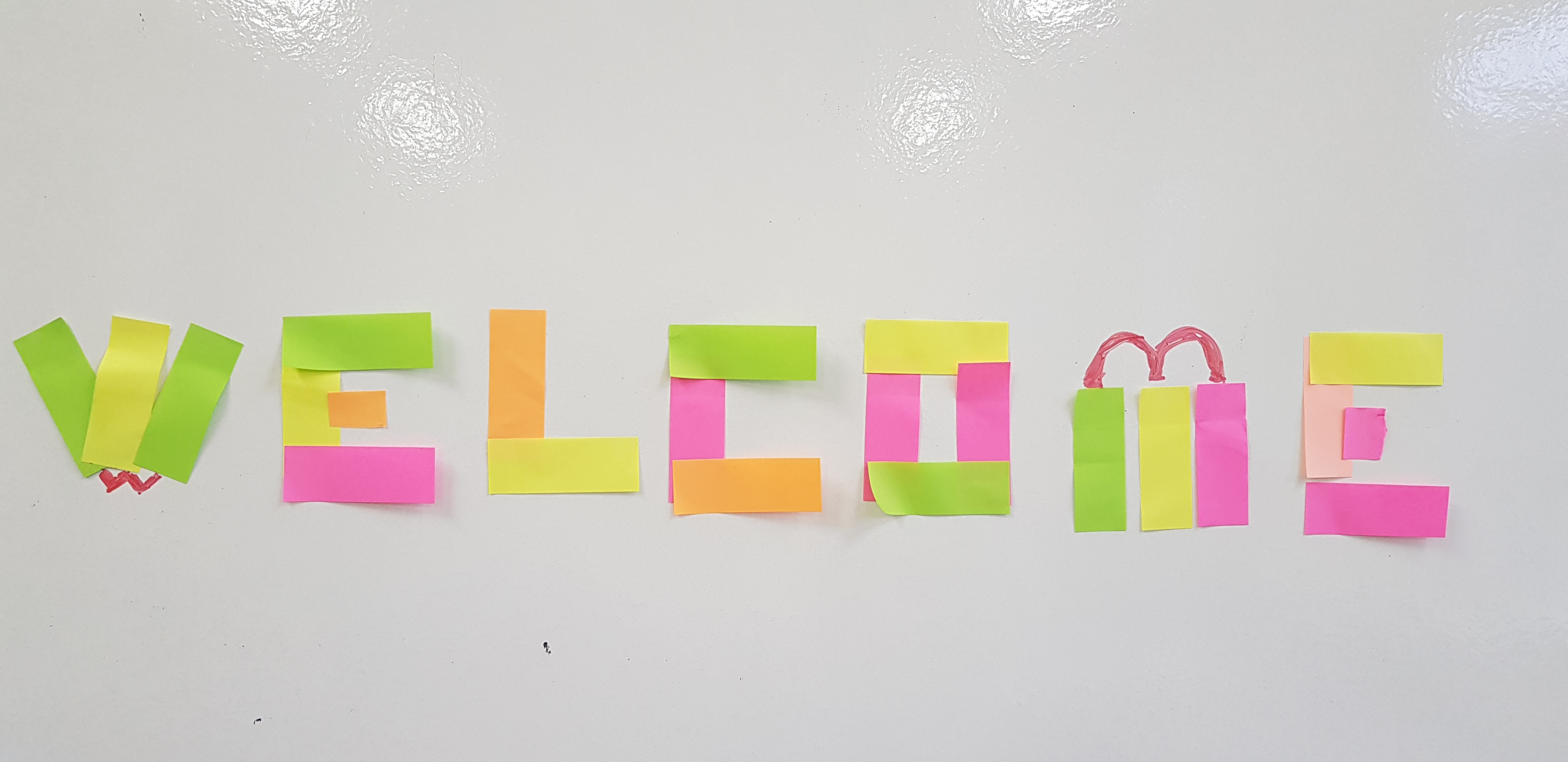
(I know! It looks home-made, but this is because it is)

  • On one wall of the class, I have displayed the word “Welcome” formed using Post-it notes, as in the picture.
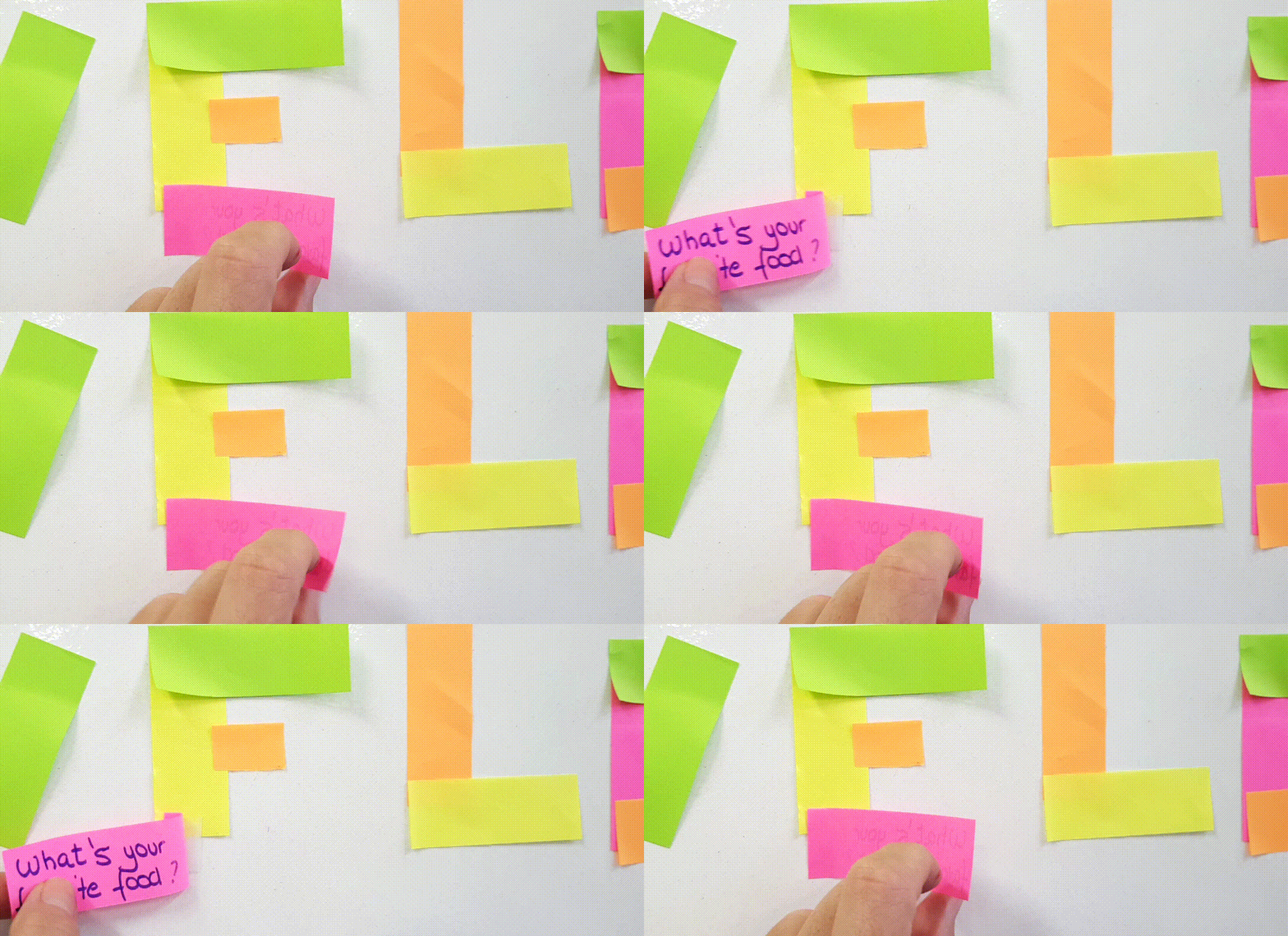
  • On the back of each post-it note, I have written a question that will help students and teachers get to know each other.
  • I have asked students to stand up and pick a post-it note containing a question.
  • I have asked students to remain standing, pair up with another student and ask each other the questions on their post-it notes.
  • I have allowed them about 4 minutes to ask and answer their questions before asking them to find a new partner.
  • I have also participated in this mingle activity. After all, I also want them to know me and it gives me a good chance to assess their English.
  • Please, refrain from overcorrecting or even correcting. It’s their first day.

Can’t think of questions to ask? This site has you covered. bit.ly/2zqxcJP
Idea for the post inspired by Post-it.com

Activity 3. Yes, I have, I have never

This activity is just so much fun.  What do we need? We need slips of paper, as many as students in the class. I normally fold a regular sheet of paper in half, lengthwise, and get two slips of paper.

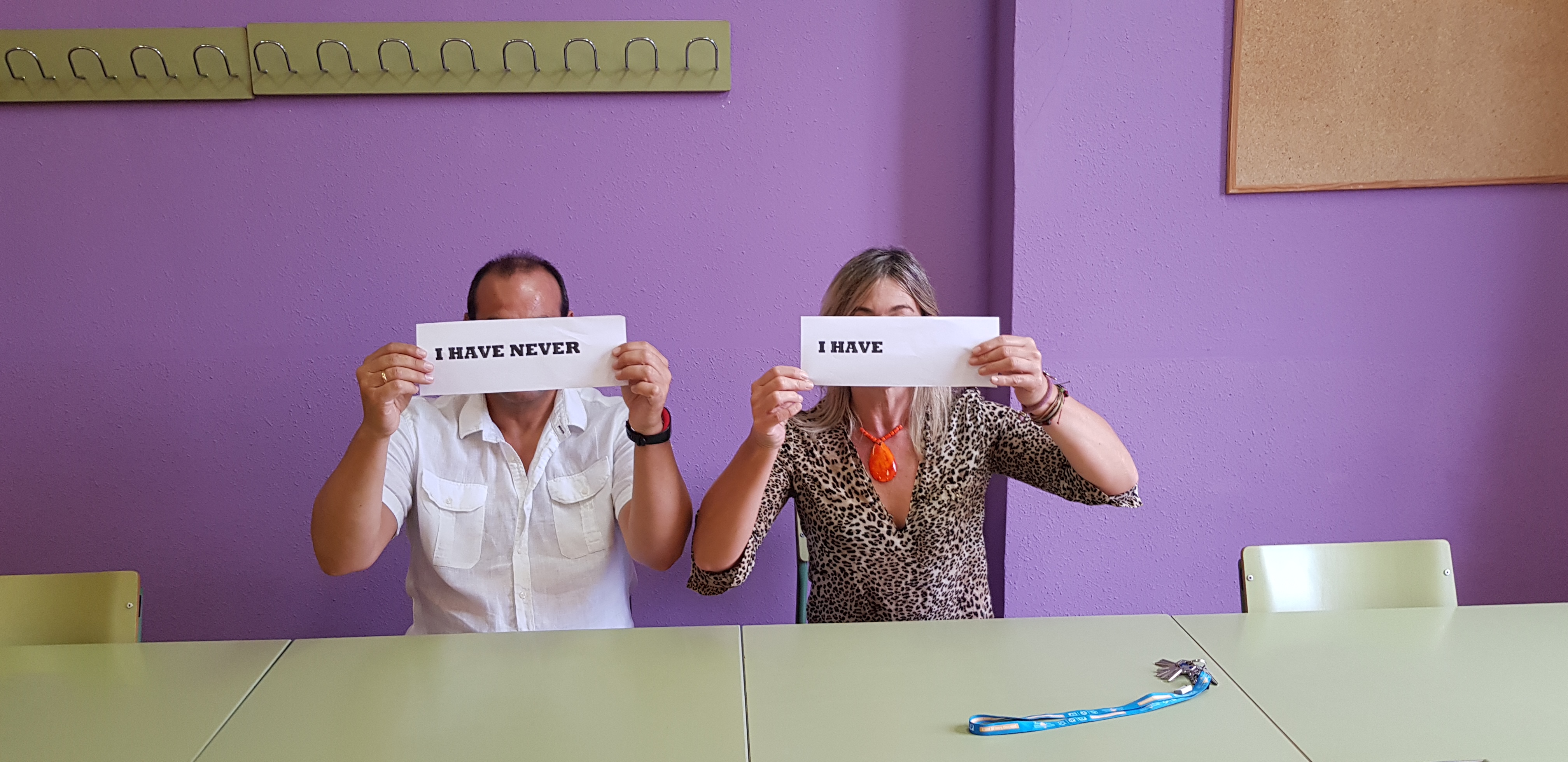
  • I ask students to write on one side I HAVE and, on the other side, I HAVE NEVER. Ask them to write the words big enough to see from a distance.
  • Tell students you are going to ask them questions and they should display their slip of paper with their answer to the question.

For example. Imagine that I ask  Have you ever failed an English exam?

In the picture below, you can see Julio, the German teacher, and me exemplifying the possible answers (sorry, as I said, classes have not started yet and I had to bribe a colleague).
  • Choose one or two students to elaborate on their answer and then ask another question and repeat procedure.
  • To add to the fun, and because it’s also important that students get to know you,  you should also have a slip of paper and once or twice give some details about you.

Note: Make sure you ask randomly I have and I have never answers, otherwise some students might never display the I have option.

Possible questions:

  • Have you ever been on TV?
  • Have you ever won a contest a received a prize?
  • Have you ever been stuck in a lift?
  • Have you ever got in trouble at school?
  • have you ever helped someone who was in danger?

Get more questions here and here  

Hope you have liked my first post! If you do not want to miss any of my posts, you might  want to follow Blog de Cristina on Facebook and on Twitter.

Great to be back!!! I’ve missed you!

Let’s Talk about Crime: is it Rob, Steal or Burgle?

Do you know the difference between steal, rob and burgleHow do we use these three verbs?

TO STEAL

You steal when you take (unlawfully) what belongs to someone else. The object of this verb is generally what you have stolen.Generally, you steal things. The person who steals is a thief.

  • Someone’s stolen my watch
  • He stole all my money
  • They wanted me to steal your ring

You can also  steal something from someone

  • He stole from me and from my friends
TO ROB

You rob when you unlawfully take something from its owner.You rob someone or you rob a place (bank, shop, house…etc. The person who robs is a robber.

  • I have been robbed
  • Robin Hood robbed the rich
  • He robbed a bank


A person or institution is robbed of something by someone or an entity

  • She robbed me of all my money
TO BURGLE

It means to steal from a building, a home…etc.   The person who breaks into houses, shops … etc to steal things is a burglar.

  • My house was burgled last night
  • She has been burgled

Test your knowledge with this exercise.

Click at the top right-hand corner to enlarge the window (red arrows)


A Low-Prep, Low-Tech Discussion Game to Activate New Vocabulary with a Simple Scrap of Paper

Naturally, I am a huge supporter of any activity that involves students getting out of their seats and interacting with other students. Also, if you have been reading me for a while, you will surely know that I am always worried about making vocabulary stick.
So, this super simple activity combines these two things+ zero preparation. How does that sound? Yes, I know. Besides, it’s compatible with any topic you are working with. Believe me, this activity is a hit.
There is a 99% chance that you will end up participating in the activity, but please, do not get all proper and spoil the fun by telling students to keep their voices down. Let them enjoy.

Aim: to make vocabulary stick by revising, reinforcing and using it.
Topic: Any. I was working with the theme of environment, but any topic would do
Level: Any.

How to go about it

Revising.

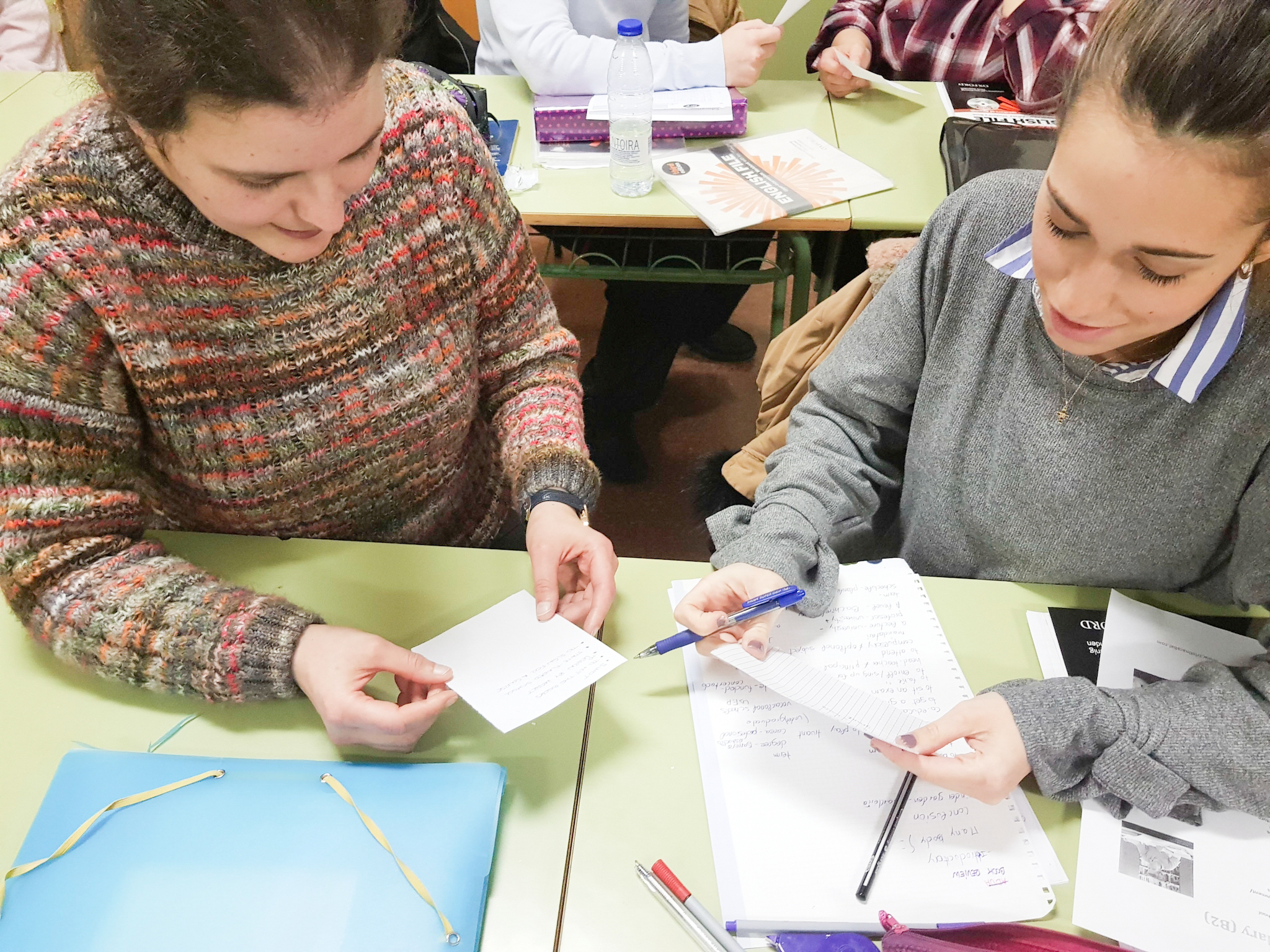
1. Revision with slips of paper. Start by revising the vocabulary you have introduced in previous lessons. I usually write the vocabulary I need to revise on slips of paper, place myself in the middle of the classroom (desks are arranged in a U shape) and very quickly give a short definition, synonym or antonym. The student who guesses correctly gets the slip of card. The winner, as you might have guessed, is the student who has more cards at the end of this activity. I do this activity very often. I think I like it because I can see that my students love it and it is a good exercise not only to revise meanings but also to work on pronunciation.

Writing.

2. Writing 5 newly- acquired words. Ask students to write on a small scrap of paper 5 words they have learned. If they have learned “make the most of” for example, encourage them to write the whole expression and not just “make the most “.

Speaking

3. On the board, write a question for the students to discuss in pairs.

4. Tell the students to stand up with the scrap of paper containing their words and choose a partner to talk to. They can sit down if they want to or they can remain standing.

5. Ask them to swap the pieces of papers and read the 5 words on it making sure they know what they mean. If they don’t, they should ask their partner to explain or clarify meanings

6. Point to the question on the board and ask them to discuss it trying to introduce as many words as possible from their list of words. Allow 4 or 5 minutes to discuss this question.

7. Important step: Ask students to swap lists again before asking them to stand up and find a new partner.

8. Write a new question for discussion on the board. Ask students to sit down with their new partner, swap the scraps of paper and repeat procedure.

My students said they loved the game! Let me know what your students think if you decide to give it a go.

Follow us on Facebook and on Twitter

The Liar: a Present Perfect Continuous Game.

This week is not supposed to be a game week. I can feel the “exam cloud” starting to creep up on me. Yes, exams are just two weeks away and I should probably be dedicating the whole lesson to revising. And I‘ll do it. I promise. And it will all be very academic and probably boring.  So what you are about to read is very likely the last fun activity I’m going to do with my students before exams but students deserve a break from time to time and I’m sure they will enjoy this little game to revise the Present perfect Continuous. Besides,it is a ton of fun.

I have to say that I have not invented the game. I was kindly offered to me by a teacher from EOI Plasencia (hello Maite Martínez) after an enjoyable training session. I asked her to write a guest post explaining the game, but she kindly refused and said she could not do that as she was not the author adding that the game had been in her possession for a long, long time and couldn’t remember where she had got it from.

I have googled up the game trying different combinations, but I could find no trace of it. So I have decided to publish it.

Please, if you are reading this and you’re the author, write to me to give you proper credit.

Now, with the game.

Aim: to practise the present perfect continuous in the pattern:

  • How long have you been playing golf?
  • I have been playing golf for 6 years


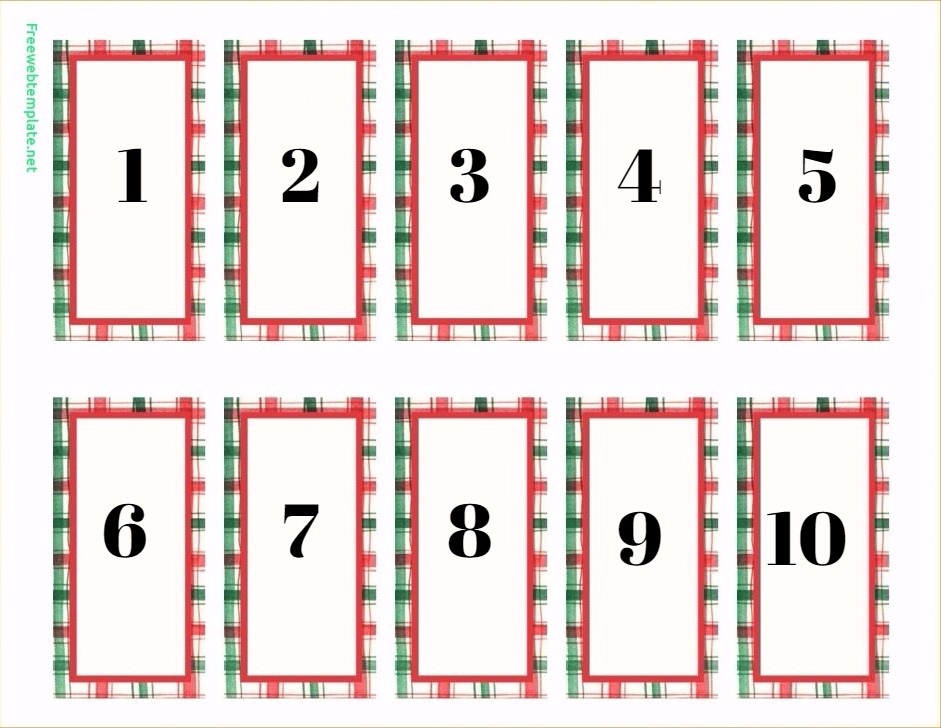
Before the game: You’ll need to prepare cards with the numbers 1 to 10. You will need a deck of cards for every four or five students. Numbers (1-10) will be repeated three times in each deck of cards. So, you will have three 1s, three 2s, three 3s… etc, ie, a 30-card deck.

You can download mine here.

The object of the game is to get rid of all your cards.

  • Ask students to play in groups of 4,5 or 6.
  • Tell students they are all “nouveaux riches”.
  • Someone in the group shuffles the cards and deals them out. All of them.
How to play:

  • Player A, the person on the right of the dealer, begins. He turns to Player B, the person on his right, and asks him a question. For example:

                   How long have you been eating at Maxim’s?

  • Player B puts one of his cards face down on the table without showing it to anyone and answers, for example:

                    I have been eating at Maxim’s for 5 years.

Important: You must always put down a card equal to, or more than, the previous card. Player B will need to put down a card with a number higher than 5. If you cannot do this, you must lie and hope not to be challenged to show your card. 
  • Now, Player B repeats exactly the same question Player A asked him to Player C, the person on his right. Player C answers and puts one of his cards face down on top of Player B’s card. For example:

                  I have been eating at Maxim’s for 7 years.

  • Now Player C repeats exactly the same question to Player D. In this way, play moves round the circle in turn.
  • If any player suspects that another player is lying, they can say:

 Stop! I don’t believe you- let me see that card.

  • If it’s a lie, that player must pick all the cards on the table. However, if he was telling the truth, the player who challenged him must pick all the cards.
  • After a player has picked all the cards, it‘s he who starts the game again asking a new question.
  • The first player to get rid of all his cards is the winner.

List of snobbish things to do

  • Ski in St Moritz
  • Eat caviar
  • Play golf
  • Fly business class
  • Wear Armani clothes
  • Vote conservative
  • Shop at Harrods
  • Drive a Porsche
  • Go on cruises

Blog de Cristina is on Facebook and on Twitter. 

Top Website to Help you with Writing

I’m not a native speaker. I work in English, write, read and watch TV in English. In short, I breathe English. But I’m not a native and I’m not ashamed to admit that sometimes, especially when correcting written work, I have this feeling that a collocation is just not right but I cannot I come up with the correct one straight away.

Has it ever happened to you?

I could rely on my instinct, I could certainly do it, but sometimes I just can’t without making sure I’m doing the right thing. Problem is that a dictionary would be no help here as we are dealing with more complex issues. We are not talking about grammar or vocabulary meanings, we are dealing with how words collocate with some words, but not with others and this is just something that if you are not a native, you will have a hard time deciding whether it is correct or a bad translation from your native language. The problem, of course, is that to your non-native ears it might sound perfect.

For example, let’s take this simple sentence

Global warming is produced by…

Does it sound Ok to you?

For a Spanish speaker, this sounds just right.  But is it a natural collocation in English?

Doesn’t Global warming is caused by… sounds better?

When I am in doubt, I  have a bunch of useful websites I use, but my favourite for this kind of problem is Netspeak. Please check my post Six amazing Websites that Make your Writing Stronger to read about this “bunch”  I was referring to.

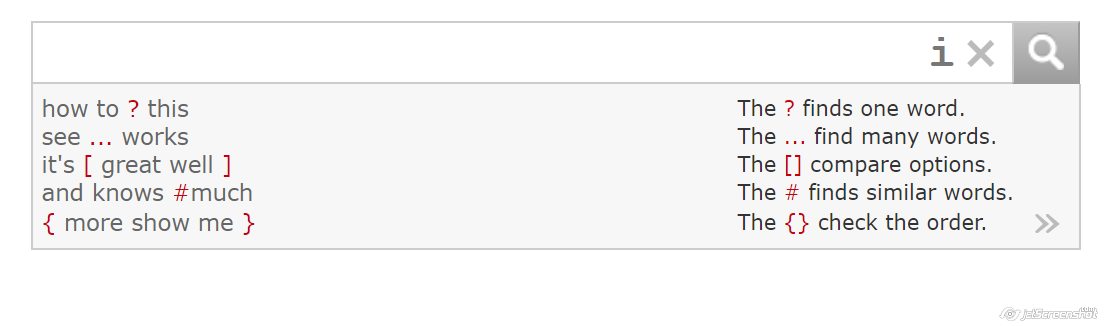
So, when I am not sure if “xxxx ” is correct, this is what I do.

What else can you do on Netspeak?Among other things:

  1. If you have forgotten a specific word, type ?   Ex:  ? for granted
  2. If you need to find many words, type   Ex …granted
  3. If you are not sure about two words or want to compare them [] Ex It sounds [good well.

Blog de Cristina is also on facebook. Click here to follow us