This is a nice presentation given by Carmen Menéndez , a student at the Elementary Level.Click on View Full Screen on the slides to see them better.
Category Archives: Resources
Speaking: Practising Modals
I shouldn’t be saying this but I have to… I hate teaching modals and I am not a hundred per cent sure I am the only one to blame for this.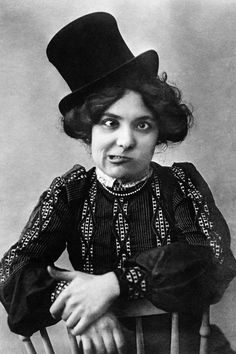 Maybe grammarians should reach an agreement on how best categorise them ?
Anyway, let’s face the teaching of modals with some speaking activities to help lift spirits. Mine, of course!
ACTIVITY 1.EXPRESSING ABILITY: CAN
Work with a partner. Take turns asking your partner questions about the abilities in parentheses. Use Can in your questions and Can or Can’t in your answers. Demonstrate you can -let’s have fun, shall we?- where necessary:)
♥ (say the alphabet backwards)
♥ (wiggle your nose)
♥ (read in a car without getting sick)
♥ (touch the end of your nose with your eyes closed)
♥ (curl your tongue)
♥ (remember your first teacher’s name)
♥ (raise one eyebrow without raising the other)
♥ (cross your eyes)
♥ (pull your fingers backwards to your wrist)
Do you have any other outstanding abilities?
Ready to continue…?
ACTIVITY 2. In pairs once again, talk about the following…

Picture Description: Elementary Level
I want to share a few pics that I am planning to use in today’s elementary classes to practise Picture Description. I published this activity last year and it worked so well that I guess I’ll be forever using it. So here it is again!
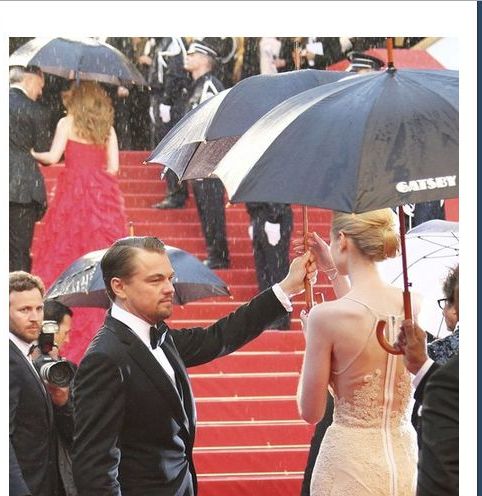
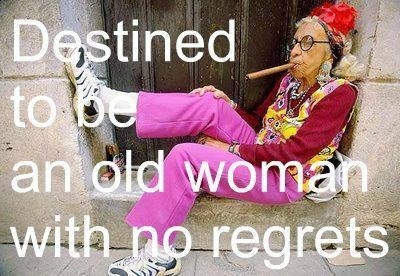
For this activity the students are sitting in pairs, one student facing the board and the other with his back to the board. Using the OHP, a picture of people performing something is displayed. Now, the person seeing the picture has to describe it in as much detail as possible and the other person has to draw the picture. Allow them four or five minutes and then choose the best picture. Below are some of the photos I’m going to use and some expressions they need to use. (note: we have just begun describing photos, so right now I am teaching the basics. Hopefully, I’ll be teaching the contents in this photocopy soon ( Click here to see it)
Introduce the photo: This photo shows…. I can see
Location: on the left/right , in the middle, at the front/back
The people (appearance and actions) She looks sad. He is reading
Your opinion: I think…. I like it because…


Easy Peasy! Have a nice weekend!
Creating a Poster : Keep Calm and Carry On
“Keep Calm and have a relaxing cup of cafe con leche in Plaza Mayor”said A. B , Mayor of Madrid in an amazing English
The Keep Calm-o-Matic is a nice site where you can create your own poster . This is mine for my classroom 😉
The poster with the words KEEP CALM AND CARRY ON are all the rage nowadays. But what does it mean? A bit of history is due…
The poster was produced at the beginning of the Second World War by the Ministry of Information to strengthen morale in the event of a wartime disaster, such as mass bombing of major cities using high explosives and poison gas, which was widely expected within hours of an outbreak of war. Over 2,500,000 copies were printed, although the poster was distributed only in limited numbers, and never saw public display.
The poster KEEP CALM AND …was third in a series of three. The previous two posters from the series, “Freedom Is In Peril. Defend It With All Your Might” and “Your Courage, Your Cheerfulness, Your Resolution Will Bring Us Victory” were issued and used across Britain for motivational purposes. An icon of a “Tudor” crown (a widely used symbol of government authority) was chosen to head the poster, rather than a photograph. The slogans were created by civil servants.
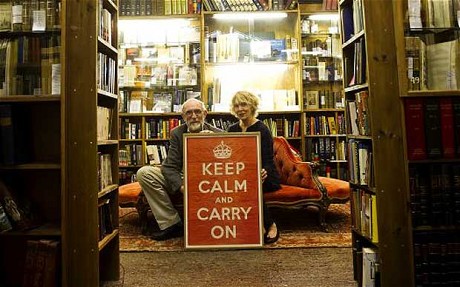
In 2000, Stuart Manley, co-owner with his wife Mary of Barter Books Ltd., was sorting through a box of used books bought at auction when he uncovered one of the original “Keep Calm and Carry On” posters. The couple framed it and hung it up by the cash register; and it attracted so much interest that Manley began to produce and sell copies. Other companies followed suit, and the design rapidly began to be used as the theme for a wide range of products.” Source Wikipedia
Word on the Street
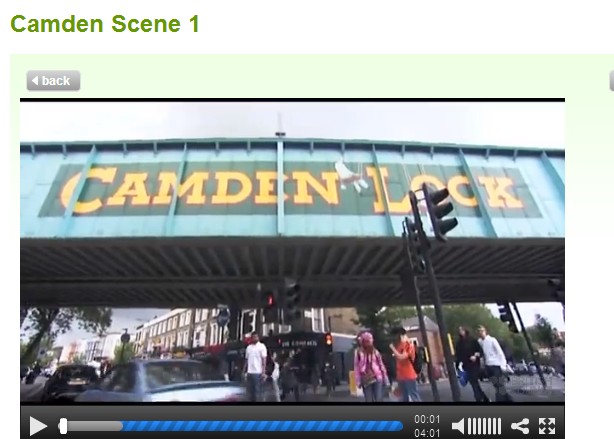
I just love this section in the British Council website. Word on The Street is a co-production of the mighty BBC and  the British Council. If, on their own, they produce superb material you can only imagine the outcome when they decide to join efforts and work together in the production of short videos (4 or 5 m) to teach everyday life and different aspects of the British culture. The videos are easy to watch, some of them accompanied by captions that help elementary students follow and divided into scenes for a deeper understanding. There are several tasks you can do after watching the video and you can also have a look at the tapescript. Some of the most popular videos are: Oxford, Travel and Transport, Camden, Animals…etc. Aren’t you dying to try some of these? My favourite will most definitely be Camden. I am in love with the market!