Tag Archives: vocabulary

Modern Taboo with a Twist

Is there anything students love more than a good game? The Taboo Game is an oldie but goodie and I have yet to find a student who does not like it.  Playing and learning? It’s always a win-win.
Playing games in class is something that I often do. Well, not this year. I have been on sick leave for 2 weeks and it is taking its toll on my lessons. I feel like I am always in a  hurry trying to make up for lost time. It might be working. I might be finally catching up with the syllabus but I am not having as much fun this year as in the previous ones. And this needs to stop. Right now.

So, to give my students a much-needed respite, we have revised the relative sentences using the Taboo game.

GUIDED PRACTICE: RELATIVE SENTENCES
  1. Before playing, I wrote the beginning of a sentence and asked students to provide the relative pronoun. This is the best time to correct potential mistakes.
  • It’s a person… WHO/THAT
  • It’s something … WHICH/THAT
  • It’s  a place … WHERE
  • It’s a time … WHEN

2. I wrote the word  DOG on the board and asked students to define it using the correct relative pronoun. (for ex, it is an animal that barks).

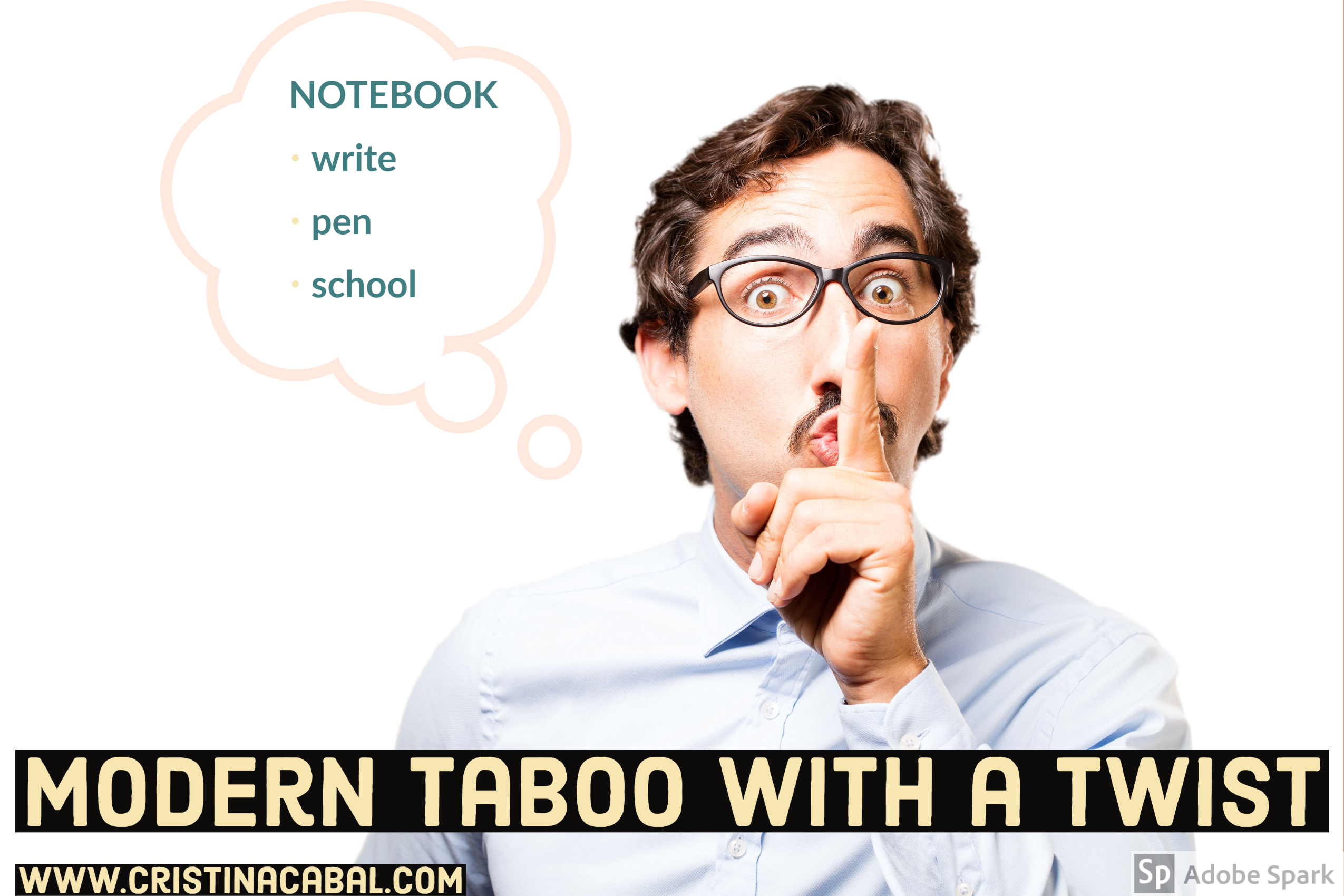
3. Then, I wrote TEACHER in capitals and under the word TEACHER, I wrote 4 taboo words they were not allowed to use in their description of the word. For example: teach, students, subjects, school. Their definition could be something like ” it is a person whose job involves using the board a lot and helping people learn  English or maths”.

Tip: if it’s a B1 class, I would use only 3 taboo words instead of the 4 you have in this game

SEMI-GUIDED PRACTICE: MODERN TABOO

Once again, to create this game I have used the flexible multipurpose Spark Adobe ( honestly, I cannot go without it).

Procedure:

  1. Divide the class into two teams and ask a representative from each team to come to the front of the class and face away from the board. Decide which team is going to start.
  2.  Player A faces their team A.  Display the presentation below. Team A describes the word at the top of the slide, without using any of the words below it (taboo words). If they use any of the taboo words, they will lose 1 point for their team and a new slide will be displayed. When Player A guesses a word, the team gets 1 point and a new slide is displayed.
  3. Team A continues to describe words for Player A for 1 minute. The game continues with teams and players taking it in turns to describe and guess words. The team with the highest score at the end of the game are the winners.

NOTE: Make sure you don’t use all the words on the presentation below. You will need at least 4 for a variation od the Taboo Game you can do at the end of the game to practise questions.

Taboo

FREE PRACTICE

Once each team has had their turn, I have put them in groups of 4 and given them paper cards to continue playing. This time, Player A describes the word to their Team. One player from Team B is allowed to see the card to make sure none of the words on the card are used. You can get plenty of Taboo cards on IslCollective. Bear in mind, you will need to register to download content.
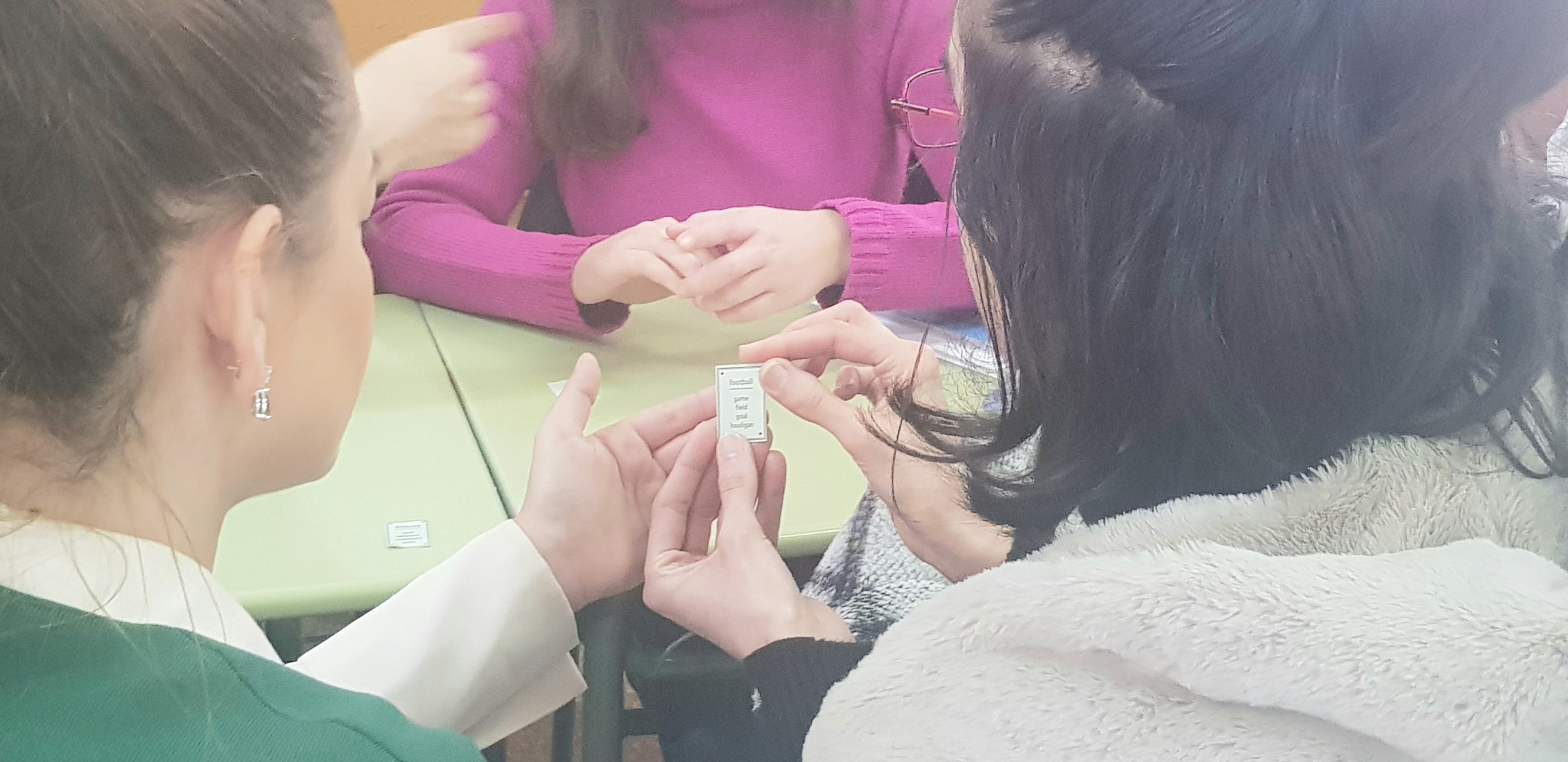
You can also download the traditional Taboo Cards here (B1-B2)  and here (A1-A2)

THE TWIST: ASKING THE RIGHT QUESTIONS

To wrap up the activity, ask a representative from Team A and Team B to come to the front of the class. Ask them to face their team and away from the board.  Display a word. The team will have to ask questions so that Student A guesses the word; again, they cannot use any of the Taboo words in their questions.

Remember our example?TEACHER? This could go like this…

Team A to Student A

  • Who helps you learn English?  Who is standing right next to you? Who writes your school report?

I hope you have enjoyed the activity! Have fun teaching, have fun learning!

8 Engaging ESL Activities for Teaching about Travelling

Engaging ideas and activities revolving about the topic of travelling coming right up!

These are some of the activities I have been doing with my upper-intermediate students. I thought I might share them with you, in case it saves you some time.

I have split the activities into two days as some of the activities in Day 2 require studying the vocabulary introduced in Day 1.

DAY 1

Activity 1: Tapping into students' previous knowledge with  Half a Crossword

As my students are upper-intermediate, it is not the first time they study this popular topic.  Therefore, to revise some of the words I thought they knew, I used the website Half a crossword. 

Activity 2: Introducing new vocabulary

Addicted to using technology in my class, as I have confessed time and again, I have used Genial.ly to create some flashcards.  The flashcards were initially used in class and then shared with them to encourage revision outside the walls of the classroom.

The flashcards contain common collocations related to travelling, but some words are missing. Before flipping the card, students try to guess the hidden word(s). The initial letters are provided to make guessing easier for them.

Note: click on the 3 dots to enlarge the presentation.


Activity 3:  Using their own pictures.

Think about it: how many pictures are stored on our mobile phones? What could engage students more than talking about what is real for them, about their own experiences, about their own trips?

Ask students to take out their mobile phones and ask them to choose their favourite picture from their last holiday. Allow some minutes for this part. Ask students to work in pairs or threes. Ask them to show the picture to their partners, talking about it and sharing the story behind the picture.  Encourage the use of the collocations in the exercise above.

DAY 2

Activity 4: Flexible seating using cards with common collocations and their pronunciation

This “flexible seating” strategy is quickly becoming one of my favourites to pair students with different partners. I explained the strategy here

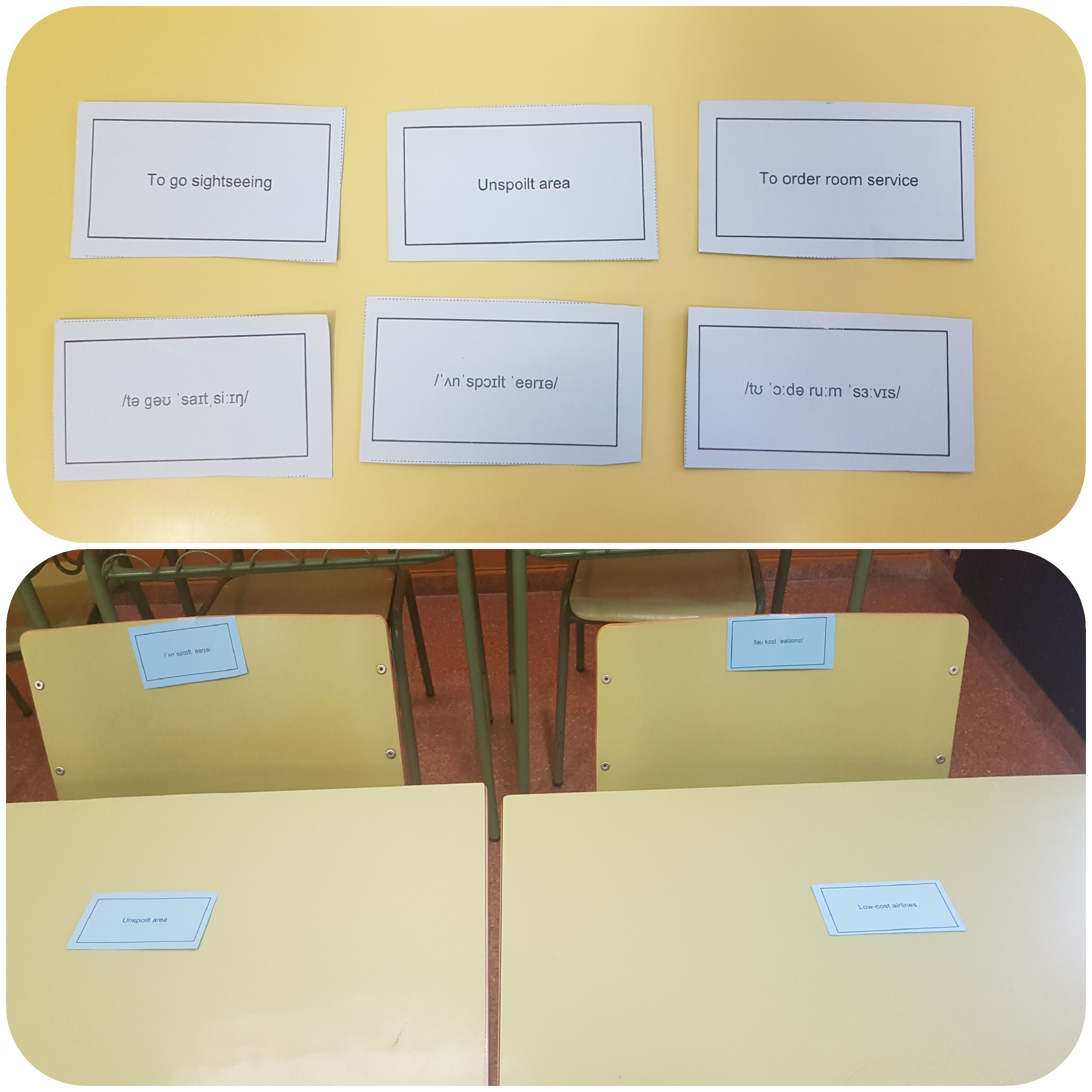
For this exercise, I sellotaped to the back of the chairs of the classroom the phonetic transcription of the collocations studied in the flashcard activity. This way, I killed two birds with one stone, as the exercise helped me to revise the collocations and ensure they pronounced the words in the correct way.  To transcribe the collocations, I used a website I have been using for years. Check it out here.

Cards here

Activity 5: Speaking: conversation questions

Using a presentation with some conversation questions I created on Spark Adobe some years ago, I asked my students to discuss the questions trying to use the collocations studied in Activity 4.

Every two questions, I gathered all the cards containing the collocations, shuffled them and redistributed them. This meant, standing up and finding the matching card with the corresponding pronunciation and then, sitting on that chair and talking to a different student.

Off the Beaten Track

Activity 6: Speaking: Ethical Dilemmas

Groups of 4 students.  I displayed the first dilemma and asked students to pair up within the group and discuss for some minutes what they would do.  Then, I asked them to share their ideas in their groups and finally, we had a whole-class discussion.


Activity 7:  Gallery Walk with Posters and Vocabulary on Cards

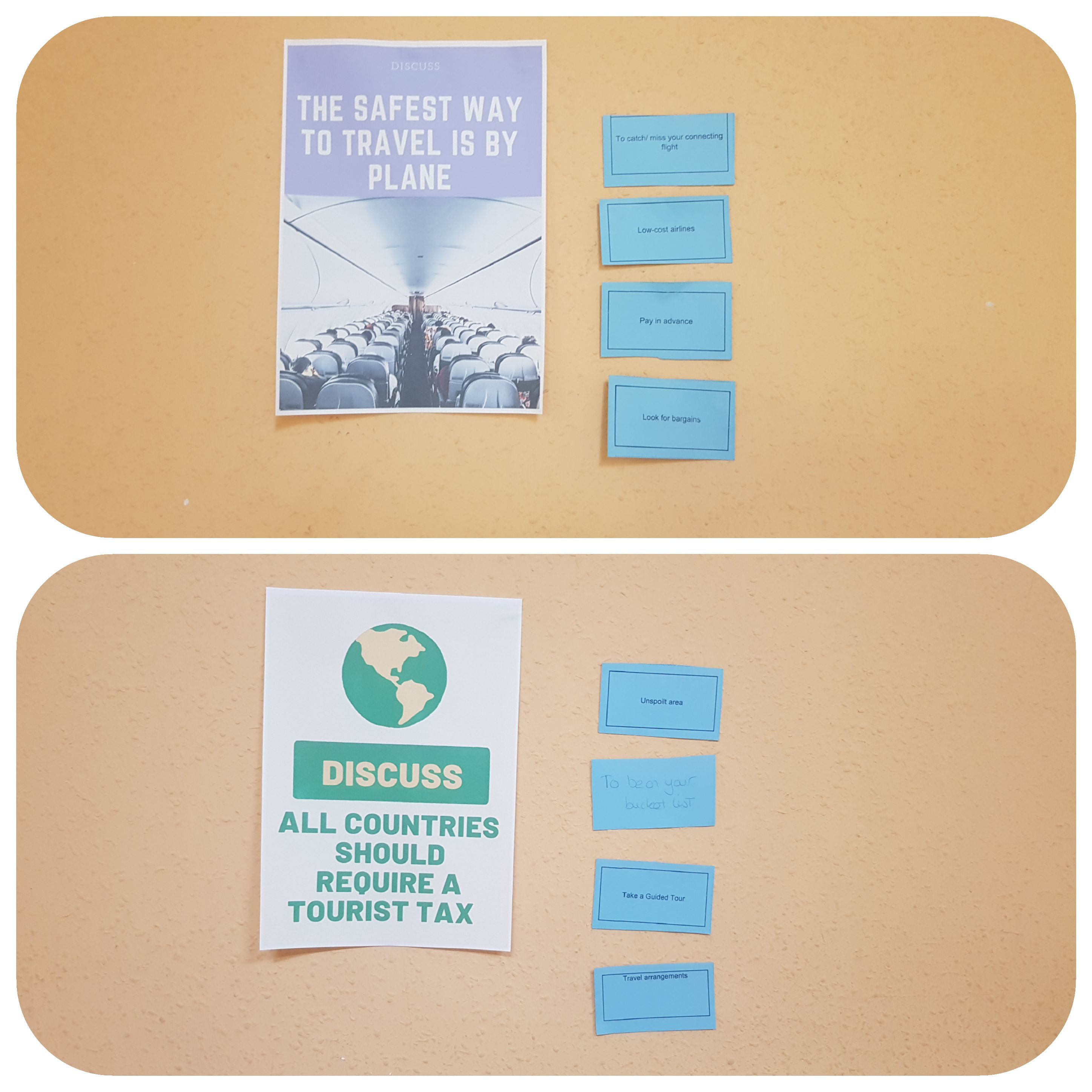
I created some posters using Canva.com and put them on the walls of the classroom. To form groups, I numbered them off and asked all number 1s to form a group, all number 2s to form a group, …etc. This way, I made sure they worked with different students.

Before the class, I put the 5 posters up on the walls of the class. Next to the posters, I also put 3 or 4 cards containing common collocations from Activity 4.

I instructed the groups to choose a poster and discuss the question in the poster, trying to use the vocabulary in the cards.

I did not set a time for each poster, I gave them the freedom to discuss as much as they wanted, but encouraged them to do at least three posters. I dedicated 25 minutes to this activity.

Posters here

Activity 8:  Using Google Maps Street View for Virtual Travelling

Giving your class a touch of modernity can’t get any easier. Ask your students to pick a city—any city in the world is at your fingertips-, and ask them to give a short speech about that city.  Just open Google Maps, write the keywords in the search box, drag the Pegman and enjoy the virtual trip. For more details, click here

Create your Own Board Game to Practise Speaking and Activate Vocabulary

It is true that there is so much material out there for our English classes that most of the times, we just need to type some keywords on the internet and voîla, we have it. But, think about it, has it ever happened to you to come across some great material but not just exactly what you are looking for?  To me. All the time. And that’s probably why I am always on the lookout for new sites to help me create my own content.

This happened to me last week. I wanted to give my students a board game with conversation questions about sports and at the same time, use a little game to activate the vocabulary we had been studying.  I was lucky, from my files, I rescued an old board game that I had used a long time ago. But although it served the purpose, I was not entirely happy and therefore I set out to trawl the internet looking for an editable board game where I could write the questions I wanted my students to discuss.

And as Jeremiah the prophet said, “You will seek me and find me when you seek me with all your heart”. Well, I must have put all my heart into it ‘cause I found it. The design is not perfect but hey! it’s free. 

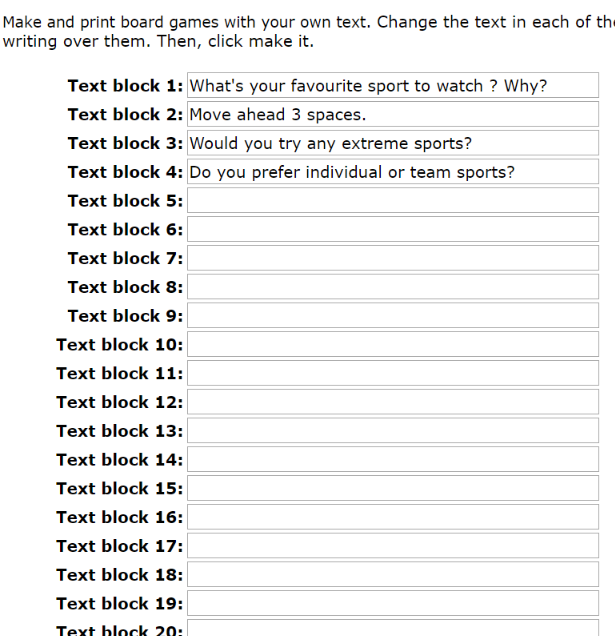
 Tools for educators is a nice little site which offers online editable templates. You just choose the template and write your own content. 

In my case, I have used the board game, but you can explore the other templates it offers. I am dying to try the dice generator. I don’t know how I am going to use it yet, but use it I know I will. 

So, this is what it looks like. You will need to fill in the 21 squares. If you don’t, it will still print the board but with some blank squares. Options when you have run out of questions?  Move ahead one space, move back two spaces… Once you have written your content, just print it.

Activating vocabulary

This is a great way to review any subject that needs a little jazzing up

  • Give students 5 pieces of paper. I normally reuse discarded printed with a blank side, which I cut into approx 10×5 cm pieces.
  • Instruct them to write on each piece a word or expression they have learnt about, in this case, sports. Ex: face danger, overcome your fears, adventurous. I encourage them to write not just the word but also the collocation as we have learned it.
  • Ask students to form groups of three or four people.
  • Ask them to put together all their cards, shuffle them a bit and place them face down in the middle
  • Give students counters and a die. The youngest in the group starts playing and then players will continue playing clockwise.
  • When Player A lands on a square, he reads the question and then picks up a card containing an expression which he will have to use when answering the question. They will have one minute to answer the question. If they manage to squeeze the expression, they can keep the card. If not, the card is returned to the pile.

Enjoy teaching! Enjoy learning!

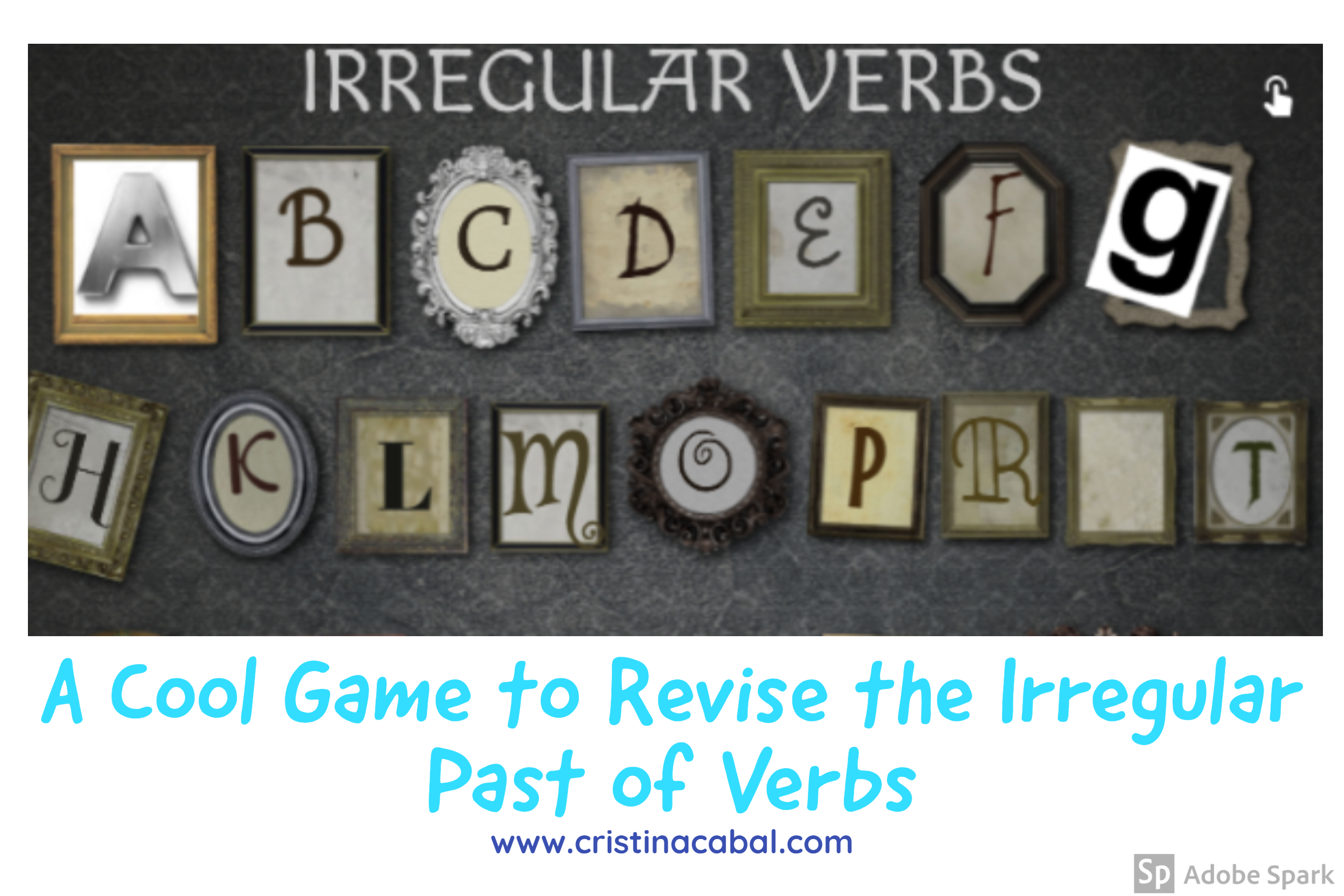
A Cool Game to Revise the Irregular Past of Verbs

Time to revise irregular verbs. I know, I know!! I am teaching B2, but trust me, they need the revision.

I mean, let’s be real. Technically, they have learned the irregular verbs sometime between A2 and B1 but you and I know that irregular verbs are like a pain in the neck to learn only compared to studying phrasal verbs. So, welcome revision!!

I have always believed that using technology in the classrooms has a lot of benefits for the students- this is probably not the post to enumerate them- but also, I firmly believe that technology without methodology does nothing for the student. Just because you use the latest tools does not mean students are going to learn more or better. They do not. You have to plan exactly what you want to do and how you want to do it if you want the activity to be effective. Otherwise, you are just playing or entertaining students. And this is something I don’t do in my classes. So, playing and learning, a big YES; just playing, a huge NO.

Anyways, since  I am a superfan of :

  • using games to learn
  • using technology effectively and meaningfully in my classes

I have created the game below using the cool interactive freemium tool Genial.ly (proud to say I am an ambassador of this great tool developed in Spain)

For more information about my workshops on how to use free online tools effectively in your class, have a look here or  here


IRREGULAR VERBS

Aim: to revise irregular verbs.

Level: intermediate

Procedure:

  • Explain that this a competition to be played in pairs: student A and B
  • Whole class: As decide on a letter to challenge Bs.
  • Bs will have one minute to write as many irregular verbs (infinitive-past-past participle) beginning with the selected letter as they can think of.
  • Explain that irregular verbs will be awarded 1 or 2 points depending on the difficulty of their spelling or on their frequency at an intermediate level. Challenge students to try the difficult ones.
  • Set a timer for the allotted time and when time is up, display the answers by clicking on the interactive letter.
  • Student B gets 1 point or 2 points (depending on the verb) only if he has correctly spelt the verb in the past and past participle.
  • Now, it ‘s Student B’s turn

NOTE: What do As or Bs do while it’s the other student’s turn to compete? They can also do the challenge, but no points will be awarded!

Note: This is an interactive tool. Click on the letters. Click on the arrows to enlarge the game.

Enjoy teaching. Enjoy learning!