Tag Archives: methodology

Teachers being taught!

I’m still at the high school. I can’t complain. It has been my own decision and nobody said it was going to be an easy path to walk . Teaching highly motivated adults is very easy, there is no argument here! But teens, oh my goodness!
Lack of motivation in some rural areas has been an ongoing problem for some time and this big crisis is not helping much.

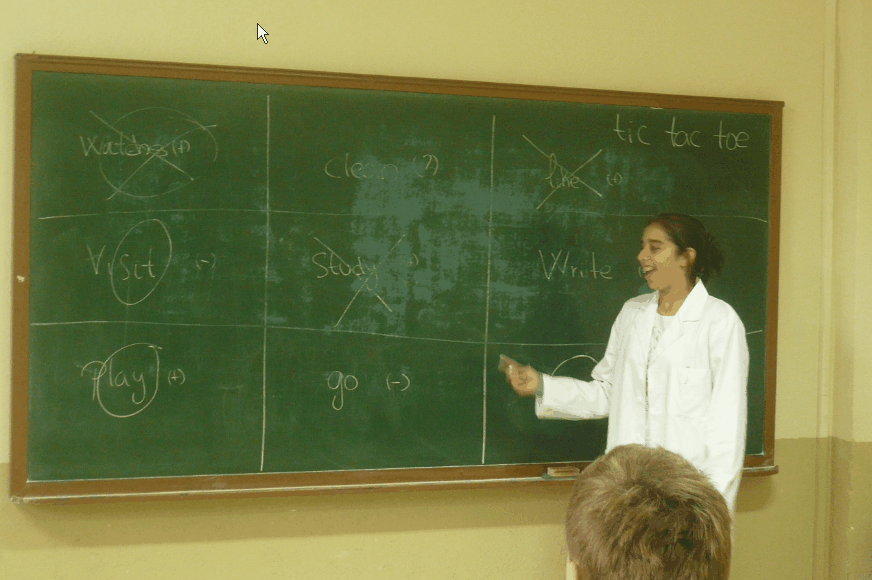
On the other hand, I find it really challenging to find new ways to motivate my unmotivated and/or under motivated students. That’s why when I suggested they try and be teachers for one day designing some strategies to revise the grammar for the Present Tense and two of my students showed a tiny bit of enthusiasm I readily encouraged them. Sadly, one of them didn’t come up to my expectations, so it’s not worth mentioning but one of my students ,Eva, did really well. She revised the present tense, she wrote some exercises for her classmates to practise and she even made us play TIC TAC TOE, which we had been using for Frequency Adverbs and Interrogative Pronouns. This is a picture of Eva below. Well done, Eva ! Teaching is in your genes!
 

Human Bingo to Revise Irregular Verbs

I got this wonderful idea from Mel Wawen although I have slightly modified it. As she explains, it can be used as a warm up before the lesson or at the end of it when students feel they have had enough of English,

This time I needed to revise Irregular Verbs and this is how I did it.

  • I asked students to tidily sit individually and in rows of three or four.
  • Then, I asked each of them to choose an irregular verb from the ones we had studied. I told them to write it down in its irregular past form on a piece of paper.
  • Every row is a team, so they should make sure every student in the same team has chosen a different irregular verb.
  • Tell them you are going to say a verb at a time, using the infinitive form. When the students hear the infinitive for the irregular they have chosen, they must say the irregular past form aloud and then sit down.
  • The first team with all the students sitting down wins the game.

Follow up:

I used this game when they first learned there was something called irregular verbs. It was funny and it only took about three or four minutes.

The second time I played this human bingo, students also had to write a sentence containing the irregular verb. After checking that their sentence was grammatically correct, I made sure they knew how to pronounce in wors in their sentences.

It was their turn now. They had to stand up and read aloud their sentence but without saying the verb. Students in the class had to provide the right verb in the past to fill in the gap.

Blog de Cristina is also on Facebook. Follow us!

A fast-paced game to revise

With my elementary classes I need to revise very often, especially for exams. We usually do it as in a competition, with students being eliminated if they fail to provide the right answer. ( games work very well with adults , too)

This time, we are going to do our revision in a different way.

♥First, I need to pair the students, mixing strong students with weaker ones.

♥Ask students to choose a winning name they can identify themselves with. Write it on the blackboard.

♥Explain that you are going to revise some  material from the textbook and that they have 5 seconds to write their answer. Give them slips of paper.

♥After the countdown 5…4…3…2…..1… students hold up their slips of paper

♥Give one point for every correct answer

♥Count points at the end of the game, ask the winning students to stand up and give them a big cheer.

This game is highly motivating and works well with teens. Appoint the noisiest student to keep the score on the blackboard and if you want to make it look real, download from this website the sound of a clock ticking . It gets even funnier!

http://recursostic.educacion.es/bancoimagenes/web/. As this site is in Spanish, you might need some help to download the clock sound .

1.Tick the Sonidos box only.

2. In the Search box , write “reloj” , which means “clock” in English.

There you have it! Choose the one you like best and let the fun begin!

Blog de Cristina is also on Facebook.Click to follow

Improving writing skills

This is an activity I’m going to do tomorrow with my intermediate students and I thought someone might find it useful. It can be done to revise vocabulary and make students write, a skill we often neglect in class. By including visual aid I have made the role of the teacher seem less important and therefore encouraged autonomous learning.

In this activity we will be revising vocabulary, mainly phrasal verbs with “turn” and verbs followed by infinitive or/and -ing.

How to do it:
Ask students to work in pairs and give each pair a blank sheet of paper. Tell students they are going to use their imagination to write a dialogue .Give students a situation they can start with (for ex two flatmates talking about their plans for the weekend; their names Christina and George). The aim of the exercise is to build up a dialogue using the prompt you display in the photopeach slideshow. Once they have written their sentence containing the prompt they have to pass their paper to the students on the left who must continue the story using the next prompt. Sometimes an additional sentence will be necessary to transition form one idea to the next.
Collect their dialogues and stick them on the walls of the class for everybody to read

Revising – Using Prompts to Revise Vocabulary on PhotoPeach

Click here to see a sample of the dialogue. I wasn’t very inspired!

Writing a narrative

This is a writing exercise for my PAU students and I thought you might find it useful. In this written exercise they’ll have to make good use of the vocabulary they have learnt about travelling and going places, the connectors they have studied and they’ll also have to put in practice some of the tips I have given them about the Writing Process, which if you are interested you’ll find published in this blog, here.

This is the idea:
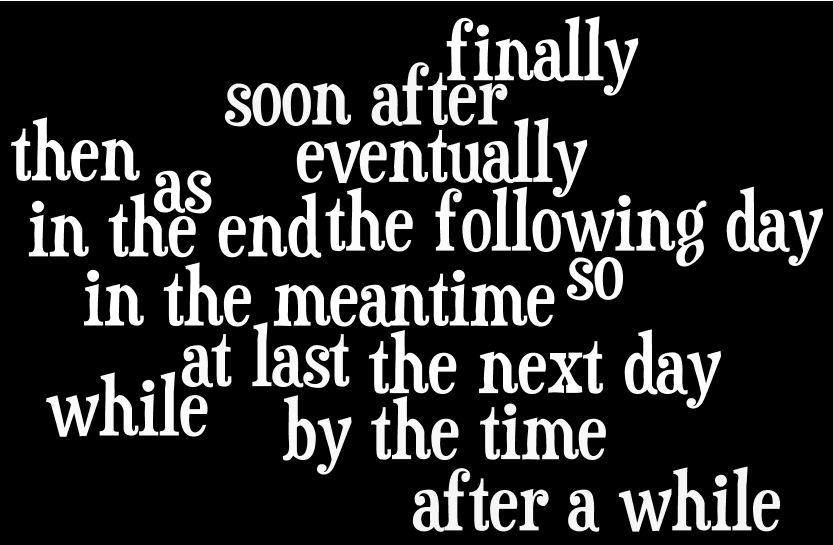
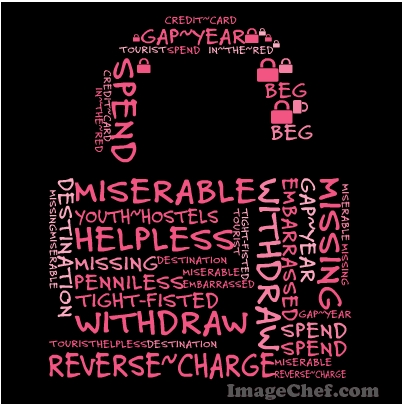
Students, in pairs, are asked to write a narrative. They have to use words from both word clouds, i.e, they have to use connectors from the first word cloud and specific vocabulary from the second. Ask them to write their narrative in coloured  paper which you’ll later post on the walls of the classroom for student to vote for the one they like best.


Make sure that you:

♣ begin by describing when and where the story takes place

♣ describe the events in chronological order

♣ use the different forms of the past tense