Tag Archives: vocabulary

Using animals to refer to people

When I was a child I used to love animals although it never entered my mind to be a vet (I’m one of those people whose knees go jelly at the sight of blood). As I grew older I started to feel less inclined to sharing my life and house with God’s creatures.
Nowadays, the only pet I have is a dog, a German sheperd, who I absolutely adore but that’s it, at least for the time being. I have had lots of pets in my life although some of them can hardly be considered pets, as according to the dictionary, a pet is any domesticated animal that is kept as a companion and cared for affectionately and I remember some of them not complying with this defintion.

Among these so-called pets I sadly remember a canary who I insisted needed fresh air and finally died of a heart attack while being out in the terrace breathing fresh air. I guess some bigger bird must´ve thought it was a delicious bite and attacked him while in the cage.
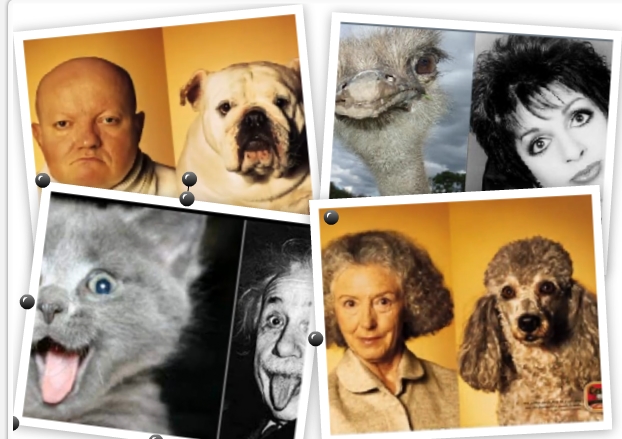
Anyway, animals have always been part of our lives. Humans and animals are so closely related that, very often, we use them to refer to people.
Have a look at some of these sentences. Come to think of it, most have a negative meaning

He’s a snake – so. you cannot trust
He’s a dog- he doesn’t treat ladies very truthfully
She’s a dog– she’s very ugly
He’s a rat– a despicable person, especially one who betrays or informs upon associates
He’s a chicken– a coward
He’s a cold fish– A hard-hearted, unfeeling individual, one who shows no emotion
she’s a busy bee= an energetic person
She’s being catty=she’s being mean
He’s an eager beaver= a person who is extremely zelaous about performing duties and volunteering for more.
She’s a mouse=timid                                                                                                                                               He´s a weasel = a person regarded as sneaky or treacherous
He’s a vulture =A person of a rapacious, predatory, or profiteering nature.

Blog de Cristina is also on Facebook . Follow it!

Improving writing skills

This is an activity I’m going to do tomorrow with my intermediate students and I thought someone might find it useful. It can be done to revise vocabulary and make students write, a skill we often neglect in class. By including visual aid I have made the role of the teacher seem less important and therefore encouraged autonomous learning.

In this activity we will be revising vocabulary, mainly phrasal verbs with “turn” and verbs followed by infinitive or/and -ing.

How to do it:
Ask students to work in pairs and give each pair a blank sheet of paper. Tell students they are going to use their imagination to write a dialogue .Give students a situation they can start with (for ex two flatmates talking about their plans for the weekend; their names Christina and George). The aim of the exercise is to build up a dialogue using the prompt you display in the photopeach slideshow. Once they have written their sentence containing the prompt they have to pass their paper to the students on the left who must continue the story using the next prompt. Sometimes an additional sentence will be necessary to transition form one idea to the next.
Collect their dialogues and stick them on the walls of the class for everybody to read

Revising – Using Prompts to Revise Vocabulary on PhotoPeach

Click here to see a sample of the dialogue. I wasn’t very inspired!

Road to Grammar

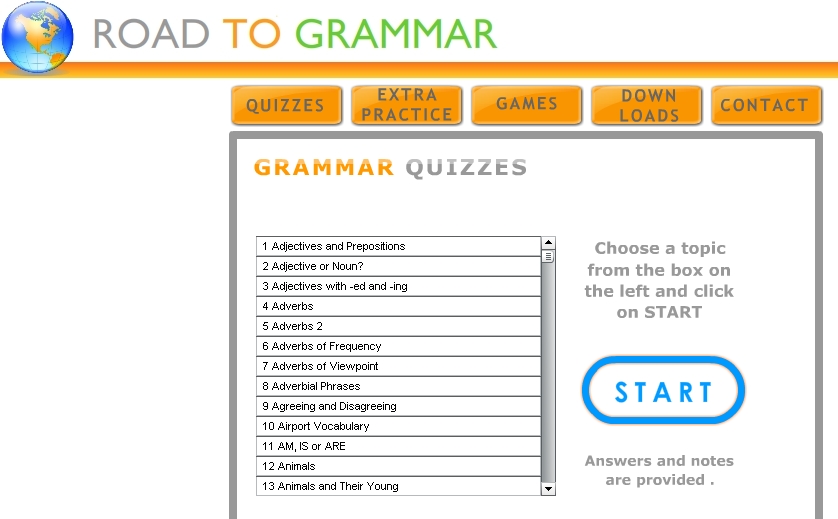
Road to Grammar is a great site to practise grammar and vocabulary. One of the best things about this site, in my opinion, is that if you choose the wrong answer in the quiz  and you click on NOTES, it provides  a note explaining why your answer is correct or incorrect.
Apart from these quizzes there’s a section that I love called Games. My favourite one is called FLUENT and it allows two students to play. Be careful if you choose to play, it’s kind of addictive!
I also recommend trying the Extra Practice section and the Downloads, which has some great PDFs for students and teachers. And last but not least, there’s a section called Road to Grammar JR dedicated to young learners

Linguee: the web as a dictionary

We all know how difficult it is to write, even more in a foreign language. More often than not we look up words in dictionaries only to find that it offers so many possibilities for the translation of the word that  we don’t know which one to choose for the context we need. In fact, sometimes it doesn’t help us at all but makes things more complicated as we don’t know which word to use to mean what we want to express and we end up completely frustrated. Here, Linguee can help us as it is a bilingual dictionary but  in context.
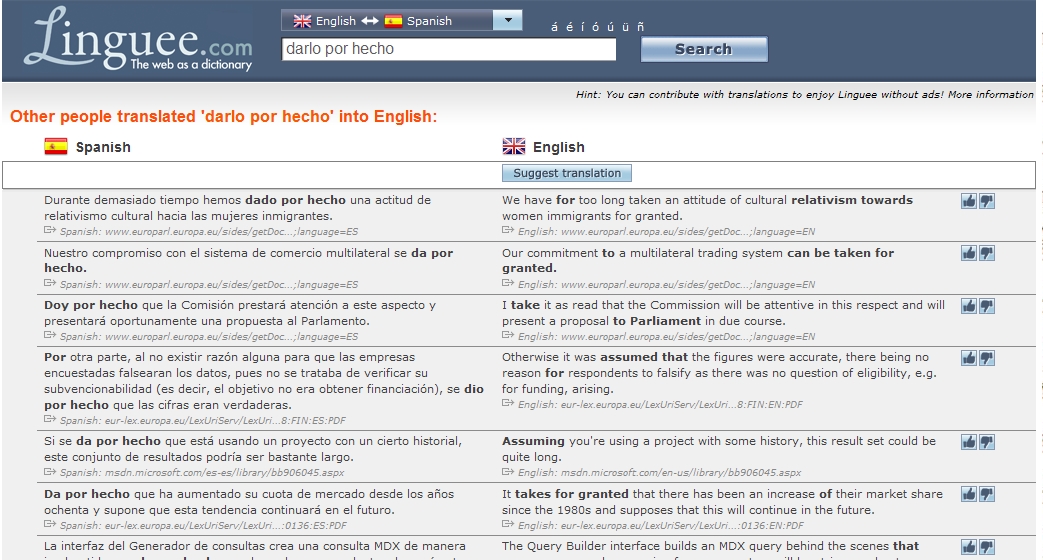
Let’s see how it works. Click on the word Linguee and it’ll take you straight to the dictionary. Try the Spanish idiom      ” darlo por hecho” … see? Helpful , isn’t it?

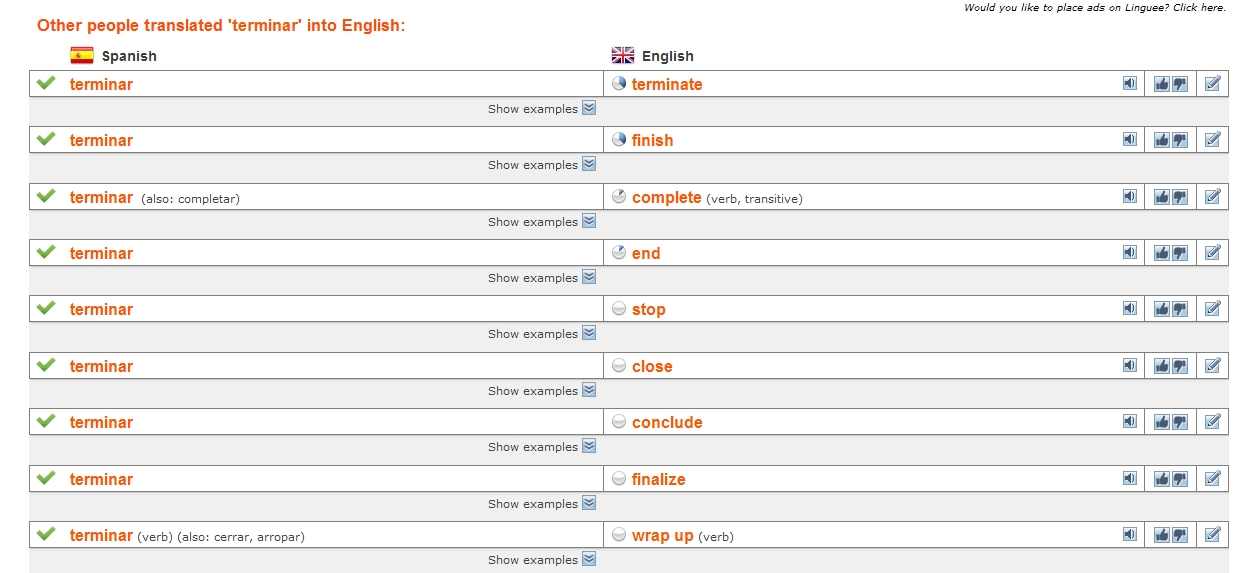
Now, let’s try a single word such as “terminar” .

Now it works as a dictionary with an expandable list of the words in context and   the added possibility of listening to some of the translations.

Give it a try, I’m sure it’ll help you a lot improve your writing skills!