Tag Archives: grammar

Agony Aunts: a No-Prep Activity to Practise Giving and Receiving Advice

Are you gearing up for the first classes of the new year?  I  am. And I want to give my students a back-to-the-grind activity which would get them into the right mood, namely, engaged, learning and having fun.

Have you ever heard about “agony aunts” or“agony uncles”? I am sure you have! In case you have no clue about what I am talking about, this is the definition the Cambridge dictionary gives.

an agony aunt is a person, usually a woman, who gives  advice to people with personal problems, especially in a regular magazine or newspaper article

I bet you all have a famous Agony Aunt in your country.

Inspired by this well-known figure, I have designed this effective activity with two aims

  • To practice writing skills
  • To give students the opportunity to practise the language used to ask and give advice
  • To provide speaking practice interacting with different students

Materials: a piece of paper with “Thank you”  written on it for every student in the class. You can easily ask them to do it before the activity begins.

Step 1: Writing

1. Reading a model.

  • Ask students to discuss, in pairs, who is better at giving advice, men or women.  Ask for feedback.
  • Using the OHP, display the picture below and read it with your students.I hope nobody takes offence, it is just meant for fun!

2. Writing. Individually, ask students to write about a problem they might have. They can also invent it. Walk around the class helping them with grammar and vocabulary.

Step 2 Revising vocabulary to give and ask for advice

Write two columns on the board; one with the heading Giving Advice and the other one with the heading Asking for Advice and ask students to contribute to both. It could look like this

Giving Advice

  • if I were you, I’d…
  • I think you should…
  • In my opinion, you shouldn’t
  • Why don’t you…?
  • I would advise you to
  • You might try….

Asking for Advice

  • What should I do ( about)…?
  • What do you think I should…?
  • Can/ could you give me some advice about…?
  • Do you have any advice on—?
  • Could you recommend…?
  • What do you suggest I do?
  • What ought I to do?


STEP 3. Speaking

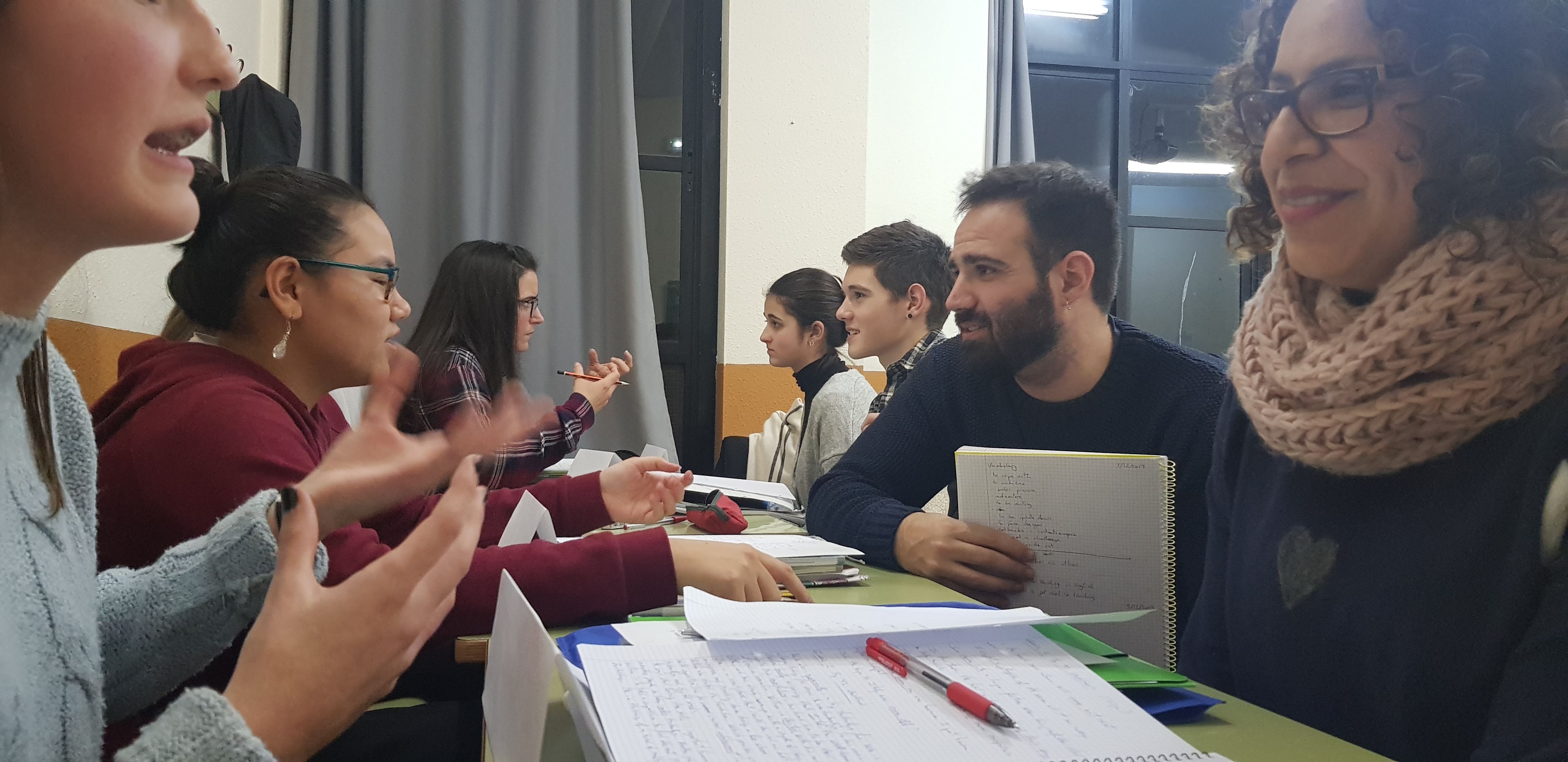
Divide the class into two groups: Agony aunts and Advice seekers. Using the speed chatting technique, the two groups sit facing each other; there should be an agony aunt for each advice seeker. If you have an odd number of students, consider participating yourself.

The idea is that each problem seeker will tell the agony aunt their problem and the agony aunt after considering the problem, should offer a piece of advice. After two minutes, a bell rings and the advice seekers should move one position to talk to the next aunt agony.

Once they have talked to all the agony aunts, they will need to choose the best piece of advice given for their problem. They will thank the Agony Aunt by giving him/her a card with the words Thank you. The student who gets more Thank you cards  is named Agony Aunt of the Day year and gets a big applause from the class

Now, they change roles and the Agony Aunts become advice seekers and vice-versa.

Some Help with the Terrible “Another, Other, Others”

Look at these big words other and another. Talking about these two is always a good idea.  If you are wondering why, it is maybe because you are not a teacher ‘cause if you are in the teaching business, you know well why they are so big.

If you are a student and you don’t recognize the problem these two words might cause, it is mainly for one of these three reasons

  1. You are aware these two cause problems, but you do not make this mistake, in which case you can stop reading here.
  2. You are making this mistake and don’t know how to fix it, in which case this post can really help you.
  3. You don’t really know what the fuss is about, which means you are nor even aware that you are making this mistake. Well, dearest, it is you I had you in mind when I decided to write this post.

Let’s see if together we can fix it once and for all.

First, let’s have a look at the grammar. Below you’ll find the PDF, but I have always liked teaching and then revising and then reinforcing and because it kind of feels repetitive, I feel the necessity to do it in different ways. I don’t want my students to die of boredom.

So, I have designed this nice presentation using the interactive tool Genial.ly to support the rather dull but effective PDF file.

Another, other, others PDF

Note: to enlarge the presentation, click on the 3 dots


  1. A drag and drop exercise

2. An interactive quiz
And then the fun part. By the way, I had to resist adding more questions. I am kind of addicted to making quizzes. But I refrained 😊 . Only 15 items here. Enjoy!

Do you Have One Minute? Four sites to Learn English in One Minute

Do you have a minute? This is all you need for these four highly recommended sites I am going to share with you today.

1. English in a Minute 

If you have never watched English in a Minute, I think it’s time!

Centered on confusing vocabulary or grammar points, this ever-growing collection of video clips has been nominated for the ELTons Awards (English Language Teaching Innovation Awards given annually by the British Council)

Why do I recommend these short videos?

  • They focus on real confusing terms.
  • They are clear, short ( 1 minute) and to the point.
  • Transcript for every video is available, so you can also practise pronunciation if you decide to read along.
  • Most of them have a grammar reference
  • Most of them have  a quiz to test your knowledge

Here you can learn about the difference between:

  • Story and History
  • Stop to do and stop doing
  • Person and people

Click on the picture or here

2. BBC News in One-Minute.

Targeting more advanced students, here you can watch the latest news summary from BBC World News updated 24 hours a day. In one minute. As promised.

Click on the picture or here

One-Minute English

Hugh Dellar from Lexical lab is the star in these videos. I love his videos because they teach you real English, the English you might not find in dictionaries but which is essential if you want to understand native speakers. The videos are easy to follow as he speaks slowly and repeats the target word or chunk several times during the recording.

For example: Do you know what the words “sarnie” or “samey” mean?

Click on the picture or here

English in a minute 

And finally, this is another worth-sharing site. If the site above featured British English, this one run by VOA Learning English (Voice of America) explains expressions used in American English although, in most cases obviously, the expressions on the videos are used both in British and in American English.

Again, click on the picture or here

So, here you are, four awesome sites to learn something every day! Enjoy English! Enjoy learning!

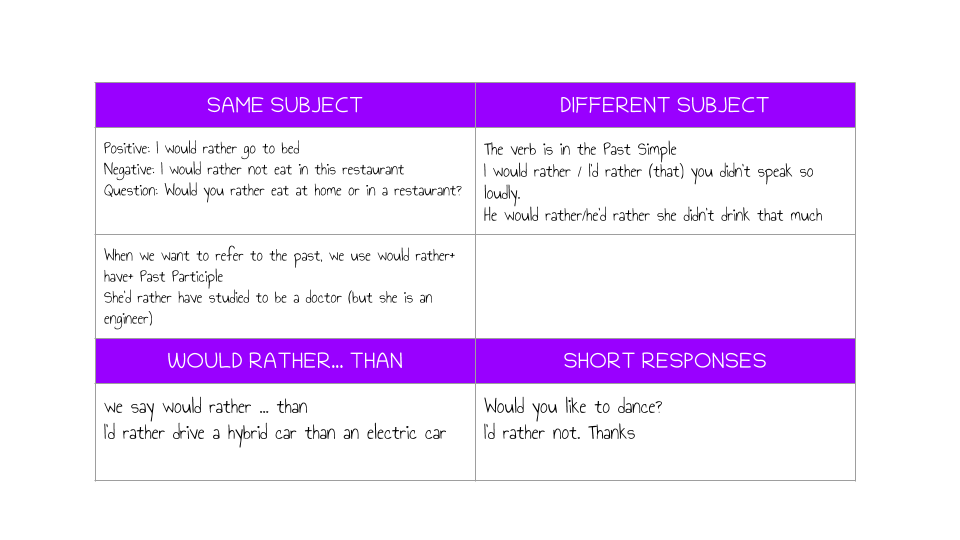
A Word On Grammar: Would Rather

I love grammar, don’t you? But I’m not going to lie, sometimes I struggle with making grammar interesting. A lot of times it’s just plain boring grammar. However, when I am feeling inspired, using technology can change everything. Technology is great at showing content, you just need to grab the content from your course book and combine different tools to make a great lesson.

Step 1. The boring part. Teaching grammar.

I am not going to give you the spiel about how important grammar is. I guess if you are reading this blog, it’s because we are all on the same page here.

Feeling lazy myself today, I am going to give my students the grammar from this website: Cambridge English Dictionary. Who would know better?

Step 2.  Revising grammar with an animated video.

I am going to use the first 0:50 seconds and save the grammar for prefer and would prefer for a better occasion. You might need to play twice. The second time, I normally pause the video and ask students to give me their own sentences.


Step 3: The exercises.

This is a challenging exercise as all the sentences are different  and exemplifying different structures with would rather.

How to do it, or rather, how I do it:

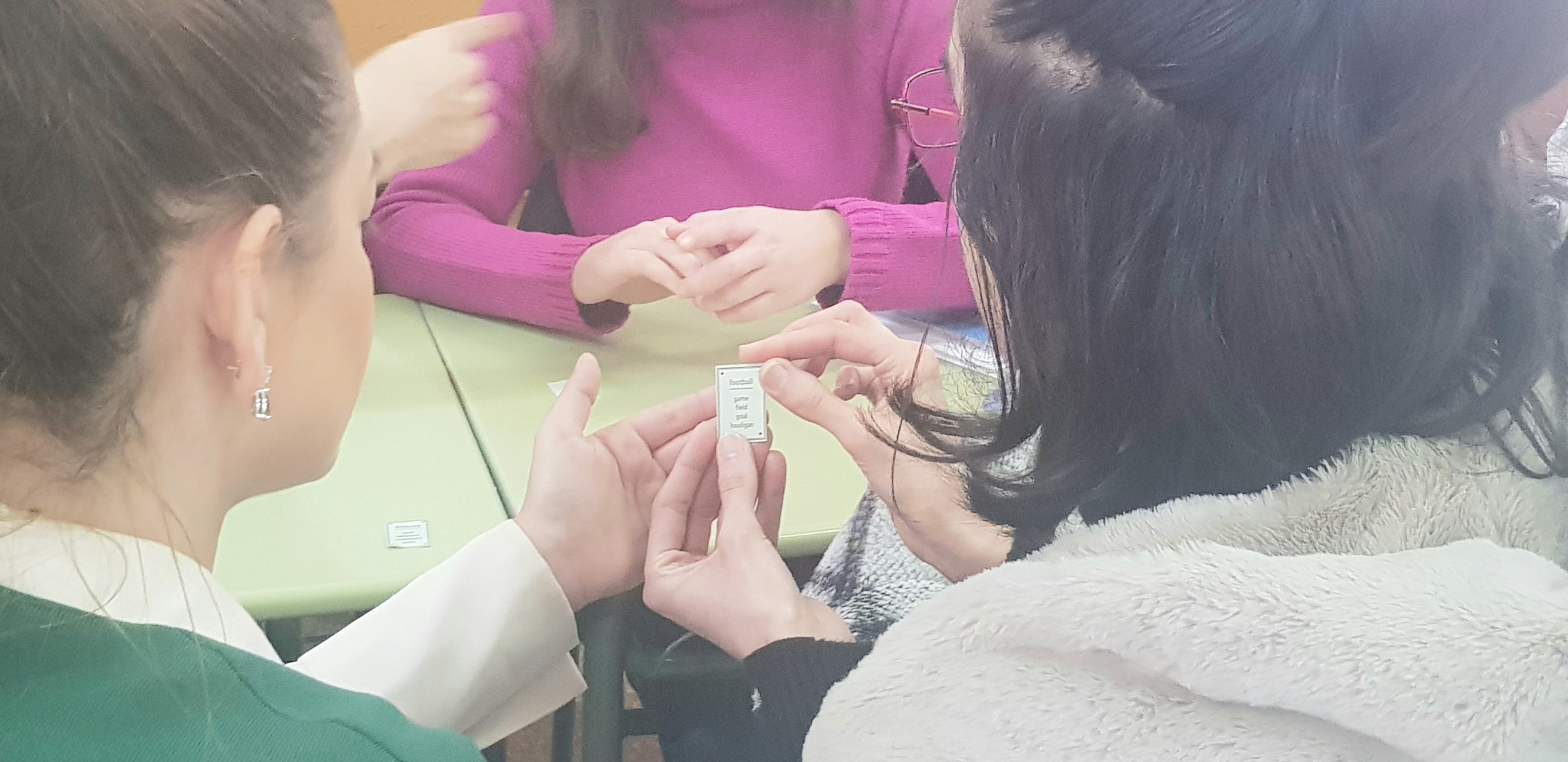
  1. First time: I display the sentence and ask students to write down their answers. Allow about 1 minute for this task and then ask students to give you the answer, flip the card and correct.                                                                                                                                  Note: some students will prefer to do the exercise orally and you’ll see a bunch of them staring at the screen waiting for you to ask for the right answer. It’s important to insist that, in this part, they’ll need to write their answers down as it is the first time they will see a variety of different examples of the use of would rather and it might be challenging.
  2. Second time:  Class as a whole. Orally, do the exercise.
  3. Third time: at the end of the class or maybe the next day, I do it again, asking individual students to provide the correct answer.

I have used Quizlet to create the study set and I have shared the link with my students so that they can revise at home.

Flip the card to see the answer.


Note: there is nothing like technology to revise again and again without students getting bored. You just need to change the approach.

Step 4: Speaking. Digital Gallery Walk

An engaging activity using a more engaging tool to present it. Ask students to stand up- remember this is a gallery walk- and choose a partner to talk about the first question. Ask them to stop, find a new partner, and display question number 2. Allow 3 or 4 minutes per question and encourage students to use the target grammar in their answers.

If you want more oral practice, you’ll find lots of would you rather questions here. Some of them really give me the creeps and would rather not use them. But this is up to you!   🙂Powered by emaze


Fun Lively Communicative Game to Reinforce I Wish/If Only

Who doesn’t welcome a bit of fun in the classroom, a light getting-out-of-your-seat activity? I can see no raised hands?  Right, we are all in for this game!!!

Before you continue reading. For this activity, you will need to have space in your classroom, which I don’t. Even though my class is U-shaped, it is still a small class. But, no problem.  Right outside my class, there is a big aisle where we can do this little activity and perhaps, who knows,  some students from other classes might want to join us. The more, the merrier.

We can do this game in two different ways or in both ways. Actually,  I did first Part 1 and then Part 2. Both equally effective.


Before the game: on the board revise the grammar for I Wish/ If Only.

The Game:

Ask students to form a big circle leaving the most space in the middle. They don’t have to hold hands or be excessively close to each other as long as they form a big circle and everybody can see everybody else.

This is how it works:

Part 1. The teacher asks a question containing I wish/ if only.

Shout the first question; for example, Who wishes they were rich? and instruct all the students whose answer is Yes to come into the middle of the circle and there, in pairs or threes, briefly explain their answers. Allow one or two minutes’ conversation and then, ask them to go back to their positions. Encourage them to use the target grammar in their answers.
What do students whose answer is No do? Easy answer: the same. The will need to pair up with the student who is closest to them explaining their answer.

These are the questions I have used. You are welcome to use them.

  • Who wishes they were abroad right now?
  • Who wishes they had a bigger car?
  • Who wishes they had studied harder when they were at school?
  • Who wishes they were thinner or fatter, taller or shorter?
  • Who wishes their neighbours were nicer people?
  • Who wishes they had a different English teacher? 😊
  • Who wishes they had chosen a different profession?
  • Who wishes they had a more positive attitude towards life?
  • Who wishes they could live to be a hundred?
  • Who wishes they could be president of their countries for just one day?
  • Who wishes they had more time to socialize?
  • Who wishes they had had more siblings?
  • Who wishes they had been born in another century?
  • Who wishes they had been born a member of the opposite sex?
Part 2. The students produce the sentences. The High-Five.

I have called this part The High Five. Still standing and forming a circle, ask students to think of a sentence about themselves they think people will easily relate to using I wish/ if only.

Students take it in turns to say their sentence aloud and at the same time move into the centre of the circle.  Anybody who feels the same way moves to the centre of the circle and gives a High-five to the person in the centre of the circle who has said the sentence.

Same procedure as above. In pairs or in 3’s ask them to briefly discuss their answer.

You can start by moving to the centre of the circle and saying:
I wish I could pass my English test ( Note: your hands will hurt from all the high fives you’ll get with this sentence)

Discourage sentences that might be too personal or too specific like
I wish my mother had come with me on that trip.

Remember that it is important to model first and give clear instructions so that students know what they have to do. You want everybody participating and nobody slowing the game down or feeling uncomfortable because they haven’t understood what they need to do. If necessary, use concept check questions( CCQ) to make sure everybody knows what to do.

Interested in spicing up your lessons? I ran face-to-face workshops helping teachers integrate technology in their classes in an easy way, using free online digital tools. Practical tested ideas that combine traditional teaching with modern techniques. Fun and learning, a win-win!

From teacher to teacher. In English and in Spanish.