Tag Archives: methodology

A Five-Minute Activity to Bring Music into the Classroom

Wouldn’t you like to be listening  to the latest hit on the radio and find out that you are able to understand the lyrics? Wow!!! Don’t you, every now and then,  sing along even though you can only remember some  of the words from the chorus and you don’t have the slightest clue about what it means? I’m sure you do! We have all been there!

But time flies and the course is short  and even though I feel listening to a song can be as good as doing a traditional listening comprehension exercise  the truth is that dedicating 20 minutes to a song never seems to fit into my lesson plan .

The idea is to bring music into the class as often as possible but without this activity taking too much time off my lessons. My focus in this five- minute-maximun activity will be on teaching  vocabulary – a structure , an idiomatic expression, a phrasal verb or a certain word. The idea is to help students  improve their listening skills and pronunciation, as well as teaching vocabulary.

In this song, we focus on the verb “to try”.

STEPS

♥Orally introduce the word you want students to learn by giving examples and asking them to infer the meaning. In the case of the verb “to try” I might want to teach the structure: Try+inf

♥Choose a song that contains the word or words you want to teach

♥Crop the video with, for example, tubechop; remember you don’t want to play the whole song .

♥First time: Students listen to the cropped video and identify when, in the song, the highlighted word(s) has been used -they can raise their hand when they hear the target word(s) .

♥ Second time: students do a fill- in- the- gaps exercise or a spot- the -mistakes exercise with the lyrics.

♥ Third time: students sing along; yes, why not? It’s  a very good pronunciation exercise!!!

♥ HOMEWORK: Now, very important, students need to go home and write a sentence containing the highlighted word(s). Ask for volunteers to translate the cropped song .

My Fill in the Blanks

DESIRE,DIE,GET UP, SOMETIMES,SOMEONE’S, LIES,WONDER,JUST

Ever _____ about what he’s doing
How it all turned to ______
__________ I think that it’s better to never ask why

Where there is ____
There is gonna be a flame
Where there is a flame
____ bound to get burned
But ______ because it burns
Doesn’t mean you’re gonna _____
You’ve gotta _____ and try try try
Gotta ……

Blog de Cristina is also on Facebook. Follow me !!

Listening:What are the best ways to memorise new vocabulary?

Have you ever asked yourself how you acquire new vocabulary? Have you ever wondered if things such as sticking post-its on the walls of your bedroom (or bathroom) really help you memorise new words? Well folks, I should say it might work when your aim is just passing a written test – I have tried this little trick plenty of times, especially when trying to learn long lists of irregular verbs,  but when your target is learning to speak a language, trust me , this little trick won’t work.

For example, what’s the point of learning the word “listen” if you don’t know that it collocates with the preposition “to”? I’ll tell you what, you’ll end up writing or saying things such as “I’m listening you”; does it ring a bell?

I could try to explain what has always worked for me but I’ve found this useful video where an expert, Michael McCarthy from Cambridge University Press, pretty much sums up what I wanted to write  and gives you tips about the best way to learn new words. Stick to it! It really works!

Listening Task: Listen to the video and write down the four tips the expert gives about the best ways to learn new vocabulary. Play the video and stop when you get to 2.20 . Play it again if necessary. Check your answers ; you’ll find them at the end of the video.

Blog de Cristina is also on Facebook. Click to follow!!

Two Games to Revise Vocabulary

If you’ve been reading me for some time  you know how much I love games. Unfortunately, when I was a student at the high school I don’t seem to remember games being part of the teachers’ lesson plan. Now, from the other side of the fence, I wonder why with so many different  things you can do in a language class, we never did anything funny; well, occasionally, we did some fill in the blanks exercises with songs, but that’s it! I also wonder how, being our classes so boring, I ended up being  a teacher.

If you are at all like me, you will love playing these games!!!

♥AGAINST THE CLOCK
This game requires some preparation. On slips of paper, write down the vocabulary that needs to be revised (verbs, phrasal verbs, adjectives…etc) . Students, sitting in a circle, play in groups of four or five, so there should be one set of cards for each group. Set a random amount of time, which students won’t know (this is important so that they don’t cheat). Give the pack of cards to one of the students. Set the timer. Now, he has to describe the word to the students in his group using only verbal language and, it goes without saying, without saying the word or part of it. When a student guesses the word, then the cards are passed to the next student. The person holding the cards when the alarm in the timer goes off loses. Continue playing until there is a winner.

Click to see a good selection of Classroom Timers

♥A-Z Picture Vocabulary.


This is a good activity to brainstorm new vocabulary and also to give more advanced students the opportunity to show off a bit. Students play in pairs or in threes mixing stronger and weaker students.
A picture with lots of elements is displayed on the Overhead Projector and students need to find in the picture something beginning with each of the letters of the alphabet A-Z .Set a time limit of 7-8 minutes


Practise Adverbs of Manner and Intonation Having Fun

I don’t know about you, but most of my thinking time happens when I am driving all alone in my car. This is mainly because that must be about the only time in the day I am alone- Hey, I am not complaining here but it’s difficult to do any decent thinking we when you spend all your day surrounded by teenagers – my own and my students. So, here I was, in my car, driving to work and thinking about the best way to teach Adverbs of Manner to my students when I remembered an exercise I did while taking a course in  IH London.


The idea is to combine Adverbs of Manner and Intonation in a very funny way, though to get to the funny part of the exercise there are, first of all, some steps to climb.

Step 1. This is the boring part. On the board, I write the adjectives I am going to use in Step 3 and ask students to form the adverbs of these adjectives(see worksheet ).

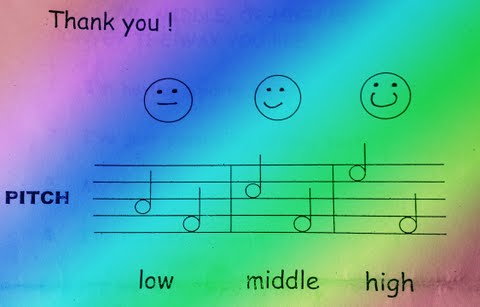
Step 2. Now it’s time to start working with intonation. I draw on the board a stave and demonstrate the power of intonation with the word Thank You! It might be necessary to repeat the expression a few times before students associate pitch with meaning
-low pitch= sarcastic, depressed, negative
-middle pitch= neutral
-high pitch = very positive

Students in pairs practise a few times.

Step 3. With the adverbs still on display on the blackboard I give each student a slip of paper with the adverbs of manner: furiously, quickly, cheerfully (Worksheet here). Students now stand up and in pairs tell each other the words I LOVE YOU using the correct pitch to convey the way they feel. The other student should be able to guess the adverb written on the card. Students move around the class talking to as many students as they can. Time limit: 5 minutes.

Step 4. Feedback: students, now, read their I LOVE YOUs aloud for everybody in the class to guess the adverb of manner.

Learn English and Have Fun!!

Retelling a text using Wordle

This is not the first time I have used this strategy to invite my students to do some speaking but it is the first time I have used it with absolute beginners. It has taken me sometime to bring myself to do this kind of activity with my 12-year-old  absolute beginners. I am always afraid the task may seem to them like a high mountain to climb, but they have been studying with me for four months now and I feel they are up to the challenge.

I really feel that I can insist, until the cows come home, English  is not only about learning grammar, but if students are not actively taking a role in their education, there is little I can do.

So I have used a text, they had previously worked  with, to ask them to retell the story. The text was about Education and it told the story of two children Eduardo from Angola and Nabyrye from Uganda. Easy text and all about present simple, which is what they have been studying. Two texts, so great to do pair work!

I have used a tool I have used other times, Wordle, to create Word Clouds to help students remember the story and retell it.

Two useful tricks when using Wordle

♥ If you want a word to be bigger than the rest, just type it twice.

♥ Insert (~ ) between the words you want to keep together.

I have posted about Wordle to revise vocabulary here and to do  a Writing Activity here

Have a nice week!!