Tag Archives: B1

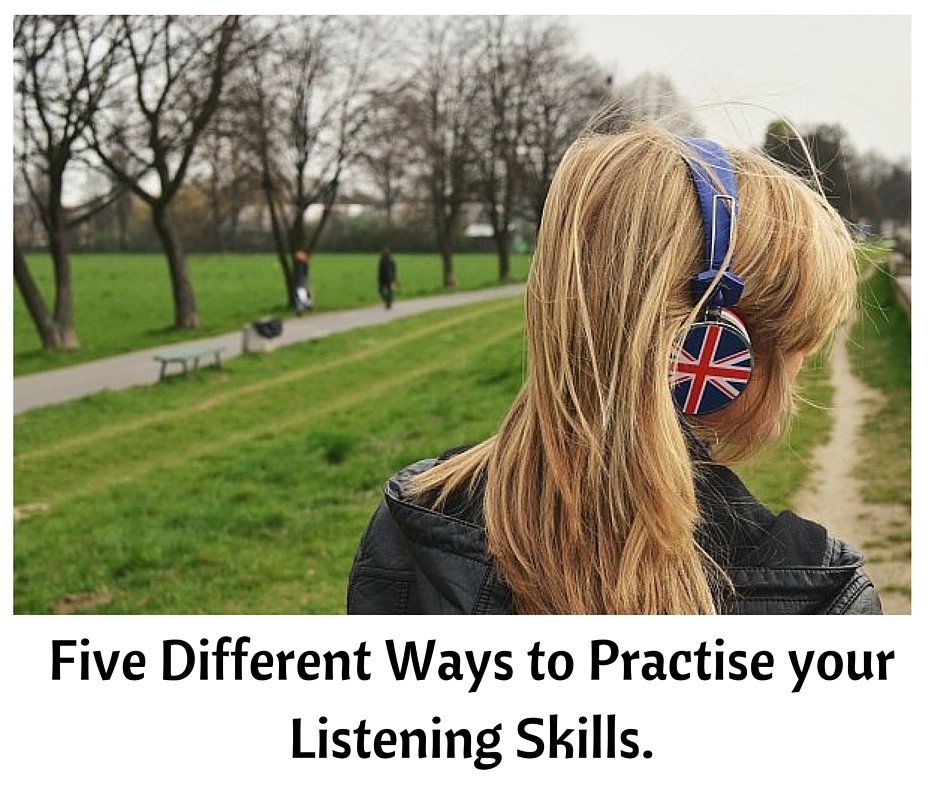
Five Different Ways to Practise your Listening Skills.

I won’t spend much time introducing this post, mainly because today is one of these days when the muse has decided to leave me.

Perhaps you’re wondering what else you can do to pass your listening test with  flying colours apart from doing every single listening comprehension exercise in your student’s book and all the ones in the workbook. I’m not trying to reinvent the wheel, but here are a few things you might want to try.
1.Read a few tips and put them into practice. Students often complain that despite grasping the main information content of the recorded material, they sometimes seem to be unable to provide the right answer and this leads to frustration.

Getting a high mark in a listening comprehension exercise requires practice, lots, and also knowing a few tips. The most common types of listening exercises are Blank Filling and Multiple Choice and there are a few handy hints on how best to deal with them that you might want to read. The tips below aim at teaching students to listen effectively to enable them to select the information they require from what they hear.

 2.The obvious. Find a good listening site with plenty of listening exercises to choose from.

One of the sites I have been recommending my students lately to practise Listening is Ingles en Aviles, a fantastic blog aimed at B2 (upper-intermediate) and C1 (advanced students) where you’ll find lots of listening comprehension exercises to choose from.

Can I also suggest my own Listening section? 

3. Listening to Vaughan radio

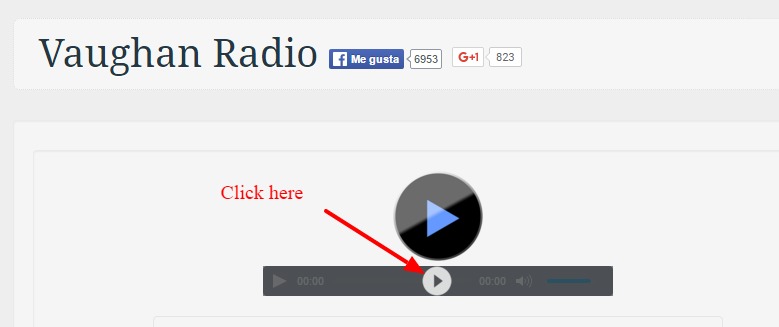
Vaughan Radio is a live radio station broadcasting from Madrid, Spain that provides listeners the chance to improve English language skills. So while you’re at home, maybe cleaning or ironing and bored to death, you might want to give it a try. From time to time you’ll hear some Spanish words to help Spanish listeners, but most of the time the show is in English and really worth listening to.

Here’s the link to listen on the computer. Alternatively, you can download the app on your smart phone. Type Radio Vaughan in the search box to download the app. My favourite programme? “The show with no name”.
4. Watching series.

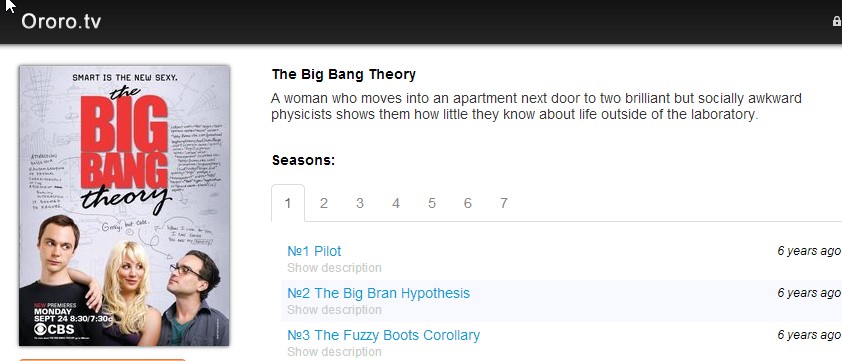
Here, I would recommend ororo.tv. What can ororo.tv do to help you improve your English? What will you find on this website? An amazing number of TV shows and films in their original versions and with subtitles in English. Right now, I am hooked on the Big Bang Theory, an American sitcom about four young scientists, but surely you’ll find attractive alternatives here to suit every taste and mood.
5. A new web tool: Youglish.

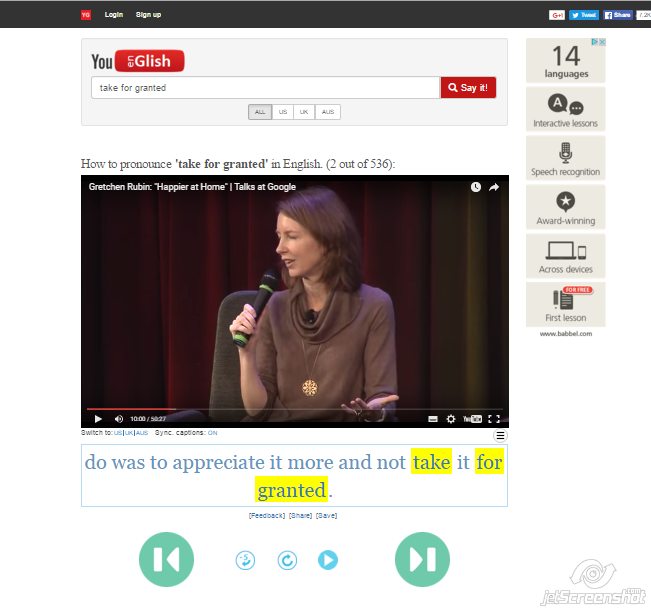
A very interesting tool to help you with your pronunciation and your listening is Youglish.  In the search box, type the word or expression you want to hear in context. Youglish provides you with videos, from You Tube, where the word/expression is spoken by real people and in context.

In case you’re wondering, this is not a sponsored post. It’s just a few recommendations from a humble teacher trying to help students by sharing some useful links.

Thanks for reading!
Blog de Cristina is also on facebook. Follow us!

Word of the Day: to Suggest and How to Make Suggestions

Would you agree with me if I said one of the trickiest verbs in English is ” suggest“?

This is one of the most common mistakes students make with this verb. Do you have this mistake?

My  mother suggested me to learn English

The sentence above is wrong  because “suggest” is not followed by object+infinitive. 

Below you’ll find some of the most common structures with “suggest”:


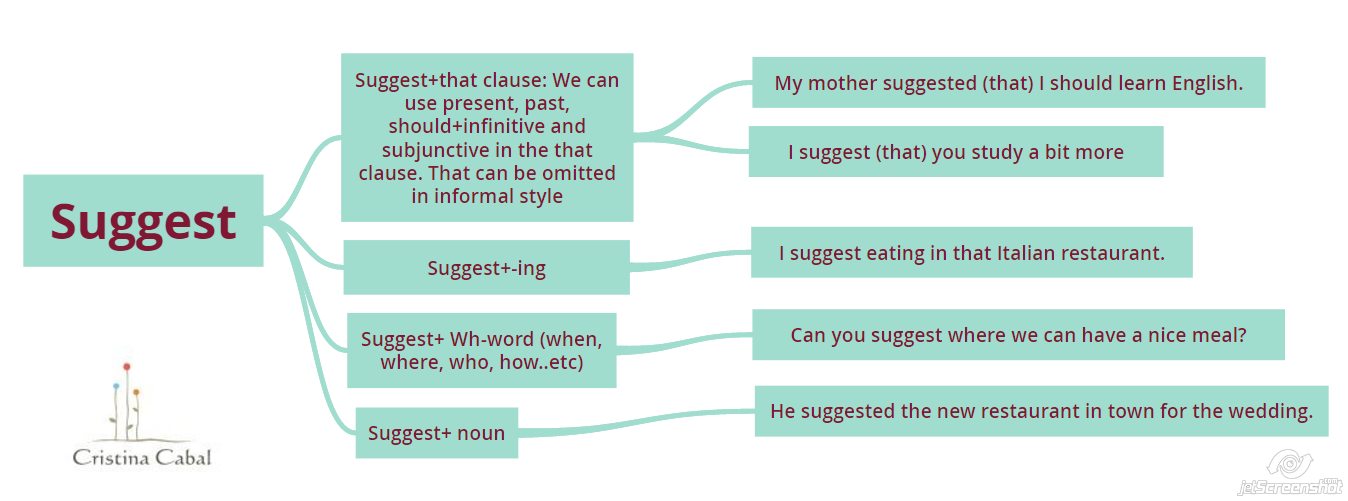
  • Suggest+that clause:  We can use present, past, should+infinitive and subjunctive in the that clause. That  can be omitted in informal style.

My mother suggested (that) I should learn English.

I suggest (that) you study a bit more

  •  Suggest+-ing

I suggest eating in that Italian restaurant.

  • Suggest+ Wh-word (when, where, who, how..etc)

Can you suggest where we  can have a nice meal?

  • Suggest+ noun

He suggested  the new restaurant in town for the wedding.

If we need to mention the person who receives the suggestion, we use a to-construction.

He suggested a new restaurant to me.

     He suggested me a new restaurant.

MAKING SUGGESTIONS

And now that we are on the subject, do you know how to make suggestions in English?

Click “play” on the interactive mind map below to study the different ways we can suggest in English and then see the video to do some practice.

Mapa Mental creado con GoConqr por cristina.cabal

Hope you have found the post useful. If you don’t want to miss any posts, follow us on Facebook.

Tools used: Goconqr and Picovico

Error Correction in Writing: Grammar and Vocabulary Checklist

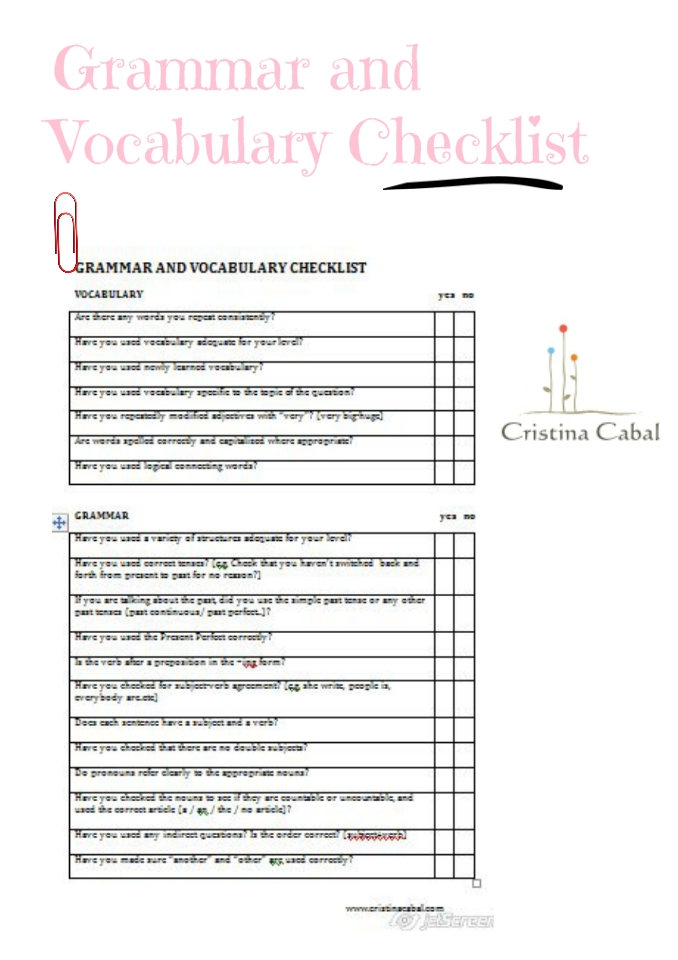
Do you think you can correct some of your own writing errors? Yes. You just need this checklist! 🙂

If you have read my last posts, you may have noticed that lately,  I’m kind of obsessed with writing.

  • I wrote about connectors of contrast here
  • I did a collaborative writing activity here
  • Students wrote about unusual traditions here
  • And here, I recommended some amazing websites to make your writing stronger

And you may think that enough is enough. Well, it is not. It might only be my impression, but I feel students are making the same writing mistakes over and over again. It seems to me that no matter how many times I correct their errors, they still make them.

So, I think I need a change of tactics and I have decided to surprise my students by asking them to correct their own errors. I firmly believe that most of their errors are silly mistakes they make just because they don’t pay enough attention.

The idea is

  • Set a writing activity to do as homework and to be handed in to be marked.
  • Set a deadline and on this day, when students have their neat and tidy essays ready to be handed in, give them the “grammar and vocabulary checklist” (the star in this post) and ask them to correct their own writings, using pencil, and the grammar and vocabulary checklist.
  • Allow 10 or 15 minutes for this step.
  • Tell students that their mark in their writing will be lower if you find any of the  errors written on the checklist.
  • Collect the edited essays and take them home to correct. Unavoidable, sorry!

Download pdf here

checklist

Clauses of Contrast: Connectors and Online Practice

This is a small presentation I have made for my students using a new online tool smore.com, which is basically a tool for creating flyers. As it happens with  most online tools  originally designed for other purposes, it has a lot of potential for creating beautiful content for our classes. You can add text, pictures, audio, videos… etc , and  you can also embed a link, which in the specific case of  this presentation is a great help.

I hope you find this presentation on connectors of contrast useful. At the end of the flyer, you will be able to test your knowledge with some online exercises. Special attention requires  the punctuation before or after these connectors.


Phones and Music: a Superb Combination

Funny thing! Every single year, no matter the level I’m teaching one of my lessons is  dedicated, without fail, to mobile phones.

This year, in November, I published a lesson for my B2 (upper-intermediate) students (lesson here) and now, it seems to be the turn of my B1 (intermediate) students.

This year my lessons about this topic seem to revolve around Adele’s hit “Hello”. Hey! What else did you expect? It’s not like every single year we have a song with
so many scenes where the leading actor is the mighty mobile phone. We certainly need to take advantage of this. Besides, I love Adele.

The lesson

This lesson is  aimed at students with a language level of B1 and focuses on discussing, reading and writing about mobile phones.There is also some general phone vocabulary and a song.


Warm-up: Speaking. Ask students as a whole class some of these questions.

  • What do you use your mobile phone for?
  • Have you ever lost your mobile phone?
  • How many text messages do you send every day?
  • Would you say you’re addicted to your mobile or the Internet?
  • Have you ever…?
  1. lost you phone?
  2. sent a message to the wrong person?
  3.  forgotten to turn your phone off/set to silent or vibrate mode (with embarrassing                      consequences)?

Teaching Vocabulary. You might want to show the slides twice to consolidate vocabulary. I would suggest doing it a third time at the end of the lesson.

Conjunto de Fichas creado con GoConqr por cristina.cabal

The song.
Warm-up. Students are going to listen to a song, so it may be a good idea to get them into the right mood by introducing the activity in a lively way.
Don’t tell students just yet we are going to listen to a song. After revising the vocabulary from the previous exercise, make a long pause until you have all the students staring at you, and say “hello”; I assume everybody should say “hello”. Pause again. Say “Adele”. I bet half the class would add “It’s me”. There you are! The perfect introduction!
(you might want to remind students that to introduce yourself over the phone “ It’s “ or “this is” are used ie. It’s Adele (speaking)/ this is Adele (speaking))

Task 1. Give students a list of words or expressions from the song. Give them some time to read them. If necessary, review how to pronounce the most difficult words. Depending on your class, you might want to keep the words in the order they are going to hear them or if you want a bigger challenge you can shuffle them and/or add some words that are not in the lyrics. Play the song and ask students to cross off the words as they hear them. Play the song once or twice depending on how challenging you want  the activity to be.
Handout here


Task 2.  Give students a photocopy with the lyrics of the song and ask them to sing/read along focusing on pronunciation.

Handout here

Reading and writing. Ask students to read online “7 strange stories of lost cell phones”  from the website mentalfloss.com and write a similar short story about something strange, funny or unusual that happened to them using their mobile phones.