Category Archives: Writing

Picture Description Intermediate: New Technologies and Food

Once again I thank my students for  kindly contributing to this blog. These  two examples of Picture Description have been sent by Noelia and Carmen from the Intermediate Level.

Thank you girls! Well done!

FOOD by Carmen Gayol
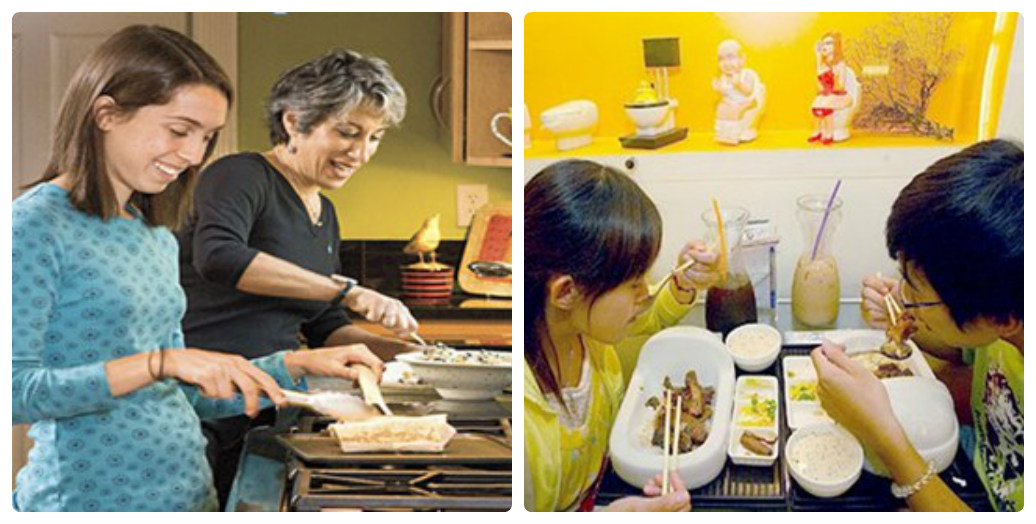
These pictures are clearly both connected with the topic of food.

The picture on the left shows two women who are cooking in a kitchen. One of them is younger than the other, but they seem to  get on well; I’d say that they have a lot in common, they could  be mother and daughter or have  a close relationship.

In the picture on the right, we can see a young couple eating. I think they are in a restaurant, an oriental restaurant because the decoration that can be seen in the background.
 We all need to eat to live, but It‘s clear that the food, in our society, is something more than nutrition. Nowadays, we all use the meals to socialize. We have family meals, business meal, and we all enjoy eating with friends.

Sometimes we prefer eating at home, like in the photo on the left, but other times, we eat out.

However, the main problem isn’t where, but what we eat. In my view, today people tend to eat fast food because they don’t have enough time to prepare a meal and they are always in a hurry. This food isn`t   always healthy, it is many times junk food which contains many calories and carbohydrates and there is a good chance  people will get overweight.

If I had to choose one of the photos, I’m sure I’d choose the first, because it makes me remember old times with my mother , and in addition, I believe that it’s a good way to enjoy eating and cooking.

INTERNET AND THE NEW TECHNOLOGIES by Noelia Espinosa

These two pictures show a connection with the topic of new technologies ,especially with the  internet.

In the first photo there is a woman sitting behind  a desktop and she has a tablet between her hands; probably she is in an office, maybe her workplace. In the second one, a little girl looks as if  she is surfing the internet and she  seems very interested in what she is seeing.  Although I can´t be sure ,I think  she is at home.

Nowadays, both pictures are very common in daily life, although in different ways. The first one shows a typical day at work in all the offices in the world.It is generally accepted that today no company would be operative without the  internet and the  new technologies because they would be unconnected and inefficient. And in the second one, children tend to be connected to the internet every day. When I was child, there was no internet, mobiles or computers, only some privileged people could afford them, but I was very happy playing traditional games with my friends in the street, for example with a  ball,  my dolls …
In my opinion, internet is very important in our lives, I couldn´t live without my mobile, my laptop etc… everybody surfs the net, everybody knows Facebook and even some people work vía Internet. However, I believe sometimes it could be dangerous especially in teenagers and children because there are parents who don´t control what their children are uploading or downloading onto the web and who their children are in  touch with.

You might also find  this section interesting. Check it out!

SPEAKING:PICTURE DESCRIPTION


Used TO: Introducing Used to ,a Nice Short Writing Game and a Beautiful Song.

After almost eight years posting ( I had another blog before this one) I have to say that I am absolutely convinced that if it were not for my blog,I wouldn’t be able to find and remember half the activities that I do in my class. Don’t misunderstand me !!! I’m not implying by any means that I’m sort of disorganised or forgetful; a teacher should never fall into this category, but the truth is that this blog has helped me tons to have all my stuff organised. That must have been the reason that prompted me to start writing… but to be honest, I cannot remember! :).

Two activities that I did yesterday with my students and that I don’t want to forget are

1. A small warm-up to introduce Used To

2. A  fun nice short writing game that requires no preparation

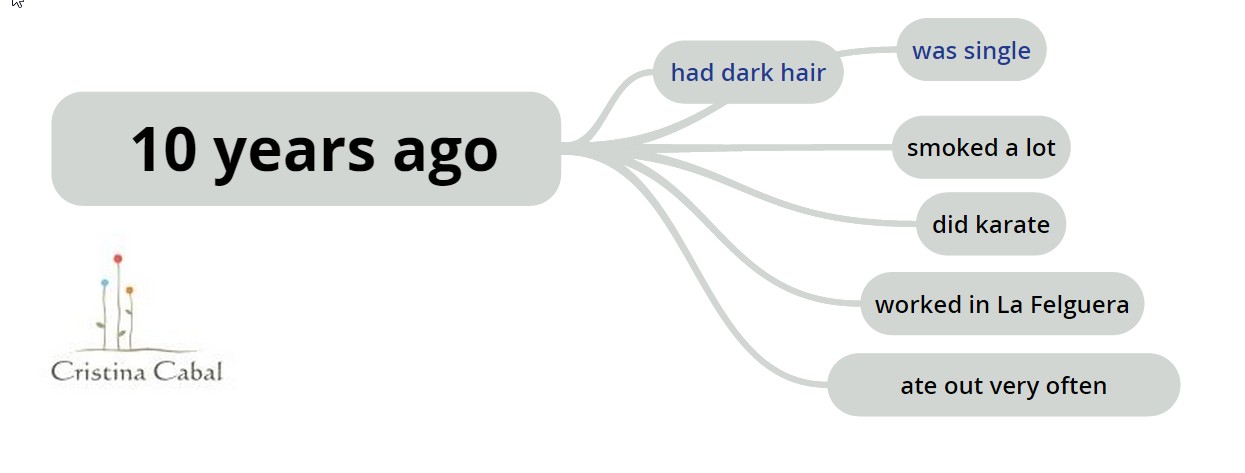
1. Introducing Used To. The picture below shows what I wrote on the whiteboard. I made sure I gave examples of past actions -in the diagram the font is in black- and past states -in blue. (Remember: We use ‘used to’ for something that happened regularly in the past but no longer happens or for something that was true but no longer is).

At this stage, a good performance makes all the difference.

Students pay more attention when you dramatise or introduce the idea in a nice way. Let’s see two examples. Which do you think will make the student pay more attention?

1. OK, Today, I am going to explain Used to, It is used to…. and here are some examples… Do you understand? Any questions?

2. Ok, folks !! That’s me 10 years ago!! Look at my hair now!! What colour is it? Do you think it suits me?? Thanks so much !! You’re so sweet! Now I have fair hair but 10 years ago, I used to have dark hair.  What about you? Has anybody changed their hairstyle?? Yes, teacher, I had dark hair too and now I have red hair!! Ok ! María, so in English, you can say! I used to have dark hair but now my hair is red.

The second option works much better, trust me on this one!

2. WRITING GAME: I HAVE RETIRED

Target language : Used To to describe past habits or states, contrasted with the  present

Preparation: none

Level : B1/B2

Time: about 15 minutes

Procedure:

Setting the context. Tell students they have to imagine they are 70 and they are retired. They are happier in retirement than when they were working but there are some things that they still miss.

Step 1. Students in pairs or in threes choose the job they used to have.

Step 2. Students will need to produce four sentences using Used To , giving clues for the other groups to guess their job.

  • All the sentences must contain ” Used to” in the positive or the negative
  • the first sentence will contain the clue most difficult to guess
  • the last sentence will contain the easiest clue
  • The first sentence will be awarded 4 points and the last one 1 point

Step 3. Each group will name a spokesperson who will read out the clues. It’s important ,at this stage, to ask students to speak up and clearly . Some rules:

  • The spokesperson will read the first sentence and the other groups will raise a hand if they think they know the answer.
  • Only one guess is allowed for each clue
  • If the answer is correct, they will be awarded the four points, if it is not,the second clue will be read for three points.

Example

  • 4 points . I used to work with a lot of people
  • 3 points. I used to work after “work”
  • 2 points. I used to use my voice a lot
  • 1 point . I used to work with children

How many clues did you need to hear??  Yes, the answer is TEACHER

3. LEARNING WITH SONGS. Is there a best way to learn?

This is a beautiful song by the Newcastle songwriter James Morrison and it is called Once When I was Little . I used some time ago to talk about Childhood Memories and to revise Used To.  I hope you like it. I love it!

Click here to see how I worked with the song

A Fun Writing Activity to Practise Giving Advice . Students in the limelight

Raise your hand if you have never had a problem!  Nobody??? Good! That’s what I thought! Now, raise your hand if you have never asked for advice!! I see !! OK ! Maybe some of you don’t like to ask for advice!!

Ok folks !!! What’s clear is that we all have problems and and when we have them, we most usually turn to friends or family asking for advice; it remains to be seen whether we follow the advice but even if we  end up feeling that the advice  given hasn’t helped much, I’m sure, at least, you would  feel grateful  just because someone you trust has been willing to take the time to listen to you.

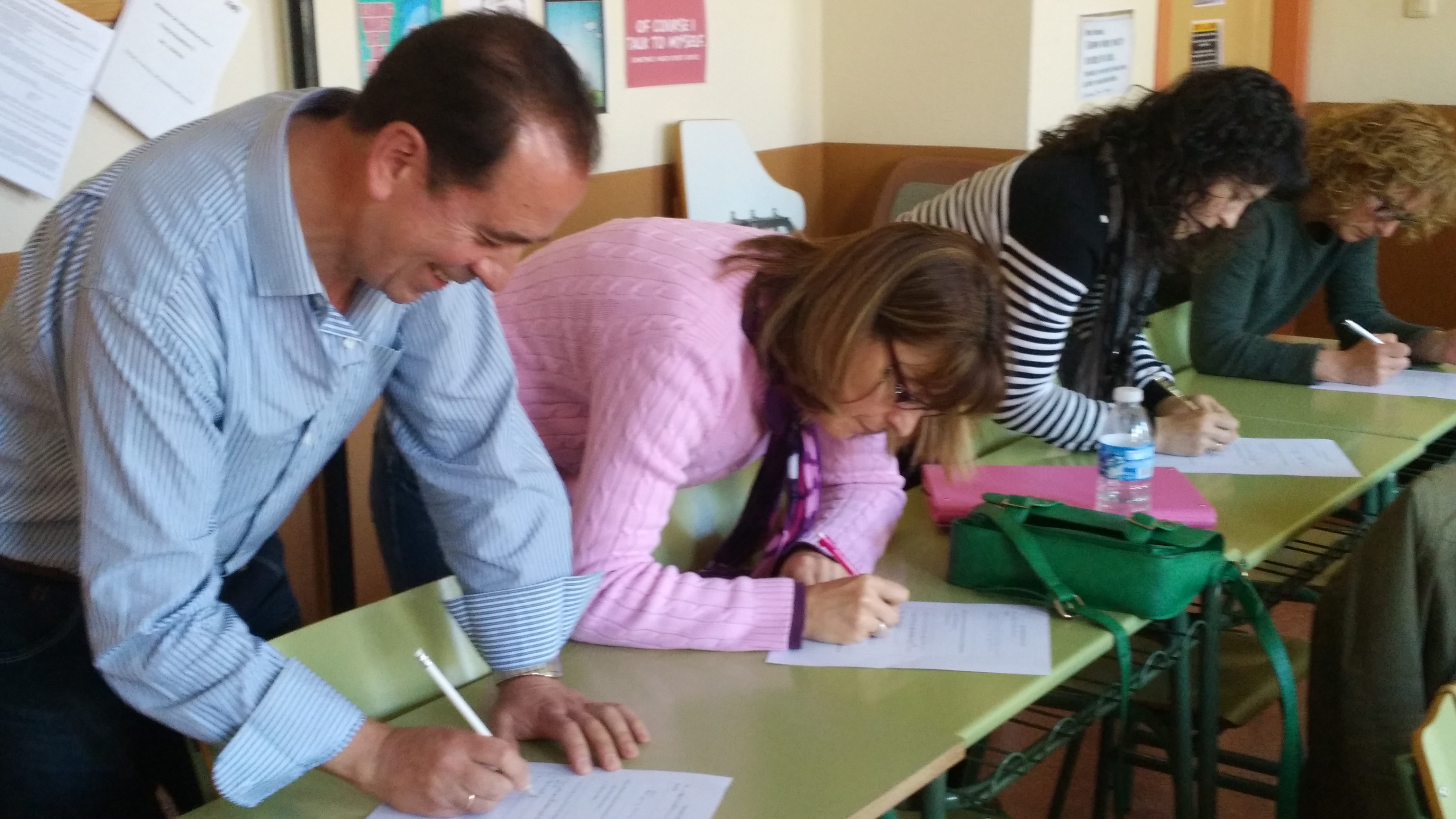
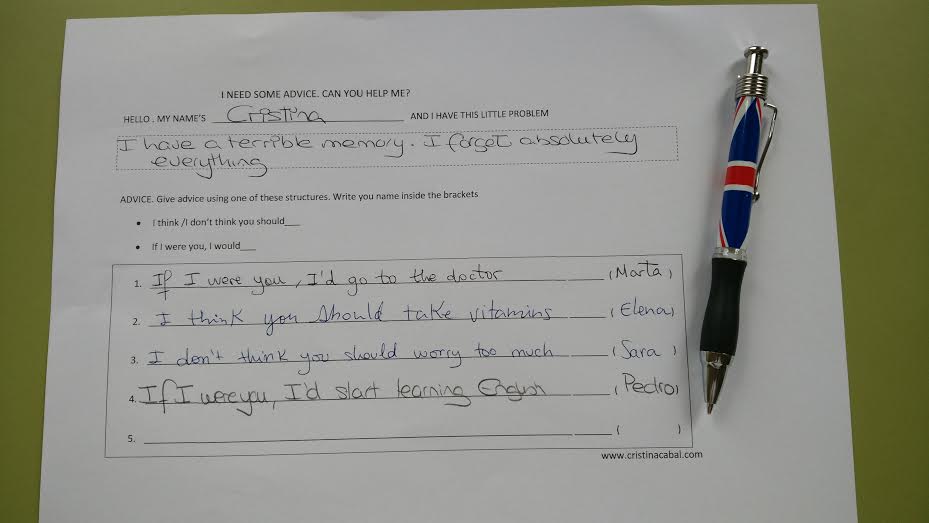
In this post, I want to share with you an activity to practise giving advice, which has worked really well with my students (see photo below)

LEVEL: B1

AIM: to give written advice using

♥I think / I don’t think you should…

♥ If I were you , I would…  

MATERIALS: A clean sheet of paper and a pen or you can download the template here.

STEPS

1. Introduce / revise the two structures above, used to give advice. Share with your students a problem and ask them to offer you advice using the two structures above. Choose the funniest or most sensible advice as the best offered.

2.  Give students a copy of I NEED SOME ADVICE or display the template so that they can copy the information on a clean sheet of paper.

2. Students write their name  and their problem in the space provided and leave it on their table, face up.

3. Introduce the idea of Agony Aunts ( see definiton here) and tell students they are going to act as agony aunts to solve some problems.

4. Students stand up and they go around the class reading their classmates’ problems and writing their piece of advice in the space provided, together with their name inside the brackets. The same advice cannot be repeated. Allow 10 minutes for this step

 5.  Students sit down at their desks, read the advice offered for their problems and decide on the best. Problem and advice will be read aloud. The students who has offered the best advice gets one point. See who gets more points and name him the new Agony Aunt.

Learn English and have Fun!! If you like my blog , “like me” on Facebook too, please. Follow this link

Lesson Plan: Dating , Family and Friends

Level: Intermediate
Topic: Dating, Family and Friends
Aim: To develop all four skills – listening, reading, writing and speaking .

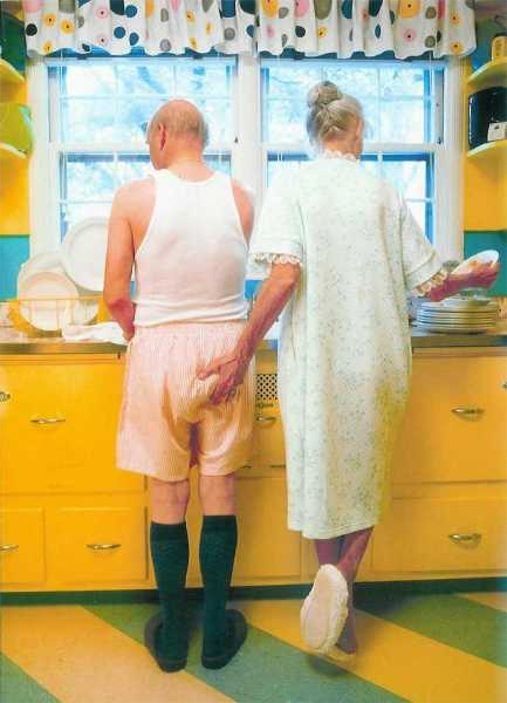
Has our lifestyle changed so much that it has affected the way we socialise, date and  communicate with our family? Here is a nice visual lesson plan to talk about these issues TASK 1 Look at the picture below. Which of these adjectives would you use to describe the picture? Give reasons

Awesome   disgusting   funny   unreal   pornographic  sexist

romantic   interesting     unusual      provocative     depressing

Can you think of any more adjectives?

Task 2.  Introducing &Revising Vocabulary :   Dictogloss.

(Dictogloss technique here )

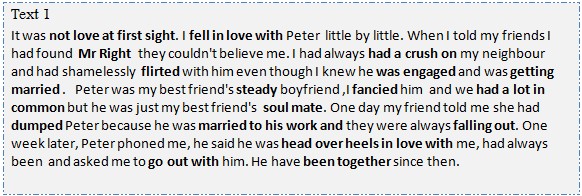
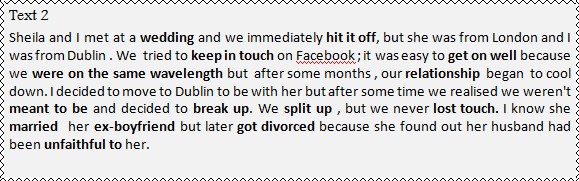
As I normally have large classes I have written two texts containing the target language so I will divide the class into two groups and I’ll dictate the texts in turns, following the dictogloss technique. Texts will be then written on the board or /and a copy of the texts handed out.

Vocabulary Handout 

TASK 3 SPEAKING

Has traditional dating become a thing of the past? Look at the pictures below showing different ways of dating. In pairs, discuss which ones you prefer, which ones you wouldn’t mind trying and which ones you would never try, giving reasons to support your opinion.

TASK 4. LISTENING: What makes for a good friend.  See on youtube

Time to improve your listening abilities. This time we are going to listen for specific vocabulary. Ready?

Listen to a man talking about  What Makes a Good Friend and fill in the spaces in the exercise embedded below.


TASK 5 . SPEAKING: A CLOSE FRIEND. Think of one of your close friends. In pairs, ask and answer these questions

  • How long have you known him?
  • Where did you meet?
  • Do you get on well? What do you have in common?
  • Do you ever argue? What about?
  • How often do you see each other?
  • How do you keep in touch? Have you ever lost touch? Why?

TASK 6. SPEAKING.

Students sit facing each other using the speed-dating technique. Some students remain seated during the whole event ( in real speed dating, women remain seated). When the bell rings, students sit across from another student and they use their questions to start a conversation. They need to keep on talking for 3 minutes. Then a bell rings and “men” need to stand up and move to their right to start a new conversation with a different partner and the whole process is repeated again. Instead of a  bell so I use a Class Timer (here).

Display with the OHP, on the whiteboard, the pictures with the questions and ask students to talk about the question on the picture for about three minutes. When the time’s up,  students change partners and a new picture is displayed.

I have created this slideshow with Google Sites.


TASK  5 Writing. Choose any of the questions in the exercise above and write an essay making sure you use the vocabulary you have learnt in this lesson. Do you need some inspiration? See what other students have written  hereherehere and here

I hope you’ve enjoyed the lesson!!

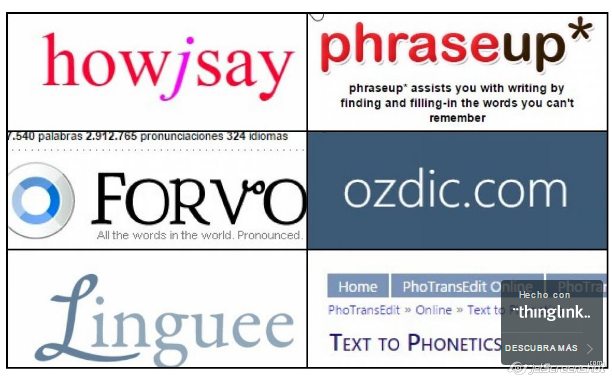
Six Wonderful Sites to Help you Write, Speak and Sound Better

I’m not a native speaker. Even though I read, write, work and I would almost dare say live  and dream in  English, I haven’t learned the language from birth and sometimes have moments of self-doubt. These websites I am going to share in this post have been an invaluable help.

Blog de Cristina is also on Facebook. FOLLOW IT!


Howjsay  and Forvo: The world’s largest dictionaries of English Pronunciation

How often have you come across a proper name you had no clue how to pronounce and you desperately needed to know the  correct standard  pronunciation of or perhaps  a variant pronunciation of this word?  Let’s say you want to know the pronunciation of the word “selion”. You go to the most important online dictionaries offering pronunciation, but the word you’re looking up is not there and you suddenly begin to panic. At this stage you can do three things: panic, pretend you know how to pronounce it ( you just know how to sound British, no problem there) or look up the word in any of these two amazing sites that have saved my skin countless times.

Linguee

We all know how difficult it is to write, even more in a foreign language. More often than not we look up words in dictionaries only to find that it offers so many possibilities for the translation of the word that  we don’t know which one to choose for the context we need. In fact, sometimes it doesn’t help us at all but makes things more complicated as we don’t know which word to use to mean what we want to express and we end up completely frustrated. Here, Linguee can help us as it is a bilingual dictionary but  in context

Phraseup

Sometimes we know what we want to write, the sentence is phrased in our mind, but we can’t figure out some of the words we need. This is where phraseup*comes in. It assists you with writing, by suggesting possible combinations to fill-in the words you can’t remember. Each suggestion is accompanied by definitions, synonyms and translations to other languages.
Imagine you know there is an expression containing the words ” take” and “granted” but you have forgotten what goes in the middle, PhraseUp can help you here, too. Just type the words that you remember and put an asterisk * where you want the application to insert something. Very useful, isn’t it?

Or maybe  you want to use the verb+preposition combination “cope with” but you are just not sure which words it collocates with, just type it in PhraseUp and options will be provided.

Ozdic.com

I have been using ozdic.com for years and this is a dictionary I cannot live without. It is not any dictionary, it also help you to sound more natural when speaking or writing in English. Let’s  say you don’t know the preposition that collocates with the verb “insist”, or which adverbs sound  more natural with this verb; let’s imagine you need to use the word “idea” but you have no clue what adjective to use  apart from the overused “good “. Go to the dictionary now, this is just a sample of what you’ll find : bright, brilliant, clever, excellent,, marvellous | valuable, worthwhile | exciting, inspirational, interesting, stimulating | constructive, positive | absurd, bad, mistaken, ridiculous | , crazy, mad, outlandish, wild | half-baked | ambitious, big, grand.

The dictionary contains over 150,000 collocations for nearly 9,000 headwords and it is based on the 100 million word British National Corpus.

Text2Phonetics 

It is a wonderful tool that can save a lot of time if you need to transcribe something. I have tried it with small texts (two or three lines) and it’s incredible! You will be able to  pronounce a whole text perfectly .
Just paste the text you want to transcribe and click the Transcribe Button to get the transcription.