Tag Archives: A2

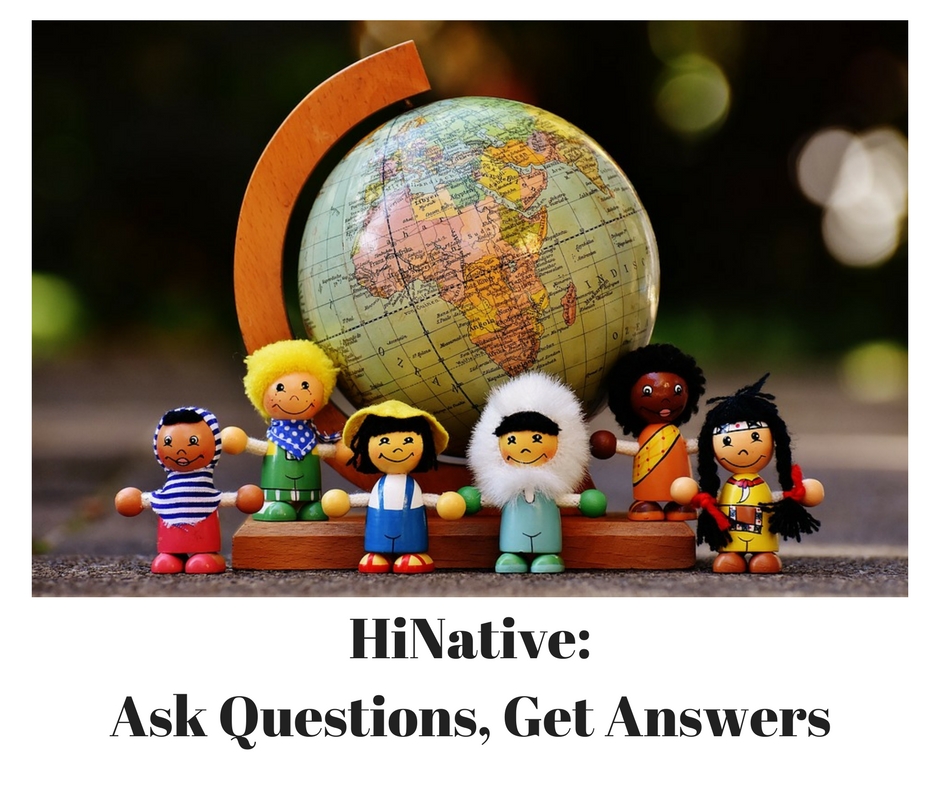
HiNative: Ask Questions, Get Answers

Wouldn’t it be just awesome to have native speakers almost at your beck and call to answer any of your questions and for free?

That’s HiNative, a free question/answer platform where you can ask questions and get answers about language and culture from native speakers all around the world.

I came across this extremely useful website by chance and decided to check it out. It was Saturday, 9.30 in the evening and thought it was probably not the best time to post a question and get an answer. I was wrong. Within 5 minutes of posting my question, I had 4 answers from native speakers so imagine how fast it would be any other day of the week.  Hinative is a give-and-take platform and though you don’t necessarily have to do it, the thing is that I also liked the idea of helping others with questions about my own native language and so the site got me entertained for a long while.


You can also download their free app on your mobile phone.

How does it work?

  1. Sign up. You’ll be sent an email to confirm your account.
  2. The interface is very simple and easy to use.

  • Home: Here you can find questions other users ask about your own native language. Remember that it’s a give-and-take platform and you’re also expected to help other users
  • Notifications:  this is where you’ll be notified about new answers to your questions.
  • Profile: Here you can modify your profile and your settings
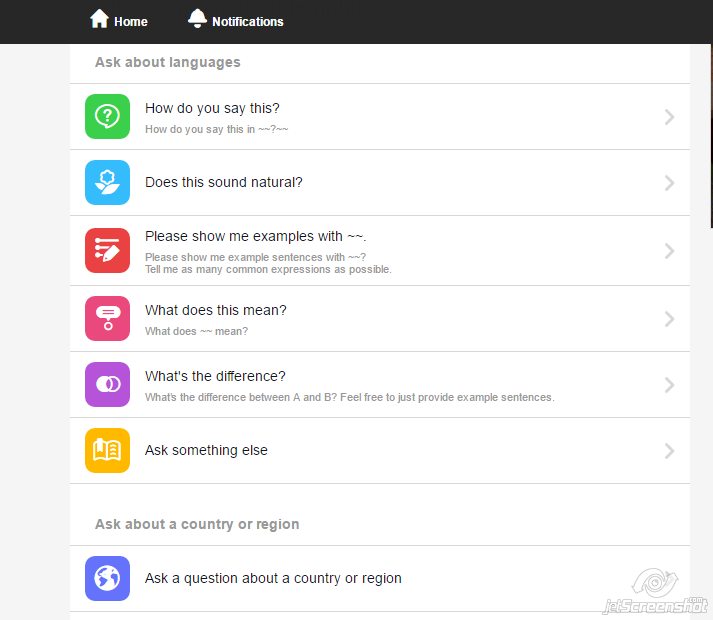
  • Ask: where you can pose your questions. Below you’ll see some of the templates you can use to make it easier for you to ask.

3. Ask your question. What kind of questions can you ask?

You can ask questions such as “what’s the difference between “scholarship” and “grant”? or How do you say “___” in English? or Please show me examples with the expression ” take it for granted”

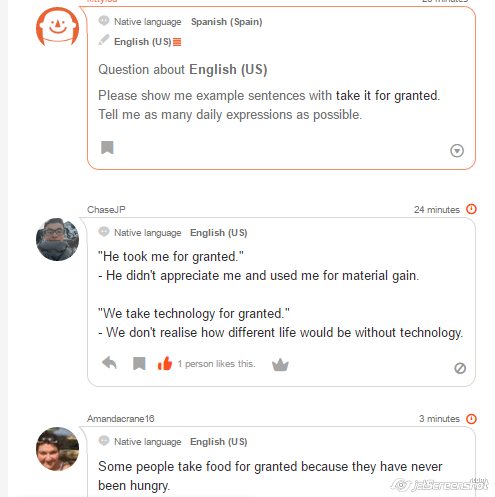
So, I decided to use one of the templates and ask  Please show me examples with the expression ” take it for granted”. This is what I got.

So, quite easy really, just register, ask your question and sit back while waiting for someone to get back to you. You won’t have to wait long.

10 Best Free Listening Websites with Quizzes to Practise for Listening Exams

So what do you do to practise listening for exams?

Growing up, I never had the opportunity to do any extra practice to improve my listening skills. We didn’t have the Internet and the thousand possibilities it offers to learners of any language nowadays. The teachers had an old tape player that sometimes stopped and started on its own and old tapes that ended up sounding distorted and most of the times unlistenable so if you wanted to get better at listening, you just listened to the radio and struggled to understand the lyrics and sing along. Not that I ever complained. That was the perfect excuse to listen to music while claiming to be working hard. I have to say that my father never bought it!

So, exams are just around the corner and I know you’re beginning to freak out. Don’t worry! Here I am, coming to the rescue!

These are, in my opinion, the best sites with quizzes to practise listening comprehension. In no particular order.


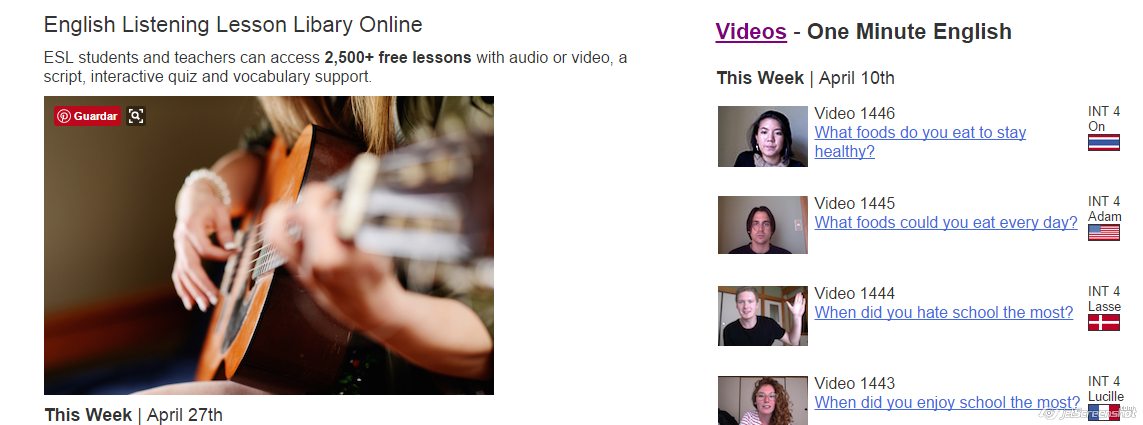
TALK ENGLISH


  • url: http://www.talkenglish.com/
  • Levels: three main levels (beginner, intermediate and advanced)
  • Pre-listening /Post-listening activities: no
  • Transcript: yes
  • Audio Download: no
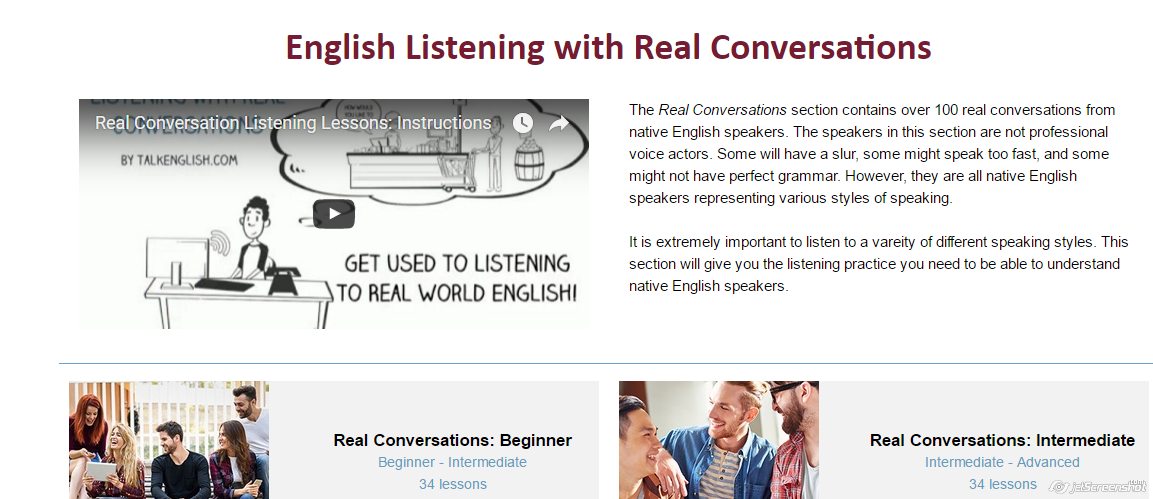
  • What I like best: it has some other listening activities like dictations or listening based on pictures for lower levels. It also has a section dedicated to advanced students with a story and some comprehension questions. See here
  • What I don’t like: In my opinion, the “listening” categorised under “advanced level” is far too easy.

 ELLLO


  • url: http://www.elllo.org/
  • Levels: six levels (beginners-advanced)
  • Pre-listening /Post-listening activities: grammar or vocabulary activities
  • Transcript: yes
  • Audio Download: only audio for vocabulary
  • What I like best: there are seven activity types (see them here) and a variety of accents.
  • What I don’t like: a bit disorganised.

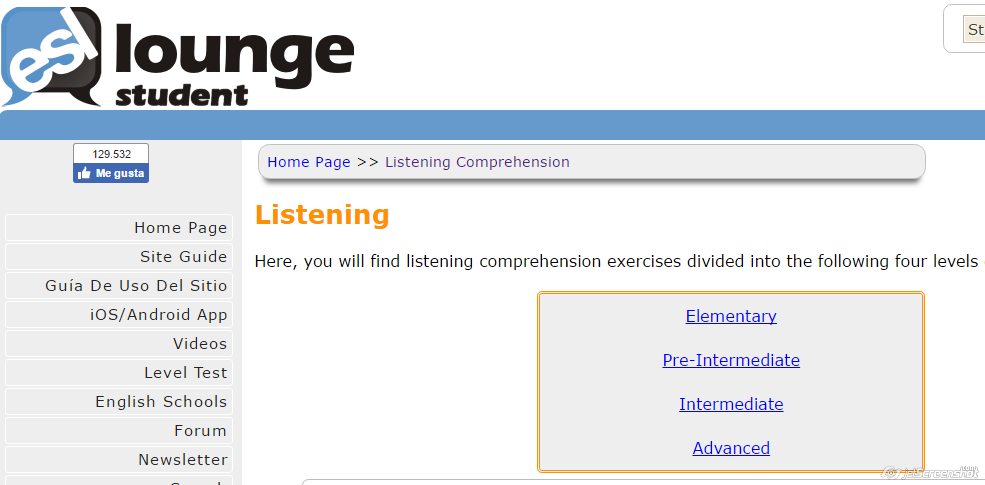
ESL LOUNGE


  • url: http://www.esl-lounge.com/student/listening.php
  • Levels: four  (elementary, pre-intermediate, intermediate and advanced)
  • Pre-listening /Post-listening activities: no
  • Transcript: yes
  • Audio Download: yes
  • What I like best: it offers different kinds of comprehension exercises (multiple choice, cloze, true/false…etc)

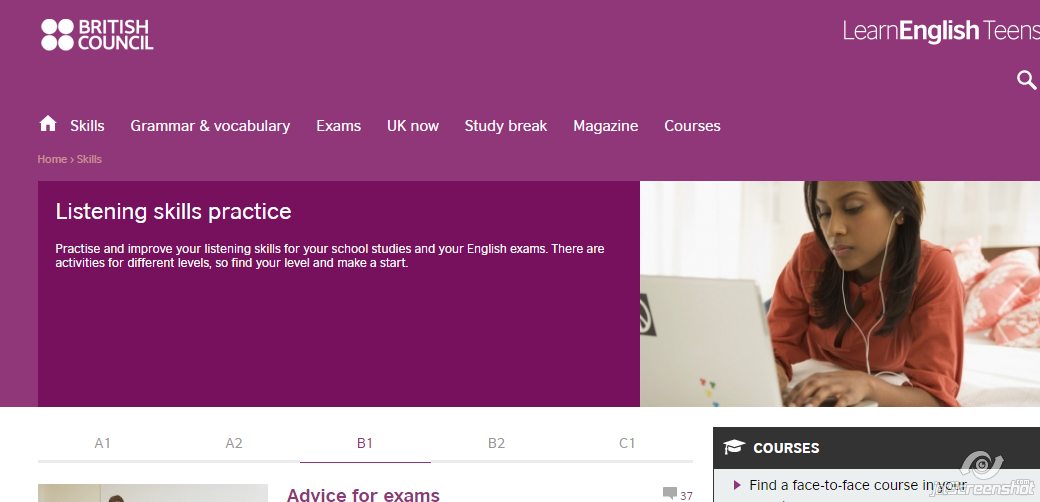
BRITISH COUNCIL


  • url: http://learnenglishteens.britishcouncil.org/skills/listening-skills-practice
  • Levels: five levels ( A1, A2, B1, B2, C1)
  • Pre-listening /Post-listening activities: both
  • Transcript: yes
  • Audio Download: yes
  • What I like best: very user-friendly for both students and teachers. PDF available for exercises, answers and transcript.
  • Extra: The British Council also runs some other sections to improve and practise your listening skills and learn about Britain, its culture, its language and its people. See here

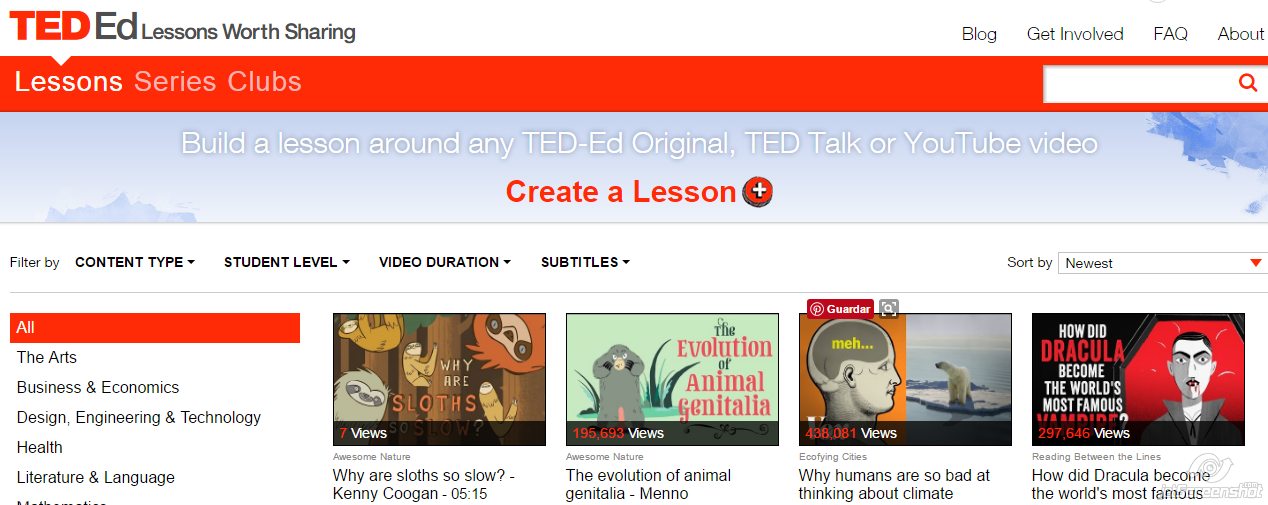
 EDTED LESSONS WORTH SHARING


  • url: http://ed.ted.com/lessons
  • Levels: advanced
  • Pre-listening /Post-listening activities: all the lessons have three parts : watch, think (where you can do the comprehension exercise) and discuss (post-listening questions)
  • Transcript: no, although most lessons are on youtube, and you can watch them with subtitles
  • Audio Download: the videos are on youtube, so they can be easily downloaded
  • What I don’t like: the audio is not sorted by level and although most of videos are for advanced students, some of them are much easier than others so I would say that they are suitable for B2 students and higher. You need to register although it’s free.
  • Extra: you can also create your own lessons

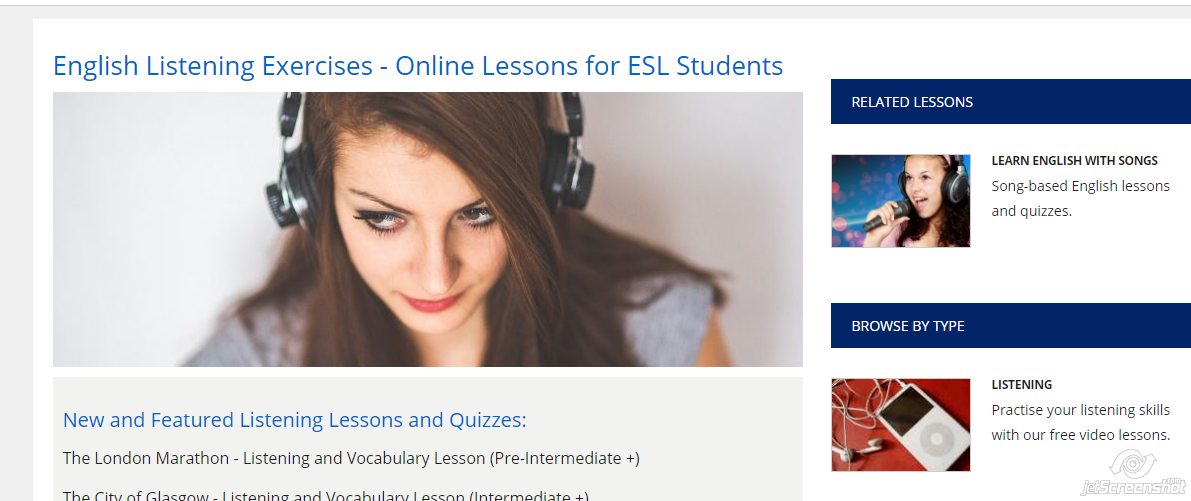
ESOL COURSES


  • url: http://www.esolcourses.com/content/topicsmenu/listening.html
  • Levels: four main levels (upper elementary, pre-intermediate, intermediate, upper-intermediate)
  • Pre-listening /Post-listening activities: most of the times
  • Transcript: no
  • Audio Download: the videos are on youtube, so they can be easily downloaded
  • What I like best: carefully designed  user-friendly lessons plans

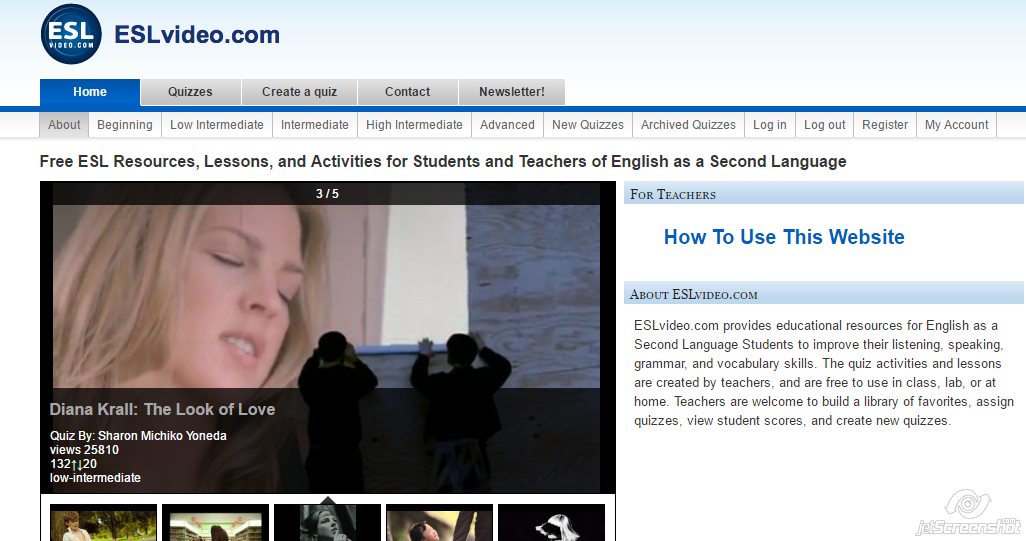
ESL VIDEO


  • url: http://www.eslvideo.com/index.php
  • Levels: five ( from beginner to advanced)
  • Pre-listening /Post-listening activities: no
  • Transcript: not always
  • Audio Download: the videos are on youtube, so they can be easily downloaded
  • What I don’t like: anybody can create a listening quiz so it might contain mistakes
  • Extra: You can create your own quiz


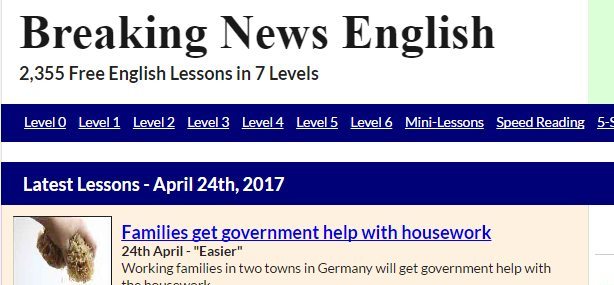
BREAKING NEWS ENGLISH


  • url: http://www.breakingnewsenglish.com/index.html
  • Levels: seven levels
  • Pre-listening /Post-listening activities: both
  • Transcript: yes
  • Audio Download: yes
  • What I like best: you can listen to the same piece of news at different levels and the news can be read at different speeds.
  • Extra: Sean Banville’s also runs eight other sites, check them out here


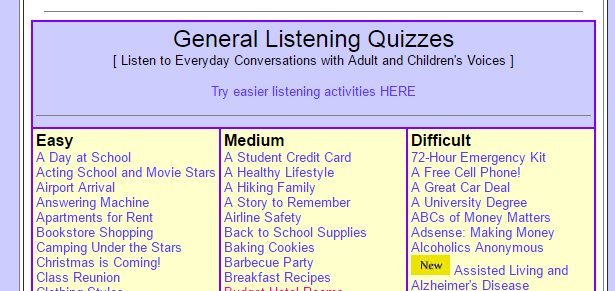
RANDALL’S ESL CYBER LISTENING LAB


  • url : http://www.esl-lab.com/
  • Levels: three levels ( easy, medium and difficult)
  • Pre-listening /Post-listening activities: Both
  • Transcript: yes
  • Audio Download: No
  • What I like best: the post-listening activities and the vocabulary section ( see here) where you can learn how to pronounce words associated to different topics.

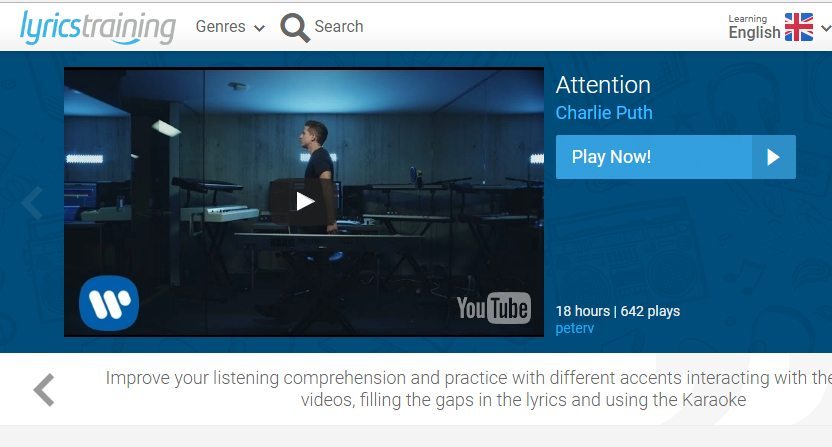
LYRICS TRAINING


  • url: https://lyricstraining.com/
  • Levels: four ( from beginner to expert)
  • Pre-listening /Post-listening activities: no
  • Transcript: any lyrics site will have the lyrics for the song
  • Audio Download: the videos are on youtube, so they can be easily downloaded
  • What I like: it’s fun and a different way to approach listening exercises.
  • Extra: You can create your own exercises (beta).

Check also:

Blog de Cristina is also on Facebook. Click to follow


The Article in English: Explanation, Exercises and a Challenging Quiz

Although the use of the article in English seems a priori an easy subject to teach, the truth is that some students struggle with the use and omission of it.

What can you find in this post?

  • Intermediate level:
  1. Animated video with some rules on the use and omission of the articles “the, a/an”
  2. Some links to exercises from around the web to consolidate knowledge.
  • Advanced Level:
  1. An engaging quiz with feedback notes featuring some difficult cases related to the use and omission of articles.


Grammar. Watch the presentation. Pause it as often as necessary to understand and assimilate the rules.

Exercises: Links to interactive exercises  from around the web to consolidate knowledge.


The quiz


The Writing Process and 13 Tips to Raise your Essay Score

Writing is a process. For some students it might seem like a daunting task, but if you look at it as a succession of small steps to follow instead of looking at it as the big final product, writing can be fun and easy.

Useful Links:

Part 1. The Writing Process


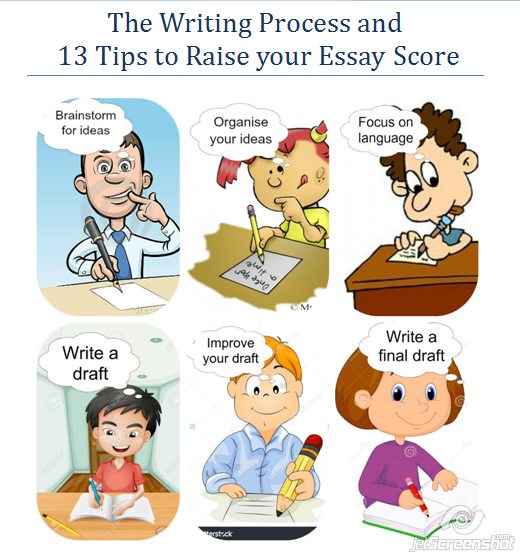
Brainstorm for ideas

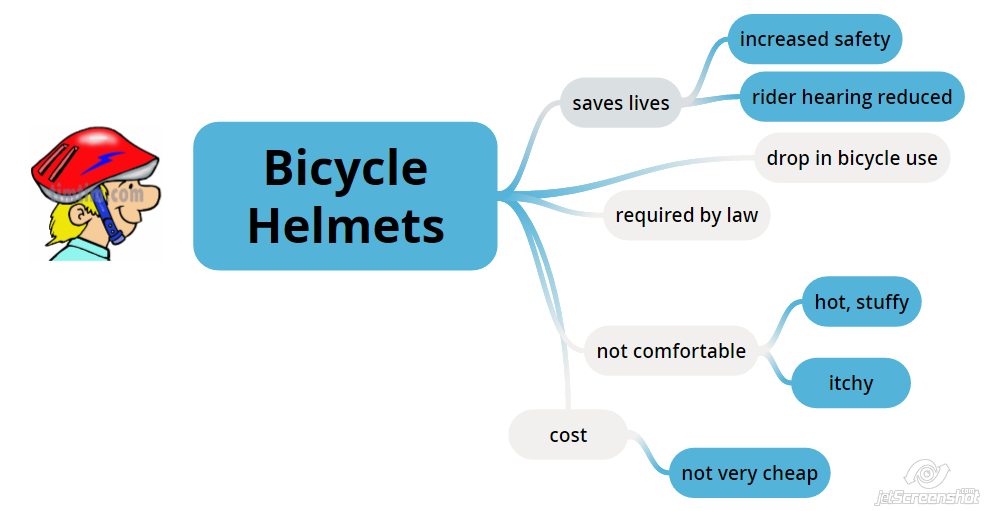
  • Write down all the ideas you can think of. You can try mind mapping your ideas. It is a good technique to generate ideas and expand on them. You can begin by writing a big bubble in the middle of the page with the topic and then use arrows to draw new bubbles with ideas and again arrows with more specific points or observations about this idea.
  • At this stage, don’t worry about spelling or grammar mistakes.
Organise your ideas

  • Decide which ideas to keep.
  • Group similar ideas together.
  • Organise your ideas according to the writing task.

Focus on language 

  • Think of words and expressions you will need in your work.

Write a draft

  • Write quickly. Don’t worry about things such as accuracy or neatness.
  • Use a pencil so that it is easier to make corrections and erase things.
  • If you are writing your draft by hand, leave a wide margin for notes and space between the lines for additions and corrections.
  • If you can’t think of a word in English, write it in your own language. You can look it up in a dictionary later.
  • If you don’t know the spelling of a word, write it anyway you can. You can look it up in a dictionary later.

Improve your draft

  • Do it slowly and conscientiously.
  • Check spellings in the dictionary and look up any word you felt unsure of. Here’s a very useful post Six Amazing Websites that Make your Writing Stronger.
  • Use a checklist to improve your work. See the one my students use here.
  • Read your draft aloud. Circle the things that need to be improved, reworded or clarified.
  • Take a break from writing and reread your draft after 30 minutes. Does everything sound right?

Write a final draft

  • Copy your corrected work neatly on a clean sheet of paper.
  • Make sure your paragraphs are clearly indicated.

Adapted from Burlington Books


 Part 2. Writing an Essay


An essay consists of several paragraphs about a topic. Although there are many different kinds of essays, they all have the same basic structure.

Opening

It is the general presentation of the topic. Try to get the reader interested in your essay. How can you do that? For example, by beginning

  • With a surprising fact.

Humans usually imitate the speech of someone with a strong accent due to empathy and to create a bond and assimilate with them.

  • With a short anecdote.

If you could interview anybody in the world, who would you choose?” asked the teacher. “Nelson Mandela”, I replied.

  • With a question.

Did you know that there is an island in Japan that has more than 450 people living above the age of 100?

 The Body.

The body can have one or more paragraphs which develop the topic. The first paragraph should contain the strongest argument or example. The second paragraph the second strongest argument and the third the weakest.

A paragraph consists of several sentences about a certain topic. It has the following parts:

  • A topic sentence, i.e. an idea.
  • One or several supporting sentences to expand on the idea.
  • A concluding sentence.

The parts should flow logically and the ideas should be easy to understand.

  • Go from general to specific. Give a general idea and then expand it.
  • Avoid unnecessary repetition by using pronouns to refer back to nouns already mentioned.
  • Use connector to join sentences and show the connection between ideas.

 The Closing

It is the paragraph that summarizes the main idea or presents a conclusion, depending on the kind of essay you need to write. Some things to bear in mind:

  • It should not bring new ideas.
  • It shouldn’t be very long.
  • It can be similar to the opening, but presented in different words.


13 Tips to Raise your Essay Score


  1. Read the assignment thoroughly, several times if necessary and underline anything relevant. Sometimes there is a question or several. Make sure you cover all of them. Focus on the purpose of the composition, on the tone and the style required and also on the length requirements.
  1. Plan your writing. You need to dedicate several minutes to planning what you are going to say and how you are going to say. It makes a big difference.
  1. Write a first draft. Use pencil, if possible, to erase or correct errors.
  1. Begin each paragraph with a topic sentence and then write some supporting sentences about this topic sentence. 1 idea= 1 paragraph.
  1. Use a variety of vocabulary and grammar structures. Avoid repeating the same words over and over again. Use synonyms or paraphrase. A thesaurus or a lexicon is useful as a source of alternative words. Use a range of grammar, sentence structure should be varied and clear.
  1. Use connectors to join ideas. They also play an important part in stringing together sentences and paragraphs.
  1. Time management. Organize the time you are given to write the essay. If you have one hour to complete the task, dedicate 10 minutes to planning and organizing your ideas and allow about 10 minutes at the end to proofread your essay before giving it to the teacher. You will still have 40 minutes left to write and develop your ideas.
  1. Keep to the topic. Don’t write about things that have nothing to do with the assignment.
  1. Sound natural. Just because you know lots of connectors, it doesn’t mean you have to use all of them.
  1. Punctuation. Pay attention to punctuation, especially to the correct use of commas and periods. Your text can be confusing if you don’t use them adequately.
  1. Style. Think about the purpose of the assignment and the audience it addresses and use the correct style and tone. If it’s informal, you can use colloquial language, simple and shorter sentences, contractions, abbreviations and emotional language. On the contrary if it’s a formal assignment, you will need to use more complex sentences, avoid contractions and abbreviations and you should definitely avoid emotional language or colloquial expressions.
  1. Proofread your essay. Have a coffee or go for a walk. Come back, take your essay and reread it aloud. Does it sound “right”? Then, it’s ready!
  1. Read a lot and try to write about anything for 30 minutes every day. You’ll soon get better.

Thanks for reading!

Blog de Cristina is also on Facebook. Follow us
Spinning the Wheel: an Engaging and Productive Speaking Activity.

This is a very simple communicative activity that works wonders because it is highly engaging, students love it and it is very productive. It takes 2 minutes to create and it is adaptable to any topic of discussion and suitable for all levels.


Aim: activating new vocabulary through discussion questions.

Levels: all

PROCEDURE.

  1. Easy peasy! Just go to wheeldecide.com and fill in one wheel with the target vocabulary and another one with the questions you want your students to discuss.
  2. Students in pairs
  3. Spin the wheel containing the questions and then, the wheel containing the word/ expression you want your students to use when answering the question.
  4. Student A has 2 minutes to talk about the question and use the target vocabulary. If he does, he scores a point.
  5. Spin the wheels again. It’s student B’s turn.

NOTE: When creating the wheel, go to the advanced section to choose colour and whether you want the option to be removed after it is landed on or not.


If you are a student and you’re preparing for exams or studying on your own, you probably have your own studying strategies, but I invite you to try this new one. I’m sure you’ll find it engaging and productive.

I ‘d like to thank Cristina Serafim for bringing wheeldecide to my attention.

Blog de Cristina is also on Facebook. Follow us!