Tag Archives: speaking

Some nice activities to practise Reported Speech

I love teaching reported speech. I don’t know if students can feel when a teacher enjoys teaching something though I have the impression that somehow it shows. Here are some ideas to get my students “love” (well, maybe I’m getting a bit carried away) reported speech. Hopefully, some of them will do the trick.

♥Video: How to tell  if your boyfriend is a slob from the British Council
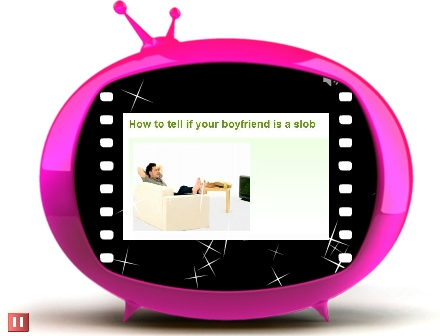
How to tell if your boyfrid is a slob

This video is great to practise statements, questions, orders and suggestions!

Setting the context: tell students they have had a big argument with their boyfriend or girlfriend and they are going to meet their closest friend to tell them all about it. Divide the class into “girls” and “boys” and ask each group to focus on what the girl or the boy says in the video. Ask them to write down as much as they can using the exact words said in the video. Working together within their groups, they’ll need to report in as much detail as possible the conversation to their closest friend (the teacher).

For weaker students I would  do the whole lesson plan as presented by the British Council. Click here

♥ Song: My name is Luka by Suzanne Vega. A song about child abuse. It tells the story of a frightened boy who is forbidden to talk about what he’s going through.

The idea is the same as above. I´ll let the students do all the work (we, teachers, need a break from time to time, don’t we?). The song is quite easy to understand and though they might not pick up everything, they will still be able to come up with some good reported statements. The idea is:

  • Students listen to the song once and write down whole sentences. (ex. My name is Luka, I live on the second floor…)
  • Students in pairs share with their partners.
  • Students listen a second time and pair again one last time.
  • Correct using the video+lyrics and ask students as a class to report the sentences one by one. (For ex. He said his name was Luka)


♥ Gossiping about the teacher (from Begem Tonyali -original post here)

Students think about 10 things they want to know about their teacher and ask the questions, which are written on the board. The class is divided into 2 groups. The first group leave the class and wait outside. The first group members take turns in asking the teacher the questions and write down the answers. Now, they leave and the second group does the same thing. However, what they do not know is that the teacher is honest and gives correct answers to only one group, but lies to the other. It’s a good idea not to tell them beforehand. Then, students pair off as 1st and 2nd group partners. The activity goes like this and one of the students tells his partner “I asked the teacher how old she was and she told me she was 16.” Then the other partner goes “I asked the same question, but she told me she was 36.” etc…until all the questions are reported. Here they have to pay attention to the usage of the reporting verbs and have fun in finding which group the teacher lied to.

♥ A funny idea from A Journey in TEFL. Kids will adore me! 😉

Preparation: before the game, students have been taught the following reporting verbs: ask, tell, warn, advise, suggest and offer.
Students are given some scrap paper and asked to write a yes/no question, a Wh-question, a request, a warning, a suggestion, a piece of advice and an offer .

When they finish, they are asked to make balls from the papers. And the fun begins….Time to play snowballs!! Allow them to play snowballs for some time and play some music. Tell them they can play snowball for as long as there is music. Stop the music and ask students to open the ball of paper and report the things written on it. Remember, the bigger the ball, the easier it will be to catch it! You don’t want to be looking for missing balls!

♥ Indirect into Direct Speech Cards.

Not so funny, maybe, but still worth doing! Students love competitions- me too, if you want to know the truth- so I’m planning to disguise this exercise as a competition with the students  getting the card and scoring points for each correct answer. Now, this activity requires some preparation on my part, namely writing on one side of a card reported speech and, on the other side, direct speech of the same sentence. I’m planning to include statements, questions, commands, suggestions, offers…etc. Show the students the reported speech side of the card. The student who guesses the direct speech sentence, gets the card and the point.

Have a nice week!

Blog de Cristina is also on Facebook! 

PictureTrail: Customizable Slide Show Maker

I have discovered this amazing site to work with slides that I cannot wait to share with you. It is just amazing the variety it offers to create slides, choosing from a variety of skins, borders, glitters, backgrounds…etc. The only thing you need to do is upload your pictures and have fun. It is also possible, as you have probably noticed 😉 to embed your slides.

How am I going to use it in my classes? Nothing to write home about really; my students are working with TV programmes so I thought to find images from different Spanish programmes and do some speaking. The instructions are in the form of a slide too, so that they can do this exercise at home again and do some more practice before exams.

By the way, the site is called PictureTrail.

films

Nice stuff to use for evaluating compulsory reading

I am a bookworm and have been so for a long, long time. Not a single day in my life goes by without reading. I like to discover my own books. I don’t want to be talked about endlessly about how good a book is, I’ll for sure end up not reading it ( this has just happened to me with the Grey’s series).  I like books that lure me in immediately.  Books that enable me to forget I have to cook my children’s dinner. Books I can’t put down. Books that even when I turn over the last page, its characters stay with me for a while, characters that have lunch with me and make me wish they had been real.

I feel that everyone has to choose their own books. That’s maybe why I keep putting off asking my students to read their compulsory reading books, normally adaptations from the classics which never come up to anybody’s expectations. I’d rather go to the school library with my students and ask them to select a book of their liking.

This term I have decided to use these cards to work with their compulsory readings. If you go through them, you’ll realize that most of the cards encourage creative thinking or reading with a purpose.  I don’t know who created them as I found them on Pinterest and the link leads to a google docs account with no name. So, I apologize for not giving you credit if you are the owner and I thank you for this wonderful material.

Fashion Victims?

So, once again, here we are, working with items of clothing and talking about fashion!

Though I cannot consider myself a shopaholic, I wouldn’t be completely honest with you if I didn’t tell you that, once a week, I leave husband and kids at home and I……. burn plastic!!!!  Well, I reckon I deserve a treat or two from time to time, don’t you think so?

Now, this is the activity I’m going to do with my fourth-year students (Pre-intermediate). I hope you find it useful!

The main activity will be displaying a video of a catwalk where students will have to be the commentators, describing what the models on the catwalk are wearing. A video such as this one … or maybe the one below it… to add more variety.


They have previously worked with patterns and materials (striped, checked, plain, silk, leather…etc) but I used some pictures from my iPad, so this vocabulary has already been covered.

Though I hate to say it, most of my students will know “trousers and shoes” but they will probably need some help with some other less common items of clothing. That’s why I’ve prepared these slides about clothes, divided into Elementary and Intermediate.

Back to School ! Part II : Icebreakers to get to know my students

So much for writing about going back to school but… my classes haven’t started yet.The big day is going to be Monday and I am still deciding which ice-breakers will work better  with my new students.

Let me show you some of the ones I’m considering and you might want to drop a line if you know of any others that work well. The good things about these ones is that they require “No Preparation“.

♣The one I like best is Personal Star for many reasons, but mainly because it requires no preparation  and students always  enjoy a bit of gossip  about their new teacher.

I draw a star on the board and inside it  6  answers to questions about me. (My answers are black , London, December 9, tennis, Terry, English , and meat.)

Tell students that the star contains information about you. Ask them to try to guess the information behind the words by asking questions.If they don’t get the idea give an example. Tell them “My favourite colour is black. What question do you need to ask to find out this information?” Elicit from them, “What’s your favourite colour?” and cross out the word ‘black’ from the star.

Then, put the students in pairs. Ask them to draw their own personal star and put 6 pieces of information about themselves inside. In pairs they can ask each other questions to find out about their partner. When they have all finished, ask them as a group to tell the others what they have found out about their partner.

♣ Who has never told a white lie?? This is another very traditional way of getting to know your students. The Game could be called True or False? or any other name you fancy.

Write on the board  3 statements about yourself :, 2 must be  true ones and 1 must be false.  Grade the statements depending on the level of the class. For beginners, use the present simple.


♥I go to the gym four times a week
♥I like football
♥My favourite singer is Justin Bieber

For a more advanced level, a mixture of tenses would be great:
♥I have been to Israel in July
♥I once did a bungee jump
♥I don’t like hoovering

Students will have to  guess which one is false. Then, ask the students to do the same and write 3 sentences about themselves. In small groups they read out their sentences and the others guess the false one.

♣Add an adjective
The aim of this activity is to try to learn their names. Introduce yourself by saying, “my name’s Cristina and I’m calm”. (Replace Cristina with your name and “calm” with an adjective which has the same first letter) Emphasise the fact that your adjective starts with same letter as your name. Invite the students to introduce themselves in the same way.

♣Hot Seat: Preparation: some vocabulary for revision. Split the  class into two teams. Take two chairs and place them at the front of the class. One member from each team sit in the chairs so they are facing their teams and with their backs to the board.
Now, write one of the words you want to revise and write it on the board. The aim of the game is for the students in the teams to describe that word, using synonyms, antonyms, definitions etc. to their team mate who is in the hot seat – that person can’t see the word! The student in the hot seat listens to their team mates and tries to guess the word.
The first hot seat student to say the word wins a point for their team.
Then change the students over, with a new member of each team taking their place in their team’s hot seat.
Then write the next word…

Source: straight from http://www.teachingenglish.org.uk/language-assistant