Tag Archives: grammar

Introducing Reported Speech Statements,Questions and Orders in a Different Way

This week’s post was not supposed to be a grammar post, it just so happened to turn out like that. Come to think of it, I have been teaching lots of grammar lately so I shouldn’t be surprised if my brain is filled with ideas for grammar teaching.

If I want my classes to be different from the ones I had when I was studying English at school (teacher-centred and book-centred), I cannot introduce all those digital tools I’m so keen on using and then go and spoil it all by asking students to read straight from a photocopy when it comes to grammar. I’m not saying it’s the wrong way to go about it, I’m just saying it’s not the way I teach or the way I’d like to be taught.

Admittedly, grammar is grammar, but can we make it a bit more appealing to our students?

Reported speech is probably one of my favourite grammar points and this is how I have introduced reported speech statements, questions and orders in my classes this week.


INTRODUCING STATEMENTS.

To introduce statements I often use quotes from famous people. The presentation you’ll see below is one I often use as my students, for the most part, are adults. But if you’re teaching teenagers, you can easily change the people in the slides and use celebrities they can relate to.

So the idea is to play the presentation, read the quote and then ask: “What did Marilyn say?” Guide students through the changes in reported speech and then show the second slide where the reported sentence is displayed.


INTRODUCING QUESTIONS.

I’ve been introducing reported speech questions in this way all my teaching career. The reason? Students collaborate from minute one and this is something I treasure.

I tell the students my son Daniel is 4 years old and he’s always asking questions. With all the drama I can muster I tell them that yesterday I got home really tired and wanted to rest a bit but my son Daniel had other plans for me and could not stop asking questions.

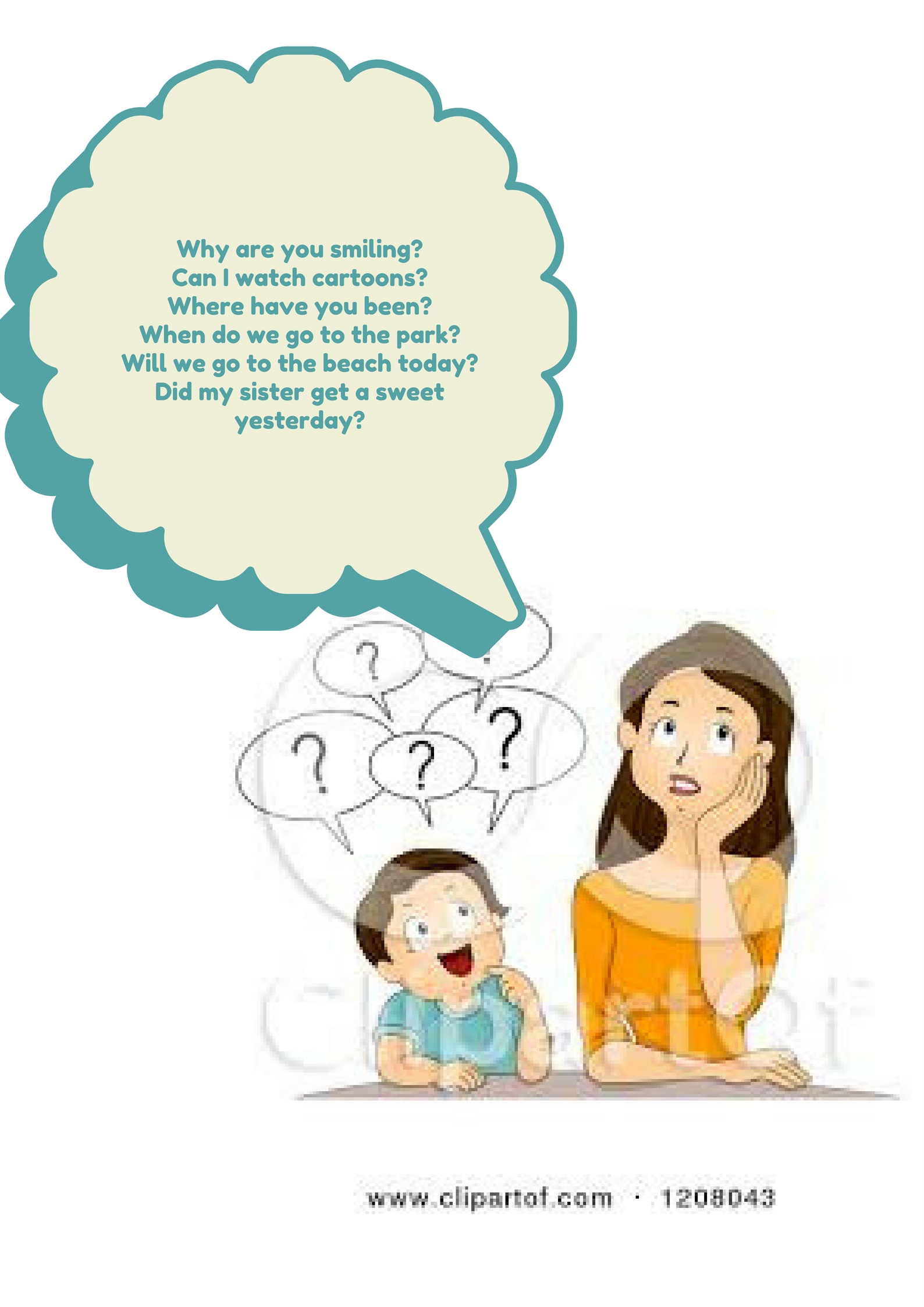
I draw on the board a boy and I call him Daniel and a woman and I call her Cristina- my name. I draw a big bubble next to Daniel and I ask students to guess what sort of questions he might have asked me. As they provide the questions I write them inside the speech bubble making sure there is a variety of wh- and yes/no questions and a variety of tenses. Once the questions have been written, I go on telling them that when my husband got home I was lying on the sofa with an ice pack on my forehead and looking dead tired  -remember drama is important- and when he enquired why I was so tired I told him all about my day and how I couldn’t rest because Daniel had asked all those questions.

  • He asked me why I was smiling
  • He wanted to know if he could watch cartoons.

INTRODUCING REQUESTS AND ORDERS.

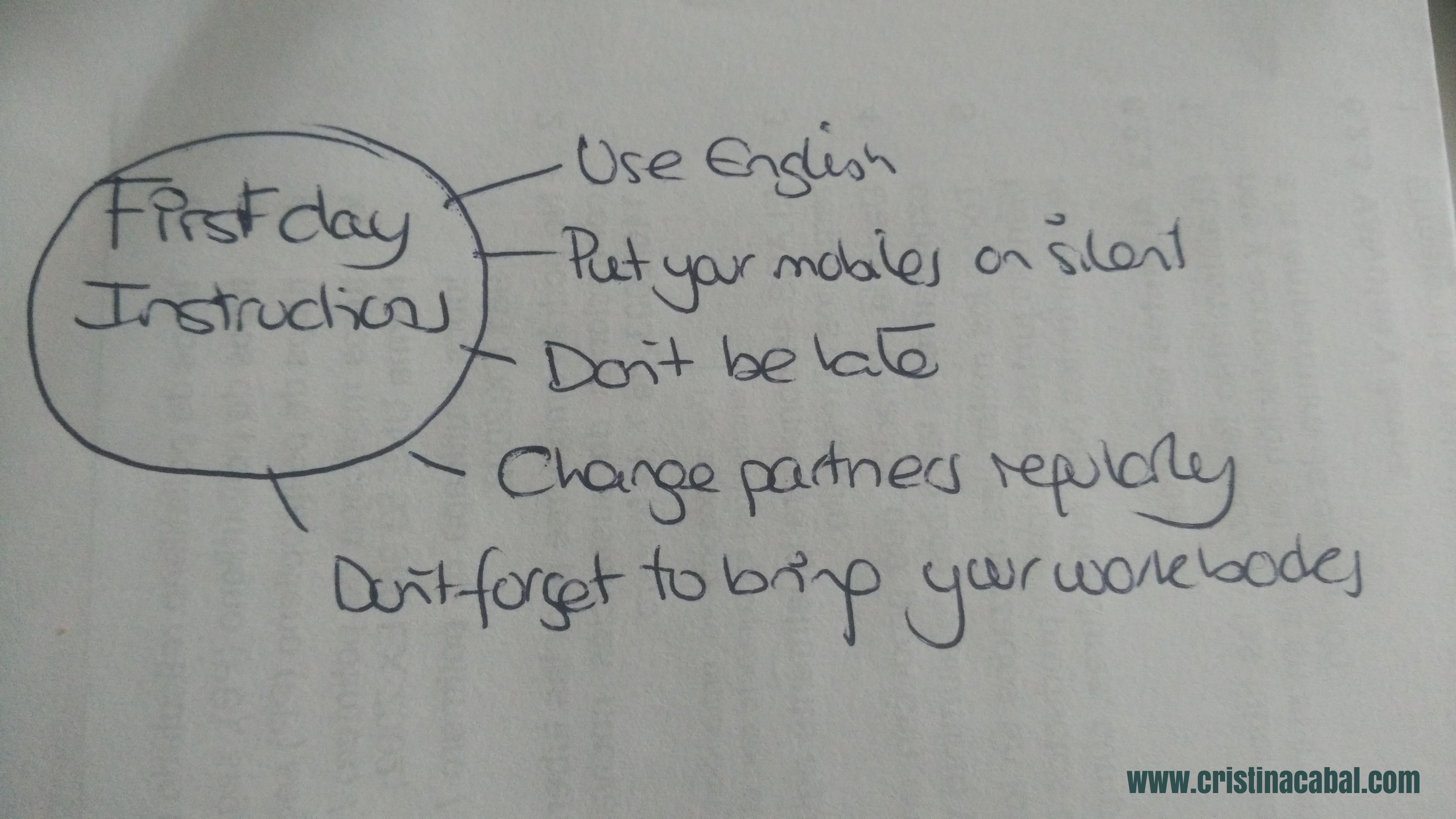
To introduce request and orders I write inside a circle on the board

First day instructions

and ask students to try to remember some of the instructions I gave them on the very first day in class.  Encourage them to tell you the exact words I used. They will probably say:

  • Use English
  • Put your mobiles on silent mode
  • Don’t be late.
  • Change partners regularly.
  • Don’t forget to bring your workbook

Write them on the board and choose a student who couldn’t attend that first day.

Tell students they now need to inform this student of the instructions I gave this very first day.

  • The teacher told us to use English in class
  • Cristina told us not to forget to bring our workbook

Hope it’s helpful! You might also be interested in this other post

Some nice activities to practise Reported Speech

Blog de Cristina is also on Facebook. Join us!

Some Activities to Teach Gerunds and Infinitives

I always claim that English grammar is easy, especially when compared to the Spanish or French grammar, but it gets a bit messy when it comes to verbs followed by infinitive or gerund.

The easy thing to say is that

  • some verbs are followed by infinitive (promise to go)
  •  some verbs are followed by gerund (can’t stand ironing).

But then we find that,

  • some other verbs are followed by infinitive or gerund with no change of meaning (start to study/start studying)
  • while some others are followed by infinitive and gerund with a change of meaning (stop to smoke/stop smoking)

And to add insult to injury,

  • some verbs are followed by infinitive with to (offer to help)
  • some others by infinitive without to ( make me study)
  • some verbs are followed by gerund, but if there is an object pronoun in between the verb and the gerund, then the gerund becomes infinitive (recommended reading / recommended her to read) …

Amazing, isn’t it?

Well, I suppose there’s nothing we can do about it, so let’s get down to some serious studying.


  • Level: Intermediate
  • Time: 60 minutes

THE GRAMMAR.

Download the document here


      THE PRACTICE:

Exercise 1. The Quiz


Exercise 2: The Rewriting Exercise


3.  Speaking and/or Writing: Storytelling Competition


  • Go to wheeldecide.com. Ask students to tell you verbs followed by gerund first, and then verbs followed by the “to” infinitive. Feed the wheel with these verbs.
  • Explain that in this activity they will need to seat in a circle in groups of 4.
  • Explain that you will write on the board the beginning of a story and then, in their groups, they will need to continue it.
  • Write on the board the beginning of a story. You can use this Short Story Generator.
  • Spin the wheel.
  • To make sure students will use the verb in the correct way, ask them to tell you whether the verb displayed in the wheel is followed by infinitive or gerund.
  • The oldest person in the group will start telling the story using the target verb in the wheel.
  • Give the student one minute to continue the story and then spin the wheel again for the next student.
  • If a student cannot come up with an idea to continue the story, he’s eliminated.
  • Continue until there is only one student left. This student will be the winner if he manages to give the story in his group a suitable ending.

Here’s the wheel I have used with my students.

Join us on Facebook

The Article in English: Explanation, Exercises and a Challenging Quiz

Although the use of the article in English seems a priori an easy subject to teach, the truth is that some students struggle with the use and omission of it.

What can you find in this post?

  • Intermediate level:
  1. Animated video with some rules on the use and omission of the articles “the, a/an”
  2. Some links to exercises from around the web to consolidate knowledge.
  • Advanced Level:
  1. An engaging quiz with feedback notes featuring some difficult cases related to the use and omission of articles.


Grammar. Watch the presentation. Pause it as often as necessary to understand and assimilate the rules.

Exercises: Links to interactive exercises  from around the web to consolidate knowledge.


The quiz


Teaching Both, Neither and Either with List.ly

Several times I have been on the verge of almost writing a post exclusively to share with you this beautiful presentation tool without any reference whatsoever to English teaching.

But I didn’t. I don’t know why, but I’m glad I didn’t.

Normally posts about tools and apps you can use in the classroom go unnoticed, unless you’re clearly into incorporating technology into your classes.

So, next week I’ll be teaching the grammar for both, neither and either and I thought it would be nice to use this tool to present and teach these pronouns as, among other things, List.ly helps you build beautiful presentations, add text and links.

Now, if you’re not interested in incorporating List.ly into your classes, you can skip all about List.ly below and go straight for the grammar. 🙂 although I hope you don’t.


About List.ly


What is List.ly?

Basically it’s a tool for creating and curating lists. With List.ly you can

  • Curate content
  • Create original post content
  • Get feedback from your students

Other features

  • You can add items with or without links, photos, text, video, audio…etc
  • Also, it’s a highly collaborative tool. Students can participate:

-by voting individual lists items up or down

-by adding to the lists

-by writing comments

  • It’s free ( you can create 3 free lists) and you can easily share it and embed it on your blog.
  • You can choose from 6 formats: list, gallery, magazine, slideshow, minimal and badge.
  • You can make it private. You can obtain the link and share it privately.
  • You can moderate the list to approve any comments or contributions to the list.
  • You can decide the order in your list: curated order (great for collaborative storytelling), crowdrank (great for voting), alphabetical or newest.
  • Below you can see some of the things you can add to your list

 Tutorial: here

   How can I use it in the classroom?

Given that you can allow students to collaborate, there are endless possibilities. To mention just a few:

  • Create a list of tips. For example: for scoring high in the oral exam and have students vote the most helpful.
  • Choose a topic, for ex. stereotypes and let students add their own ideas to the list.
  • Create a list linking to specific content they need to see or study: videos, grammar exercises, topic-related lessons, …etc.
  • As you can also upload audio, give them a topic for discussion and ask them to add to the discussion by uploading a recording with their own view on the issue.
  • Create beautiful presentations with links to extra content.
  • Writing contest: share their writing and ask students to vote on the best.
  • Start a list with the songs they would like to work with, ask them to add their favourites and then vote on the best.
  • Collaborative Speaking activity: brainstorming of ideas.

Any other ideas?


 Using BOTH, NEITHER AND EITHER


  1. Traditional? Pdf with exercises here. 
  2.   A bit less traditional? Down here!

I have embedded the presentation using two formats:

  • slideshow format
  •  List format

I’m Shamelessly Addicted to this Game

Yes. It’s true. I love this game. It’s just the right kind challenge for someone studying English.

The game is called Fluent and this is how it works:

  • There are 20 different trivia categories all dealing with grammar and vocabulary.
  • You’ll have to answer each question before you run out of time.
  • You have 3 lives.
  • You’ll need to answer 5 questions correctly to go to the next level.
  • As you level up, you are given less time to answer.
  • You can play it pairs (or 2 teams) and the winner is  the top scorer after 8 questions.

Ready for some fun, a bit of challenge and lots of learning. Here we go, then!

Click on the picture.

fluent

Blog de Cristina is on Facebook, too. Join us!